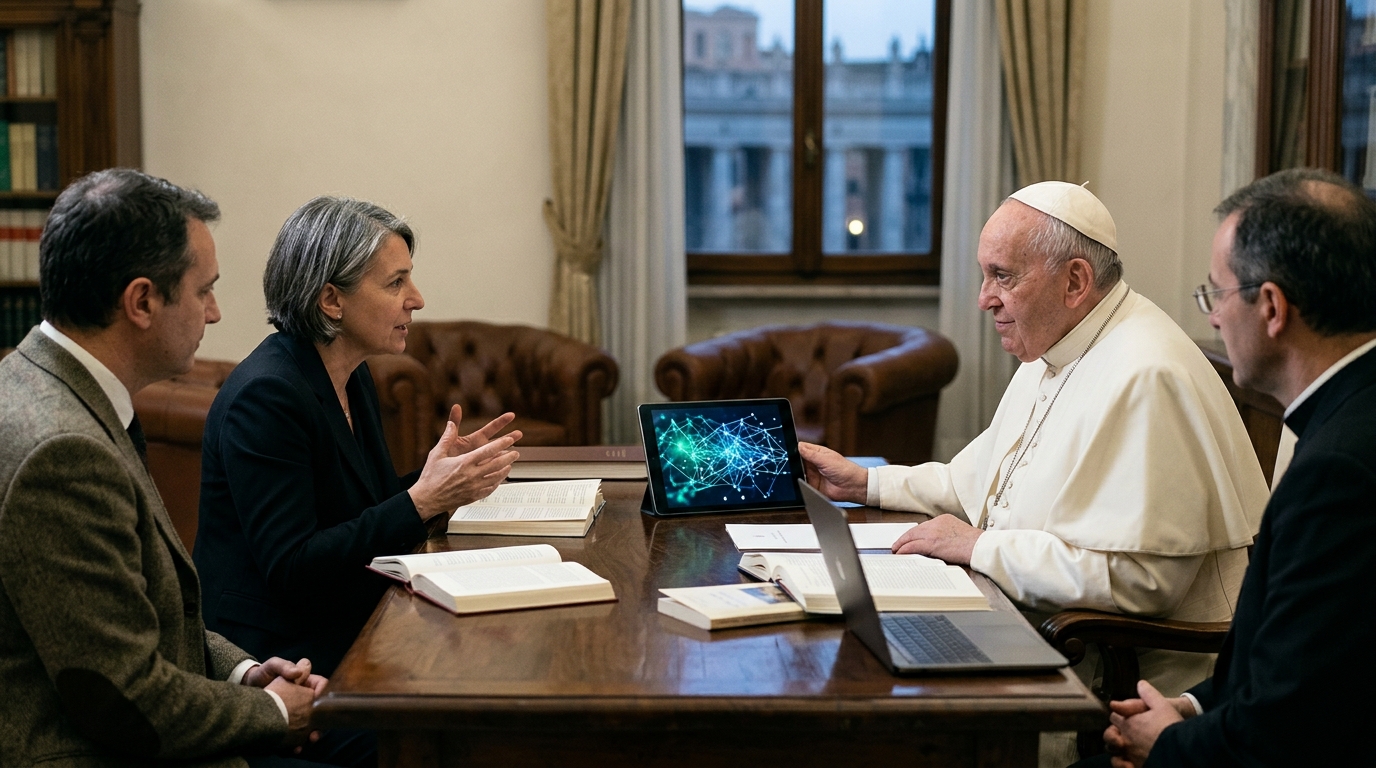
In the heart of Rome, beneath the timeless frescoes of the Sistine Chapel, a new revolution is unfolding—this time, it is not artistic or theological, but technological. Pope Leo XIV, in a move that many analysts describe as the Church's most significant intervention in the 21st century, has announced the establishment of the Pontifical Commission for Algorithmic Integrity. This initiative is far from a mere bureaucratic addition to the Vatican; it is a clear statement of intent: faith must engage in a dialogue with code.
The creation of the commission comes at a time when Artificial Intelligence (AI) has permeated every facet of human activity, from medical decision-making to the shaping of public opinion via social networks. The Pontiff, in his official address, emphasized that "technology is a gift, but its use without a moral compass can turn a blessing into a burden."
Composition and Objectives of the Commission
The new commission is not composed exclusively of clergy. On the contrary, the Vatican has opted for a multidisciplinary approach, inviting leading computer scientists from Silicon Valley, philosophers from Europe, and sociologists from the Global South. The commission is chaired by the eminent professor of Technology Ethics, Dr. Marco Valentini, who has spent years developing the concept of 'Algorethics'.
The primary goal of the commission is to establish a global ethical framework ensuring that AI systems are transparent, fair, and, above all, human-centric. The commission will tackle issues such as algorithmic bias, privacy protection, and the impact of automation on the global labor market. As the official statement notes, "we cannot allow algorithms to decide the value of human life or to deepen social inequalities."
Algorethics: A New Theology of Technology?
The term 'Algorethics', initially introduced by the Vatican in 2020 with the 'Rome Call for AI Ethics', is now receiving institutional status. For Pope Leo, AI is not a neutral tool. It is a force that can either liberate humanity from arduous labor or enslave it to opaque systems of control. The commission is tasked with answering questions that touch the boundaries of metaphysics: Can a machine possess consciousness? Who bears moral responsibility for a decision made by a neural network?
According to sources close to the Holy See, the commission will serve as a consultative body not only for the Church but also for international organizations. Discussions are already underway regarding collaborations with the European Commission and the UN to integrate the principles of Algorethics into future legislative frameworks. The Vatican aims to become the "moral compass" in a world moving faster than traditional institutions can comprehend.
Challenges and Industry Reaction
Despite the noble intentions, the Pope's initiative is met with skepticism by certain sectors of the tech industry. Critics argue that religious intervention might stifle innovation or impose dogmatic constraints on scientific matters. However, major tech giants have already welcomed the move, recognizing that the public's lack of trust in AI is the greatest barrier to its adoption.
"Ethics is not an obstacle to progress, but the guarantee that progress will have meaning for everyone," stated Pope Leo during the commission's inaugural session.
The commission is expected to release its first comprehensive report in late 2026, focusing on the use of AI in education and healthcare. This move by Pope Leo XIV signals a new era where the West's oldest institutional power meets the most modern creation of the human mind, in an effort to ensure that our future is not only smart but also profoundly human.