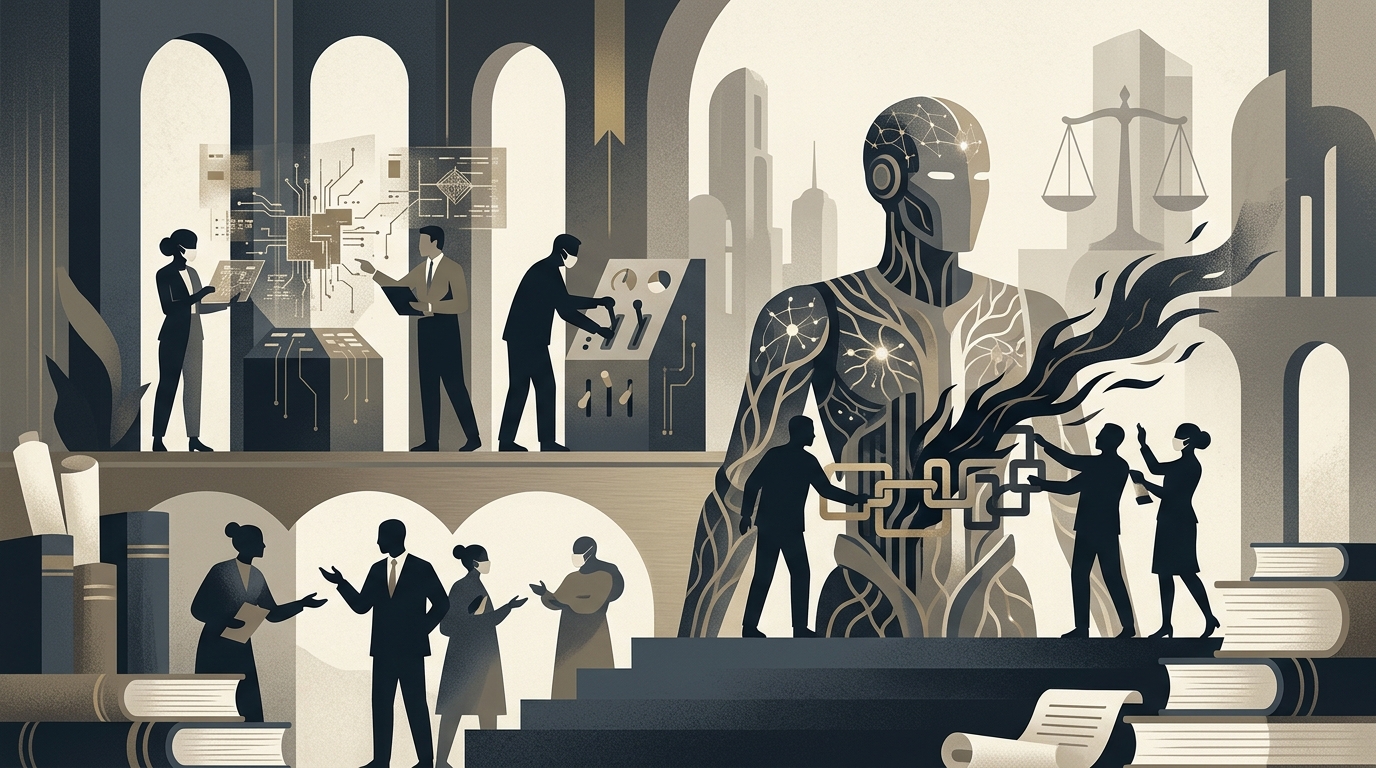
As we navigate the summer of 2026, Artificial Intelligence (AI) is no longer a futuristic promise but the backbone of the global digital economy. However, beneath the surface of sophisticated Large Language Models (LLMs) and image generators, a ghost from the past lingers: gender bias. Despite the efforts of tech giants to "train" their systems for equality, results show that technology often acts as a digital magnifying glass for human prejudices.
The Root of the Problem: Data as a Mirror of the Past
The fundamental problem of AI lies in its very nature: it learns from us. The datasets used to train models are derived from the internet, historical archives, and centuries of digitized human knowledge. As many AI ethics researchers point out, if our data is "poisoned" by centuries of patriarchal structures and gender inequalities, AI will perceive these patterns as the only "truth.".
For instance, when a model is trained on texts where the words "doctor" or "CEO" are statistically more frequently associated with male names, while "nurse" or "secretary" are linked to female ones, the system does not perceive social injustice; it perceives a mathematical correlation. The result is the automated reproduction of stereotypes at a scale humans could never achieve alone.
Algorithmic Amplification and the Vicious Cycle
What is concerning is not just the existence of bias, but its amplification. In recent tests with image generators, when asked to create images for "leaders," systems produced men in over 90% of cases. Conversely, in searches for "assistants," the dominance of female figures was overwhelming. This creates a dangerous feedback loop: users see these images, use them in presentations and articles, and thus stereotypes are further cemented in the collective subconscious.
- Hiring Bias: Algorithms filtering resumes tend to downgrade female candidates for technical positions due to a lack of "historical patterns" of success.
- Medical Inequality: Many AI diagnostic tools have been trained primarily on male physiological data, leading to less accurate diagnoses for women.
- Financial Exclusion: Credit scoring systems often assign lower scores to women, even with similar financial profiles to men.
The "Glass Ceiling" of Code
In Europe, the discussion on AI ethics is gaining particular significance. With the implementation of the European Union's AI Act, companies are now required to audit their systems for discrimination. However, legislation alone is not enough. The lack of diversity in software development teams is a decisive factor. When the teams designing these algorithms are predominantly male, "blind spots" are inevitable.
"Artificial intelligence is not biased because it is evil, but because it is an excellent student of our worst habits," industry experts state.
To break this cycle, a radical change in approach is required. The use of "synthetic data" designed to be balanced, the active participation of sociologists in the development process, and continuous monitoring of outcomes are essential steps. Technology has the power to free us from the chains of the past, but only if we direct it with consciousness and intent. Equality in the age of AI will not happen by chance; it will be the result of rigorous, ethical engineering.