When Satya Nadella announced in 2020 that Microsoft would become "carbon negative" by 2030, the tech world hailed him as a visionary. However, the sustainability report for the year 2025, published in July 2026, tells a starkly different and unsettling story. The tech giant's total carbon emissions surged by 25 percent in just twelve months, reaching 34 million metric tons. This development is not merely a statistical outlier; it is the first major proof that the Artificial Intelligence (AI) revolution is colliding head-on with planetary survival.
The Voracious Nature of Generative AI
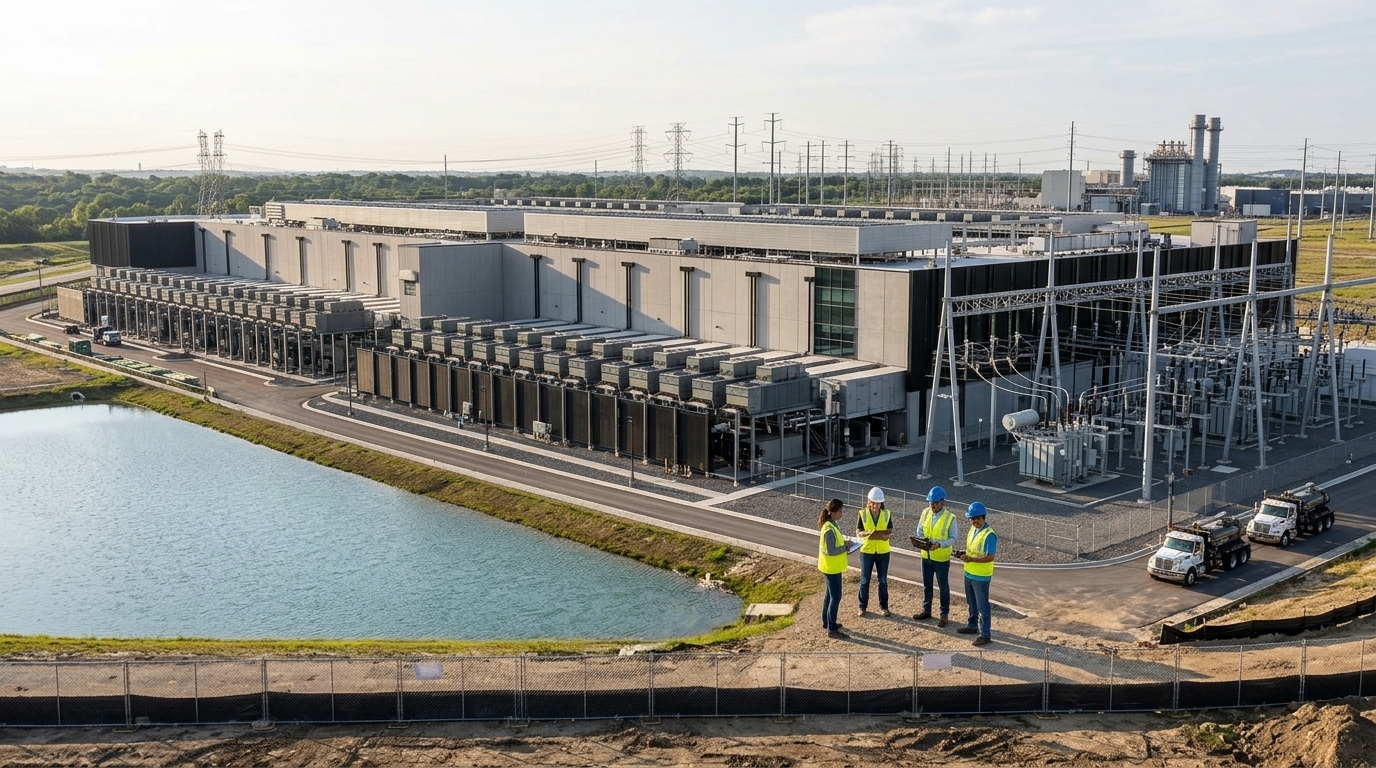
The cause of this spike is no secret: it is the massive computational power required to train and run models like GPT-5 and its successors. Microsoft's data centers, the backbone of Azure, have expanded at rates reminiscent of a gold rush. Every query a user submits to an AI assistant requires significantly more energy than a simple Google search. The demand for advanced graphics processing units (GPUs), such as Nvidia’s Blackwell series, has turned data centers into energy "black holes."
Microsoft admits in its report that "Scope 3" emissions—which include hardware manufacturing, product use, and, crucially, the construction of the data center buildings themselves—account for the bulk of the problem. The steel, concrete, and rare metals required to build these temples of computing carry a massive carbon footprint that renewable energy sources cannot immediately offset.
The Renewable Paradox
Despite Microsoft being one of the world's largest corporate buyers of green energy, demand is outstripping supply. In many regions where the company is expanding, the local power grid cannot support the load with wind or solar alone. This forces the company to rely on traditional energy sources, such as natural gas, to ensure the uninterrupted operation of its systems. Furthermore, the water consumption needed to cool these supercomputers has skyrocketed, sparking backlash in local communities facing water scarcity.
- A 25% emissions increase effectively nullifies five years of sustainability progress.
- Scope 3 emissions represent over 90% of the company's total footprint.
- Water usage for cooling AI servers increased by 30%, reaching record levels.
- Microsoft is now pivoting toward nuclear energy (SMRs) as the only viable clean baseload power.
The Ethical and Strategic Crisis
The situation poses a critical question: can a company be both an AI leader and a climate pioneer? For now, the answer appears to be no. Pressure from shareholders for AI market dominance is so intense that environmental goals are taking a backseat. Microsoft argues that AI itself will eventually help solve the climate crisis by optimizing energy grids and discovering new materials. However, this argument feels like an "environmental promissory note" that may never be cashed.
Regulators in the European Union and the US are watching closely. With the implementation of the Corporate Sustainability Reporting Directive (CSRD), Microsoft can no longer hide its setbacks behind complex carbon accounting tricks. Transparency is now mandatory, and the reputational consequences are already visible. If the biggest player in tech cannot keep its promises, the entire narrative of "green growth" through technology is called into question.
Conclusion
The 2026 report is a wake-up call for the entire industry. Artificial Intelligence is not an ethereal entity living in the cloud; it is a physical infrastructure that devours Earth's resources. If Microsoft and its competitors do not find a way to decouple computational progress from environmental destruction, the future they promise may be much darker and warmer than we imagined.