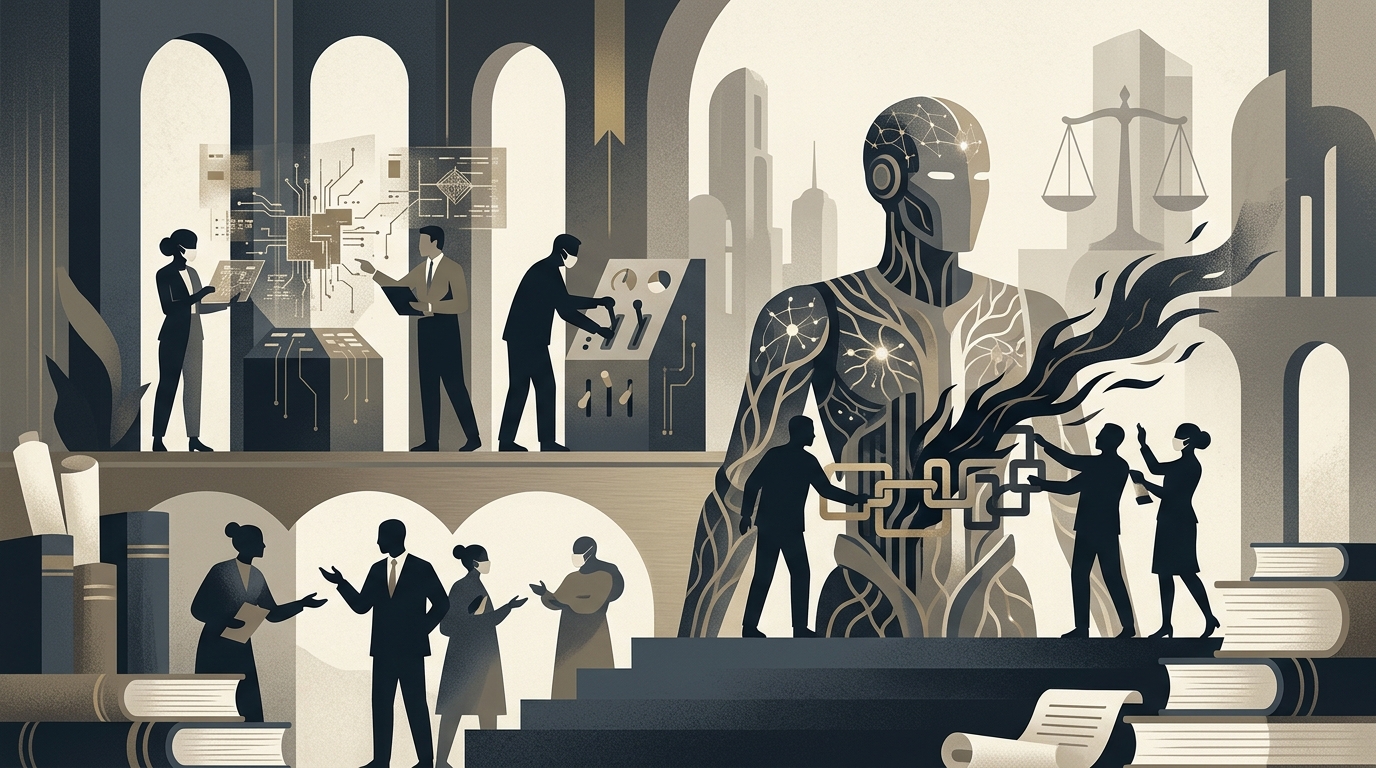
For decades, the fanfiction community has served as a digital sanctuary—a space where creativity flourished far from market norms and profit pressures. In the world of Archive of Our Own (AO3) and similar platforms, the only "legitimate" value was a love for the source material and volunteer labor. However, 2026 finds this community in a state of siege. The advent of Large Language Models (LLMs) like Claude and ChatGPT has brought not just new tools, but a profound existential crisis that threatens to unravel the very social fabric of these communities.
The recent turmoil, as originally reported by The Verge, was sparked by a growing resentment among readers and writers toward works that appear to be generated by AI. Fanfiction relies on a "gift economy": someone dedicates hours of their personal life to write a story and offers it for free to others. The use of AI is seen by many as a "debasement" of this relationship. When effort is nullified through an algorithm, the "gift" loses its value. This moral outrage has led to an informal "witch hunt," where community members attempt to identify and purge those using artificial intelligence.
The Problem of Unreliable Detectors
The greatest issue in this "war" is not the AI itself, but the tools used to combat it. Fanfiction's self-appointed "deputies" have begun using AI detection software, such as GPTZero or Claude-specific detectors, to verify the authenticity of texts. However, the scientific community has repeatedly warned that these tools are notorious for their false positives.
The tragedy of this situation is that detectors tend to target specific categories of people. Non-native English speakers often write in a way that algorithms deem "mechanical" or "overly formal," leading them to be unfairly accused of using AI. The same applies to authors with a very specific, minimalist writing style. Thus, a community that once prided itself on inclusivity is being transformed into a digital panopticon where everyone is a suspect until proven human.
"It's no longer about the quality of the story, but about proving our humanity. It's exhausting to have to prove you're not a robot every time you post a chapter," says an anonymous author on AO3.
AO3’s Stance and Freedom of Speech
Archive of Our Own, managed by the nonprofit Organization for Transformative Works (OTW), is in an incredibly difficult position. AO3’s philosophy has always been one of "maximum inclusivity" and the avoidance of censorship. Unlike Wattpad or FanFiction.net, AO3 does not explicitly ban AI-generated content, provided it doesn't violate other rules (like spam). This stance has drawn the ire of many users who demand a total ban on LLMs.
AO3 leadership argues that such a ban would be impossible to enforce without leading to mass wrongful deletions of works due to flawed detectors. Furthermore, there is the legal issue: fanfiction by its nature exists in a copyright gray area. Introducing strict rules for AI could open the door to further restrictions that would ultimately harm human creators. This conflict highlights the gap between the community's desire for a "pure" space and the technical reality of the platform.
Ethics and the Future of Creativity
Beyond technical issues, the debate touches the heart of human creation. Why do we write? If the goal is simply content consumption, then AI is the perfect solution. But if the goal is the connection between two humans through language, then AI is a noise that interrupts that frequency. The fanfiction community perceives AI as a threat to the "sanctity" of effort.
In the future, we are likely to see further fragmentation. New platforms are already emerging that promise "100% human content," using rigorous verification processes. However, the irony remains: in our attempt to protect human creativity from machines, we are adopting the most harsh and rigid methods of the machines. This war is not just about fanfiction; it is a preview of what will happen to every field of human expression as AI becomes ubiquitously present.
In 2026, the challenge for fans is not just to keep AI out of their stories, but to keep suspicion out of their hearts. If the price for an AI-free space is permanent fear and mutual accusation, then the community may lose exactly what it is trying to save: its own humanity.