In the shadow of Christ the Redeemer, a new architecture is emerging—not of concrete and faith, but of silicon and algorithms. Rio de Janeiro, a city of profound contrasts, stands at a critical crossroads. Local authorities and global tech giants are aggressively promoting the vision of 'Silicon Rio,' a digital hub promising economic renewal through Artificial Intelligence (AI) and massive data centers. However, beneath the gloss of innovation lies a harsh reality that favela residents and environmental activists are beginning to expose: the staggering social and environmental costs.
The Data Thirst in a Parched City
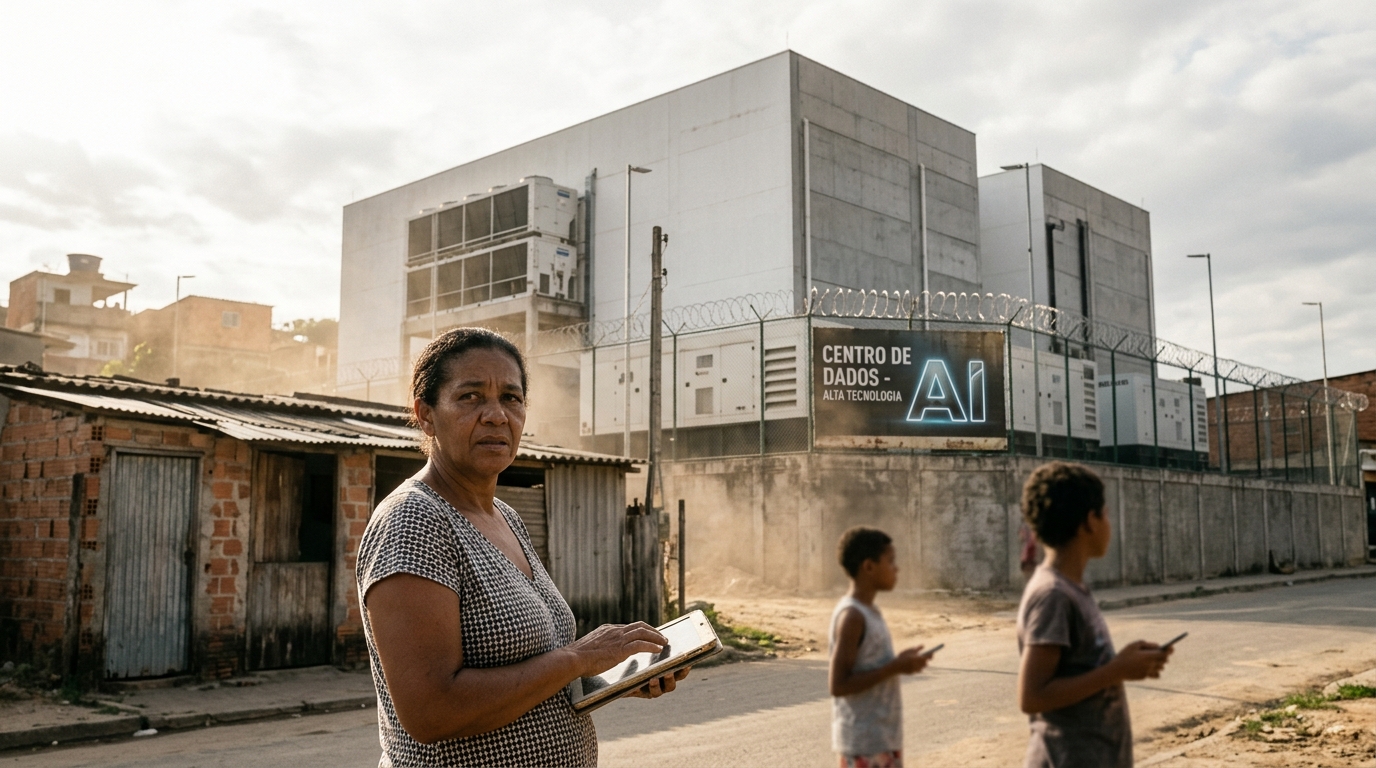
Data centers are not merely digital warehouses; they are industrial-scale facilities requiring astronomical amounts of energy and water. To cool the servers powering AI models, millions of liters of fresh water are consumed daily. In a city like Rio, where access to basic sanitation remains a privilege and water shortages in low-income neighborhoods are a daily struggle, prioritizing Big Tech’s needs over citizens' rights is a flashpoint for social unrest.
The energy consumption is equally problematic. While Brazil prides itself on a 'green' energy matrix, the addition of massive computational loads from data centers strains the national grid, often leading to tariff hikes for ordinary consumers. The question is clear: Who ultimately pays the bill for the computing power utilized primarily by the Global North?
Gentrification and the Fear of Displacement
The creation of tech hubs is frequently a harbinger of gentrification. In Rio, this translates into mounting pressure on favela communities adjacent to new infrastructure projects. Land suddenly becomes valuable for corporations, but not for the people who have inhabited it for decades without formal titles. 'Smart city' investments tend to bypass the urgent needs of local communities—such as sewage, education, and healthcare—focusing instead on fiber optics and surveillance networks.
"Technology in Rio isn't arriving to solve the favela's problems; it’s coming to use our resources and marginalize us further," notes an activist from RioOnWatch.
Digital Extractivism: The New Colonialism?
Analysts are increasingly identifying a pattern of 'digital extractivism.' Just as colonial powers once extracted gold and rubber, today’s Big Tech firms extract data and consume natural resources from the Global South to fuel services that generate profits in Silicon Valley. Rio risks becoming a 'digital hostel' where residents provide the land and water, but the fruits of the technological revolution are exported in their entirety.
The lack of transparency in agreements between the government and tech giants exacerbates these fears. How many jobs are actually created for the local population? In reality, data centers operate with minimal specialized staff, often brought in from elsewhere, leaving local communities with nothing but the waste and the constant hum of cooling fans.
Toward a Just Technological Future
To avoid social explosion, a new governance framework is mandatory. Communities must have a seat at the table during infrastructure planning. Corporations should be bound by 'Community Benefit Agreements,' investing directly in the infrastructure of neighboring favelas. AI technology can be a tool for liberation, but only if its foundation is built on equity rather than the exploitation of an already burdened city's resources.