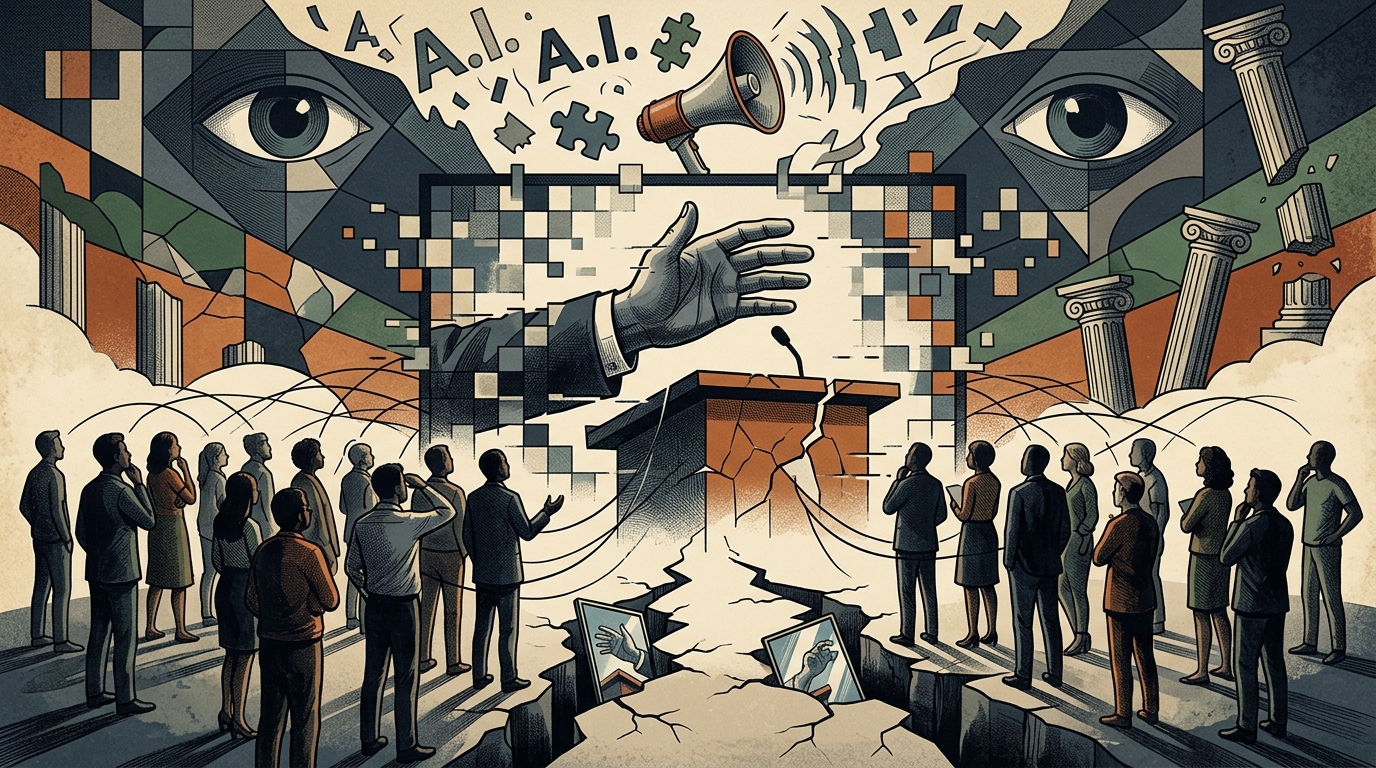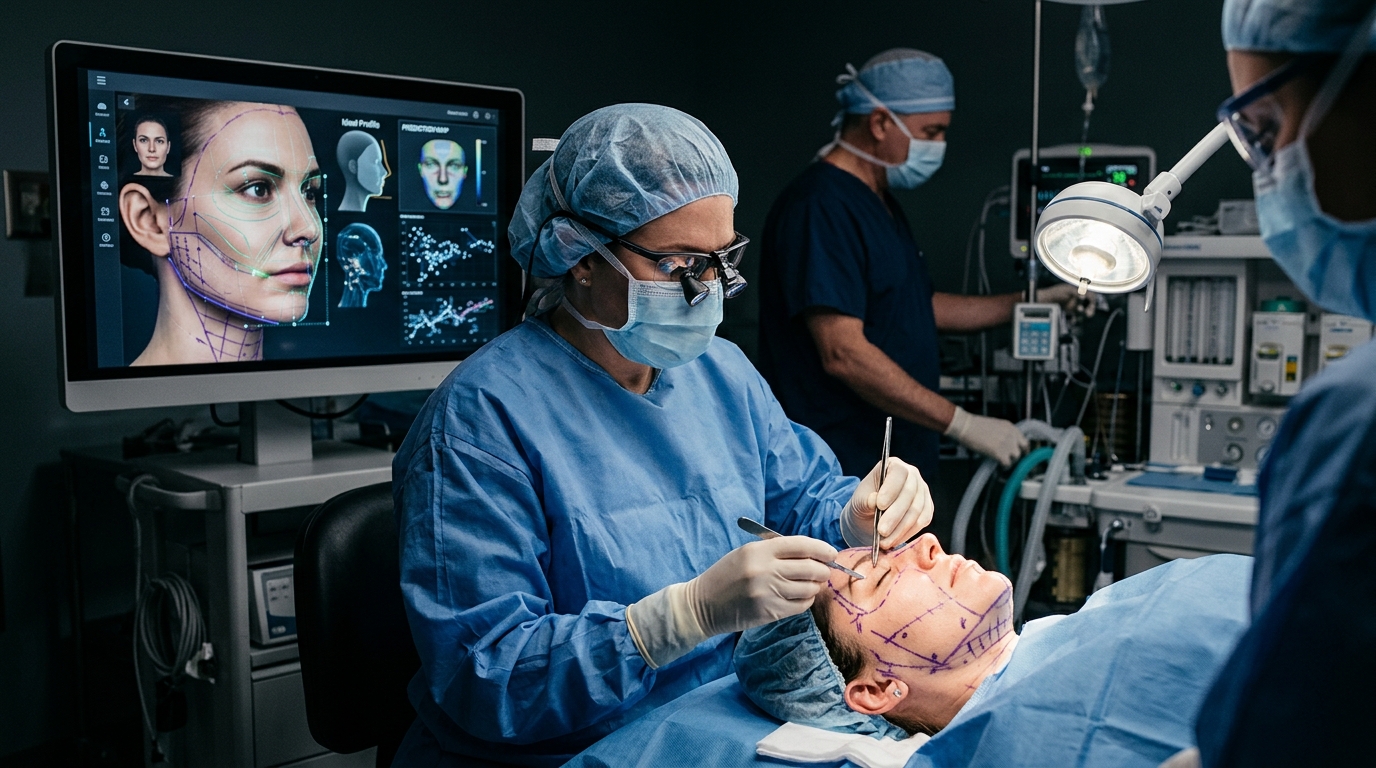
In the era of digital omnipotence, the line between reality and algorithmic imagination is becoming increasingly blurred. In recent years, plastic surgeons worldwide—from Seoul and Los Angeles to Hanoi—are facing a new phenomenon: patients no longer arrive at clinics clutching photos of famous actors, but presenting images of themselves drastically modified by Artificial Intelligence tools. AI's promise of a 'perfect' face—with mathematically symmetrical features, flawless skin, and proportions that defy biology—raises the question: can the human scalpel compete with code?
The Illusion of Digital Symmetry
Artificial Intelligence does not 'see' the face as living tissue, but as a collection of data and pixels. Models like Midjourney, DALL-E, or specialized beauty apps use Generative Adversarial Networks (GANs) to produce images based on the average of millions of 'attractive' features. The result is often a hyper-real beauty that lacks the minor imperfections that make a face human. The symmetry achieved by AI is often absolute, something that is almost non-existent in nature and, paradoxically, can trigger the 'uncanny valley' effect, where something looks almost human but simultaneously disturbingly artificial.
Experts warn that attempting to replicate these digital standards through surgery is not only difficult but often dangerous. Facial anatomy has constraints that the algorithm ignores: nerve placement, bone density, skin elasticity, and blood supply. A nose that looks perfect in an AI photo may not be functionally viable in reality, obstructing breathing or collapsing due to a lack of structural support.
From 'Snapchat Dysmorphia' to 'AI Dysmorphia'
A few years ago, psychiatrists introduced the term 'Snapchat Dysmorphia' to describe the desire for people to look like social media filters. Today, AI takes this phenomenon to a new, darker level. While filters were often obvious and playful, AI creates images that look terrifyingly real, convincing the user that this 'perfect' avatar is an achievable version of themselves. This disconnect between the digital image and the reflection in the real world leads to increased rates of depression and Body Dysmorphic Disorder (BDD).
- Unrealistic Expectations: Patients often fail to understand that light and shading in a digital image cannot be permanently reproduced on human skin.
- Loss of Uniqueness: AI tends to homogenize beauty, promoting a Western-centric standard that erases ethnic characteristics.
- The Vicious Cycle of Procedures: Failure to achieve the digital ideal leads to repeated, unnecessary surgical interventions.
The Surgeon's Ethical Responsibility
The question now facing the medical community is ethical. Should a surgeon refuse a procedure when a patient requests something digitally fabricated? The answer is not always simple, especially in a profit-driven industry. However, medical ethics dictate respect for human physiology. Many leading surgeons now incorporate psychological assessments before surgery, trying to discern whether the patient seeks improvement or is chasing a digital ghost.
"Our job is to enhance harmony, not to create masks. AI can produce perfect pixels, but surgery deals with life, movement, and aging," says a specialist from Vietnam, where this trend is booming.
In conclusion, while technology can serve as a simulation tool for doctors to understand patient desires, using it as an absolute standard of beauty is a trap. AI's perfection is static and soulless. Real beauty, by contrast, is found in movement, expression, and the small asymmetries that tell a person's story. Surgery can correct or enhance, but it cannot—and should not—transform a human into an image created by a machine learning code.