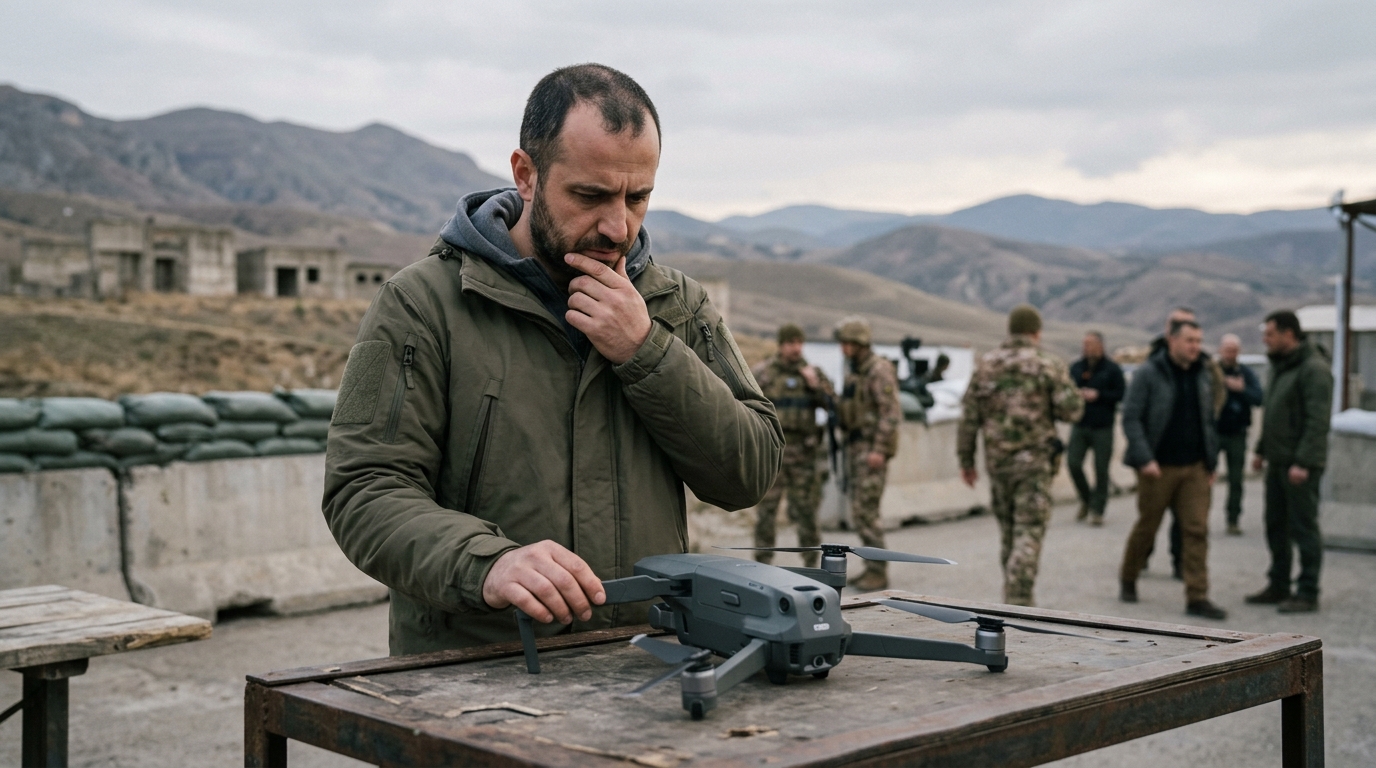
As of June 14, 2026, humanity stands at a critical juncture where the science fiction of yesteryear is rapidly transforming into a disturbing military reality. The integration of Artificial Intelligence (AI) into the military domain is no longer a future promise but a present threat reshaping the very nature of conflict. Human Rights Watch (HRW), in a series of comprehensive analyses, is sounding the alarm, calling for the immediate establishment of an international legally binding framework for autonomous weapons systems, often disparagingly referred to as "killer robots."
The Erosion of Human Control
The central argument of Human Rights Watch focuses on the concept of "meaningful human control." According to the organization, delegating the decision to use lethal force to algorithms violates fundamental principles of International Humanitarian Law (IHL). Machines, no matter how advanced, lack the ability to understand context, exhibit empathy, or judge the proportionality of an attack in the way a human commander does.
The concern is not merely about the possibility of a technical glitch, but the very nature of algorithmic decision-making. Algorithms rely on statistical patterns and past data, which often contain inherent biases. In a battlefield environment, where the distinction between a combatant and a civilian can be a matter of seconds and subtle nuances in behavior, AI risks causing mass civilian casualties due to its inability to recognize human agency and intent.
The Accountability Gap and Legal Void
One of the most thorny issues raised by HRW is the "accountability gap." In traditional laws of war, responsibility for war crimes lies with the soldier who pulled the trigger or the commander who issued the order. But when a decision is made by an autonomous system, who bears the responsibility? The programmer? The manufacturer? The officer who activated the system?
HRW argues that existing international law is insufficient to cover these cases. The absence of a clear responsible party creates a culture of impunity, where human rights violations can be dismissed as "technical malfunctions." This gap undermines justice and the deterrence of future crimes, making it imperative to have a new international treaty that prohibits fully autonomous weapons and strictly regulates semi-autonomous ones.
Geopolitical Friction and the Arms Race
The effort to regulate AI in the military domain faces powerful geopolitical interests. Major powers, including the US, Russia, China, and Israel, are investing billions in developing autonomous technologies, fearing that any restriction would place them at a disadvantage against their rivals. The rhetoric of "necessity" and "precision" is often used to justify avoiding binding rules.
- Russia has repeatedly objected to binding treaties, preferring non-binding guidelines.
- The US proposes a "code of conduct," which, however, offers no legal protection in case of violations.
- China supports a ban on use but not on development, a position many view as hypocritical.
Against this landscape, HRW and the "Stop Killer Robots" campaign emphasize that technological superiority cannot take precedence over human dignity. The Martens Clause, a long-standing principle of the law of war, states that in cases not covered by written rules, humans remain under the protection of the principles of humanity and the dictates of public conscience. The use of autonomous weapons that kill based on mathematical calculations offends, according to HRW, this very public conscience.
Conclusion: The Urgent Need for Action
The challenge of AI in the military domain is not merely technical; it is profoundly ethical and political. The inaction of the international community today could lead to a world where conflicts erupt at the speed of an algorithm and human life is reduced to a mere data point to be processed. Human Rights Watch calls on governments to show courage and proceed with the creation of a legal firewall before technology renders current discussions obsolete. Keeping human judgment at the heart of warfare is the only guarantee that humanity will not lose its soul on the digital battlefields.