In today's episode of 'Insight with Haslinda Amin' on Bloomberg, the focus shifted to Malaysia's remarkable resurgence on the global tech stage. As of June 2026, the Southeast Asian nation is no longer just a low-cost destination for electronics assembly; it is emerging as a pivotal player in the Artificial Intelligence (AI) value chain and high-end semiconductors.
The 'China Plus One' Strategy and Geopolitical Fortune
Malaysia's rise is far from accidental. The persistent friction in US-China relations has compelled tech giants to seek alternative production bases, a strategy widely known as 'China Plus One.' Malaysia, with its decades of experience in the semiconductor backend—specifically Outsourced Semiconductor Assembly and Test (OSAT)—found itself in the right place at the right time. According to Haslinda Amin’s analysis, the country has successfully attracted massive investments from industry titans like Intel, Infineon, and Nvidia, who view Malaysia as a secure and technically proficient base.
However, the challenge for Prime Minister Anwar Ibrahim’s administration has shifted from attracting capital to upskilling the workforce. For Malaysia to move from mere packaging to actual chip design, a radical reform of the education system and vocational training is required—a move Kuala Lumpur is signaling through its ambitious 'National Semiconductor Strategy' (NSS).
The Data Center Gold Rush in Johor
Another critical dimension of this tech rebound is the explosion of data centers. Due to its proximity to Singapore—which faces severe land and energy constraints—the Malaysian state of Johor has transformed into a sprawling construction site for digital infrastructure. Microsoft, Google, and Amazon have already committed billions of dollars to establish hubs that will power AI workloads across the entire region.
The central question posed during the broadcast is whether Malaysia can sustain the energy burden. Operating these centers requires vast amounts of electricity and water. The transition to green energy is now a necessity, with the country investing in solar farms and hydroelectric projects to ensure that its digital growth does not compromise its climate targets. Haslinda Amin points out that sustainability will be the ultimate differentiator in Malaysia's competition with neighbors like Vietnam and Thailand.
The Next Wave: Moving from Consumption to Innovation
As we approach the latter half of 2026, Malaysia is striving not to be a mere 'servant' to foreign multinationals but a producer of innovation. Fostering local startups that develop AI applications for agriculture and manufacturing is the new priority. Bloomberg analysts emphasize that the success of this endeavor will depend on institutional stability and the continued fight against corruption—factors that have historically hindered the region's progress.
"Malaysia is no longer competing on who has the cheapest labor, but on who has the smartest ecosystem," was a key takeaway from the discussion.
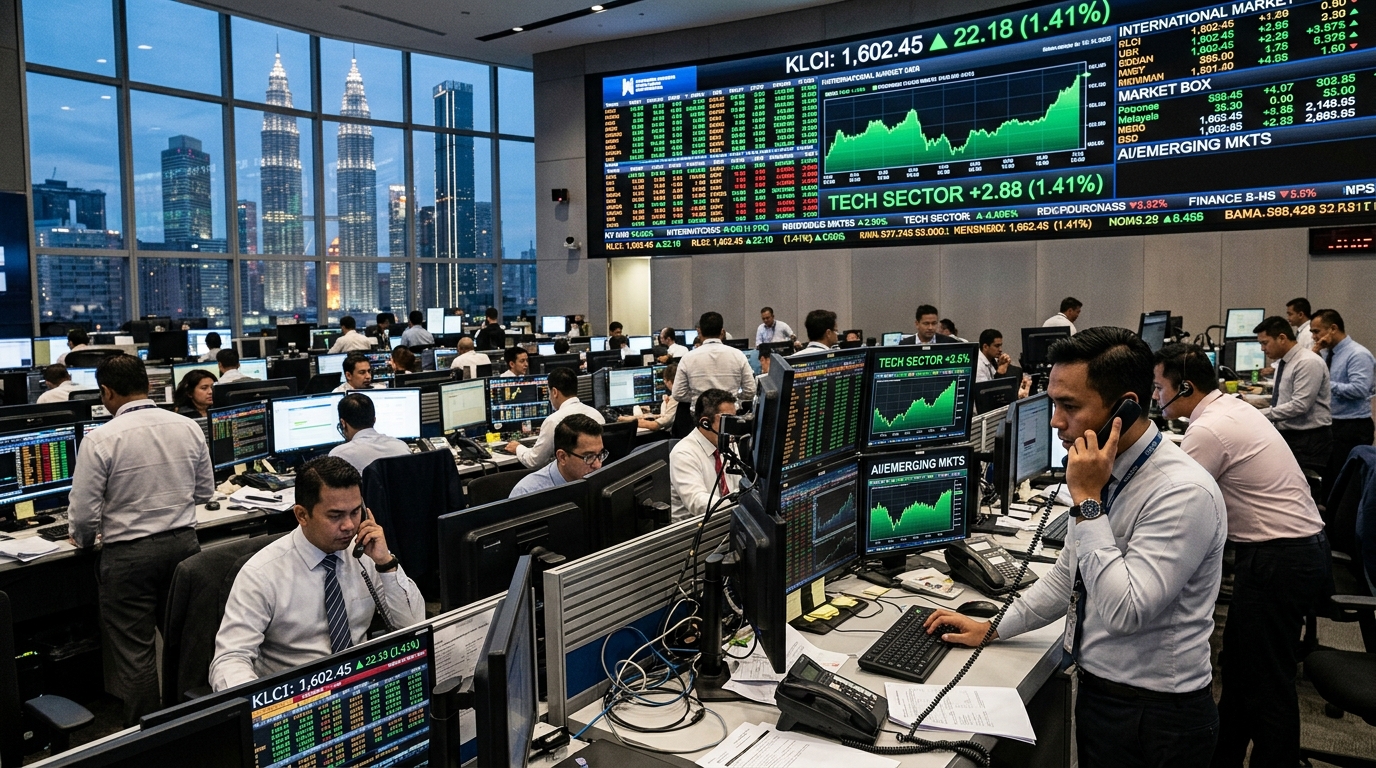
In conclusion, Malaysia stands at a critical juncture. The tech rebound is evident in stock market indices and Foreign Direct Investment (FDI) flows. If it can successfully balance the demands of global superpowers with its internal development needs, it may well become Asia’s next technological powerhouse.