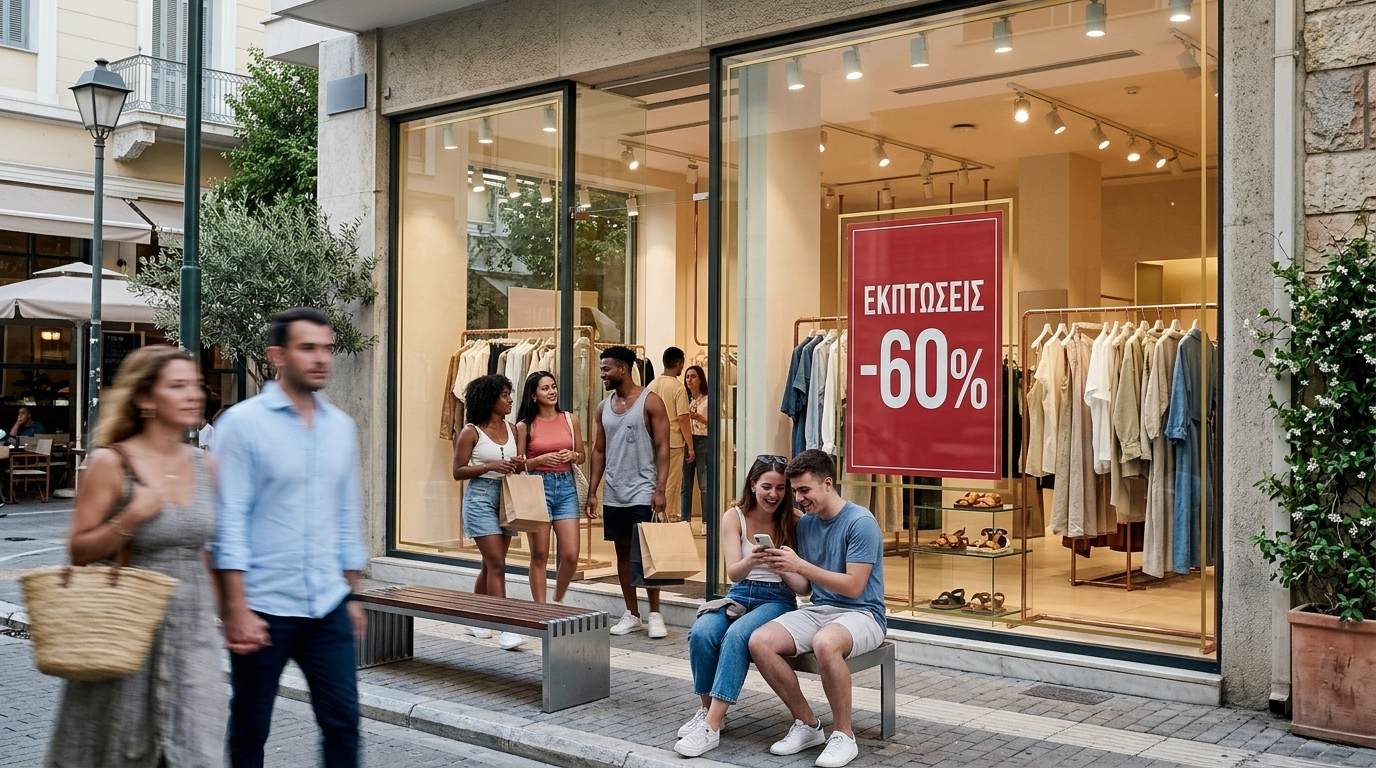
The curtain is set to rise on the 2026 summer sales in an economic environment defined by a fragile balance between stabilizing inflation and the urgent need for household financial relief. Starting Monday, July 13, shop windows across Greece will display long-awaited discount percentages, with the period concluding on the final day of August. However, this year's sales period is more than just a retail tradition; it serves as a critical test for the resilience of domestic consumption and the effectiveness of new digital price monitoring tools.
The Schedule and Sunday Trading
Under the current legislative framework, the sales will last for seven weeks. A key focal point for both consumers and retailers is Sunday, July 19. This is the first Sunday of the discount period, during which shops have the option—though not the obligation—to remain open. This specific day traditionally acts as a market barometer, allowing employees and tourists in high-traffic areas to shop with greater leisure. Trade associations typically suggest operating hours from 11:00 to 18:00 or 20:00 for major department stores, although the participation of small and medium-sized enterprises (SMEs) remains a point of debate due to rising operational costs.
Stricter Controls and the '30-Day Lowest Price' Rule
2026 finds the Greek market governed by stringent European directives aimed at eradicating deceptive discounts. Consumers must be particularly vigilant regarding price labeling. Every discounted product must display the old price (crossed out) and the new, reduced price. A crucial detail is that the "old price" is defined as the lowest price applied by the retailer during the 30 days prior to the start of the sale. This measure is designed to prevent artificial price inflation just days before July 13, ensuring that discounts are genuine and not merely optical illusions.
- Verify whether the discount applies to all products or specific categories.
- Always demand a receipt, as it is essential for exchanges or returns of defective items.
- Use price comparison platforms to ensure the offer is truly competitive.
- Focus on quality and durability rather than just the lowest sticker price.
The Impact of Technology and E-commerce
The digital transition has fundamentally altered the mechanics of sales. In 2026, the use of Artificial Intelligence by major retail chains allows for dynamic pricing, while consumers now have access to apps that track a product's price history in real-time. Online shopping is expected to capture a significant share of turnover, with express delivery becoming the new competitive frontier. Nevertheless, the physical presence in stores remains robust, especially in the apparel and footwear sectors, where the tactile experience is irreplaceable. Retailers are now challenged to provide a "phygital" experience, merging online convenience with personalized in-store service.
"Sales are no longer just a period for liquidating stock; they are a strategic battle for customer loyalty in an era where information is instantly accessible via smartphone."
Economic Context and Purchasing Power
Despite optimism regarding tourism, which is expected to boost revenues in islands and urban centers, the purchasing power of Greek citizens remains under pressure. Energy costs and food prices continue to consume a large portion of the family budget. Consequently, this year's sales are expected to be more "targeted." Consumers are moving away from impulsive buying, instead investing in essential items such as high-energy-class home appliances or durable clothing. The market hopes that turnover will exceed 2025 levels, supported primarily by the influx of foreign visitors and the pent-up demand of residents for equipment upgrades after a long period of restraint.