

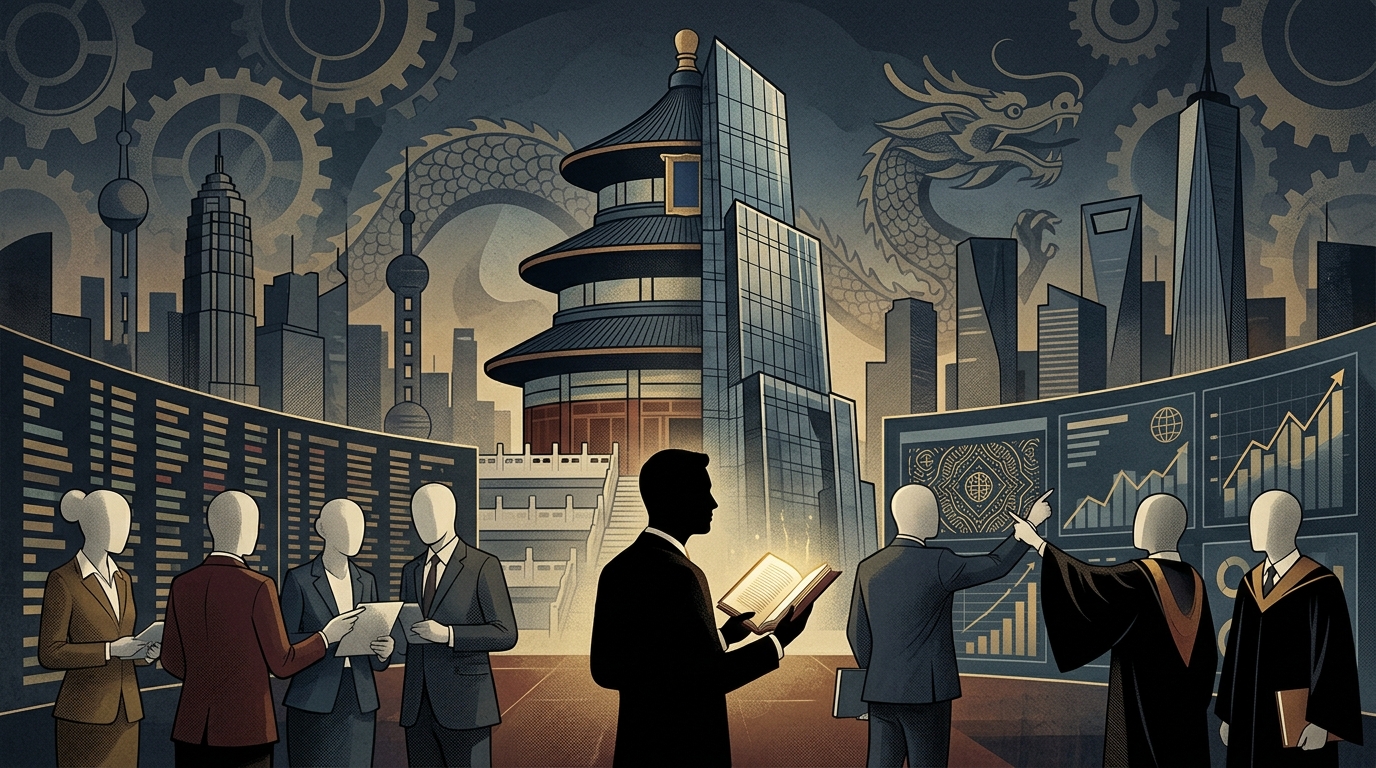
In the heart of Beijing, within the historic campus of Tsinghua University, one of the most ambitious educational and geopolitical experiments of the 21st century is unfolding. The Schwarzman Scholars program, the brainchild of Blackstone founder and CEO Stephen A. Schwarzman, is far more than a Master’s degree in Global Affairs. It is a strategic effort to reshape how the future leadership of the West—and the world—engages with the rising superpower of the East. With an acceptance rate that frequently dips below 3%, the program has become more selective than Harvard or Yale, attracting the brightest minds from every corner of the globe.
The Geopolitics of Education in a Polarized Era
As we navigate the first half of 2026, the relationship between the United States and China remains the primary friction point on the global stage. In this context, Schwarzman Scholars serves as a vital bridge at a time when many others are being dismantled. Schwarzman, a man who built his empire on understanding risk and opportunity, realized early on that a lack of profound knowledge about China represents the single greatest systemic risk to international stability. The program offers students a one-year, fully-funded immersion experience where they don’t just study China from afar, but live within its machinery.
Scholars are not confined to classrooms. They participate in high-level meetings with Chinese officials, entrepreneurs, and intellectuals, gaining a perspective rarely available to Western analysts. This "elite diplomacy" aims to create a network of individuals who, when they take the reins of governments and multinationals, will possess the ability to communicate across ideological trenches. However, this approach is not without its critics; many wonder if academic freedom can be fully maintained in an environment so closely monitored by the Chinese state.
The Architecture of Selection: Beyond the Grades
What makes someone a "Schwarzman Scholar"? The selection process is grueling and centers on what Schwarzman himself calls "leadership potential." Candidates are not judged solely on academic performance—though it is typically stellar—but on their ability to influence their environment, their adaptability, and their vision for the future. Unlike traditional scholarships, this program seeks personalities capable of navigating complexity and ambiguity.
- Leadership in Practice: The program seeks individuals who have already demonstrated initiative in social, entrepreneurial, or political spheres.
- Cultural Intelligence: The ability to understand different value systems without dismissing them a priori is fundamental.
- Network of Influence: Residency at Schwarzman College is designed to foster interaction 24/7, creating bonds that last a lifetime.
The program’s endowment, exceeding $600 million, comes from a blend of Schwarzman’s personal fortune and donations from global giants such as BP, PepsiCo, and Bank of America. This financial backing allows the program to offer facilities that rival the world's top universities, creating a "bubble" of excellence within Beijing.
The Challenge of Independence and the Road Ahead
As the Schwarzman Scholars program continues to mature, it faces the constant challenge of balance. In an era where China is tightening domestic controls and the US is increasing restrictions on technological exchange, the scholars find themselves at the eye of a geopolitical storm. The program’s ability to maintain a space for honest dialogue is the key to its success. If it can remain a place where future leaders can disagree productively, then Schwarzman’s investment will yield returns far beyond financial metrics. However, if it devolves into a mere tool for public diplomacy, it risks losing its prestige and its soul.
"Understanding China is no longer an option for tomorrow’s leaders; it is a necessity for survival," Schwarzman often remarks in his addresses.
In conclusion, Schwarzman Scholars is not merely an academic achievement. It is a statement about where the world’s center of gravity is shifting. For the few who manage to pass through the gates of Tsinghua, this year is not just a line on a resume, but a transformation of how they perceive global power and human cooperation.





