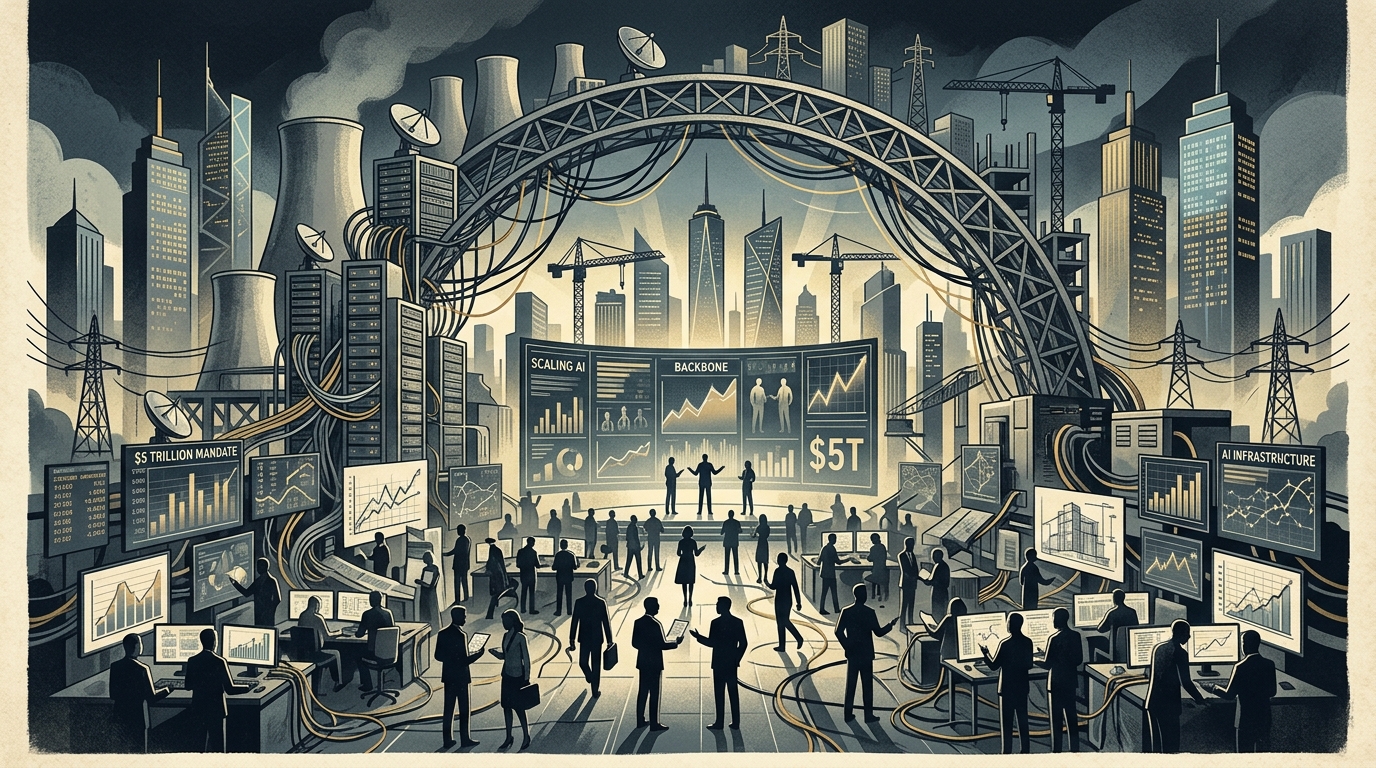
In an era where the banking industry is desperately seeking ways to boost profitability amidst geopolitical instability, Santander is making a move that could be described as the "Grand Strategy" of digital transformation. The Spanish banking giant has announced the full integration of Artificial Intelligence (AI) tools across its entire workforce, aiming to extract business value worth $1.15 billion (approximately €1 billion) in the coming years.
This strategy is not merely about adopting a few algorithms at the headquarters; it is about fully equipping every employee—from branch tellers to risk analysts—with Generative AI tools. It is an experiment of scale expected to reshape not only Santander’s operations but also the standards of the entire European and global financial sector.
The $1.15 Billion Strategy: Where Will the Value Be Found?
The $1.15 billion target is not a random figure. Santander’s management has identified three key pillars from which this value will derive: increased productivity, improved customer experience, and more efficient risk management. According to internal estimates, the use of AI can reduce the time employees spend on administrative tasks by 20% to 30%, allowing them to focus on high-value advisory services.
- Back-office Automation: Loan processing and document verification, which traditionally took days, are now completed in minutes.
- Hyper-Personalized Banking: AI analyzes customer data in real-time, suggesting products that precisely match their needs, thereby increasing sales conversion rates.
- Fraud Prevention: Machine learning algorithms can identify suspicious transactions with a level of accuracy that far surpasses traditional methods.
Santander has been systematically investing in cloud infrastructure and data, having already migrated most of its operations to platforms like Microsoft Azure. This allows the bank to deploy AI solutions at a speed that traditional competitors struggle to match.
The Human Element and the Reskilling Challenge
The most ambitious part of the plan is the training of 200,000 employees. The bank is not seeking to replace humans with machines—at least that is the official narrative—but to create "augmented employees." This requires a massive cultural shift. Santander has launched "AI Literacy" programs, teaching staff how to use prompts, how to verify the reliability of AI outputs, and how to integrate these tools into their daily workflows.
"Artificial Intelligence will not replace the banker, but the banker who uses AI will replace the one who does not," industry executives say, echoing Santander's philosophy.
However, challenges remain. Anxiety over job security is pervasive. If a task that required five people can now be done by three with the help of AI, the pressure for workforce reduction will inevitably become intense, despite assurances regarding retraining and upskilling.
Regulatory Framework and Ethics: The European Landscape
As a European bank, Santander operates under the strict scrutiny of the European Central Bank (ECB) and the regulations of the EU AI Act. The use of AI in financial services is considered "high risk" in many cases, especially regarding creditworthiness assessment. The bank must ensure its algorithms are transparent, unbiased, and fully explainable to regulatory authorities.
Santander’s strategy represents a milestone. If successful, it will prove that traditional banking giants can transform into technological powerhouses, fending off the threat of Neobanks and Big Tech. If it fails, it will serve as a costly lesson on the limits of automation in a sector that ultimately relies on human trust.