

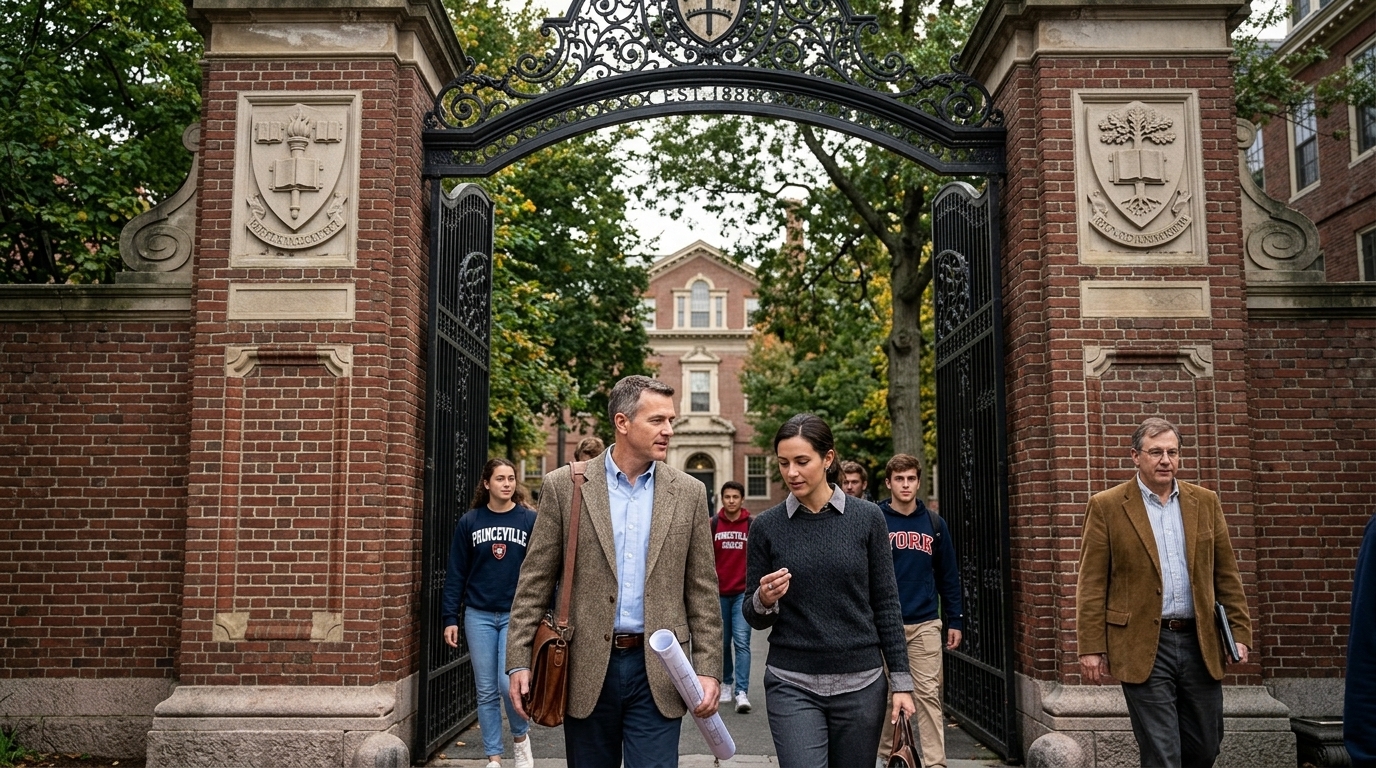
For a brief, almost utopian moment in the wake of the pandemic, the hiring world seemed on the verge of a structural revolution. Tech giants and management consultancies alike broadcast a new mantra: "the degree doesn't matter anymore." Skills-based hiring was the future, promising a meritocratic landscape where what you could actually do outweighed where you spent four years of your youth. However, as we cross into 2026, the pendulum is swinging back with a vengeance. Recruiters are retreating from the "talent is everywhere" philosophy, doubling down on traditional signals of prestige: elite degrees and high GPAs.
The Economics of Risk Mitigation
The primary driver behind this reversal is economic pragmatism mixed with a healthy dose of risk aversion. In an era of high interest rates and a focus on operational efficiency, human resources departments are being tasked with doing more with less. Skills-based hiring, while conceptually fair, is notoriously expensive and difficult to scale. It requires bespoke testing environments, lengthy technical interviews, and a robust framework to evaluate non-standard experience. When a single job posting attracts 5,000 applications—many generated or enhanced by AI—the cost of evaluating each candidate on their merits becomes prohibitive.
Instead, recruiters are returning to the "pedigree proxy." A degree from an Ivy League institution or a top-tier global university serves as a pre-vetted stamp of approval. It signals not just intelligence, but the ability to navigate complex bureaucracies and a certain level of social capital. In a buyer's market for labor, companies feel they no longer need to look for diamonds in the rough; they can simply pick from the polished gems handed to them by elite academic institutions.
The DEI Backlash and the Death of the Non-Traditional Path
The retreat from skills-based hiring is also inextricably linked to the broader corporate cooling toward Diversity, Equity, and Inclusion (DEI) initiatives. Many of the programs that removed degree requirements were explicitly designed to broaden the talent pipeline and include candidates from marginalized backgrounds who might not have had access to elite schooling. As political pressure mounts and corporate budgets tighten, these initiatives are often the first to be scaled back or quietly shelved.
This shift has profound implications for social mobility. By reinforcing the degree as a primary gatekeeper, the corporate world is effectively re-establishing a class-based hierarchy. Those who couldn't afford a prestigious education or who took non-traditional paths—such as coding bootcamps, community colleges, or self-teaching—now find themselves hitting a "paper ceiling." The promise of a skills-based meritocracy is being replaced by a credentialist oligarchy where the brand of your university determines your career ceiling before you even walk through the door.
AI as a Tool for Exclusion
Ironically, the rise of Artificial Intelligence in recruitment has accelerated this return to tradition rather than disrupting it. Modern Applicant Tracking Systems (ATS) are increasingly used to filter out noise. When recruiters set the parameters for these algorithms, they often revert to the easiest metrics to quantify: GPA and school ranking. An AI can discard 90% of a candidate pool in milliseconds based on these criteria, ensuring that a human recruiter only ever sees the "safe" bets.
"We are seeing a flight to quality, but 'quality' is being defined by a 20th-century playbook," notes one senior talent acquisition executive. "It's about efficiency, not necessarily finding the best person for the job."
This trend creates a feedback loop that pressures students to prioritize prestige over actual learning. If the market only values the name on the diploma, the incentive to explore diverse subjects or gain practical experience outside of the academic track diminishes. The result is a workforce that is academically high-achieving but potentially less adaptable and creative than one built on diverse experiences and skills.
Conclusion: The Cost of the Safe Bet
The return to degrees and GPAs may save companies money in the short term by streamlining the hiring process, but the long-term cost remains to be seen. By ignoring the vast pool of talent that exists outside the elite university bubble, firms risk creating an echo chamber of similar backgrounds and perspectives. In a global economy that demands innovation and agility, the most "efficient" hiring strategy might ultimately prove to be the most short-sighted. For now, however, the message to job seekers is clear: the pedigree is back, and the gates are closing.





