In an economy still striving to heal the wounds of a decade-long crisis and adapt to the challenges of inflation, access to finance remains the "holy grail" for small and medium-sized entrepreneurship. While large corporations enjoy access to capital markets and the Recovery Fund, the "backbone" of the Greek economy—micro-enterprises and the self-employed—often find the doors of systemic banks firmly shut. This is where the institution of microcredits comes in, a mechanism that is not just about numbers, but primarily about social inclusion and economic democracy.
The Regulatory Framework: From Theory to Practice
Law 4701/2020 marked a turning point for the Greek market, establishing the operating framework for microfinance institutions under the supervision of the Bank of Greece. The central idea is simple yet radical for Greek standards: providing loans of up to 25,000 euros without the need for physical collateral (mortgages or liens). This model targets exactly those who possess a viable idea but lack the asset base required by the traditional banking system.
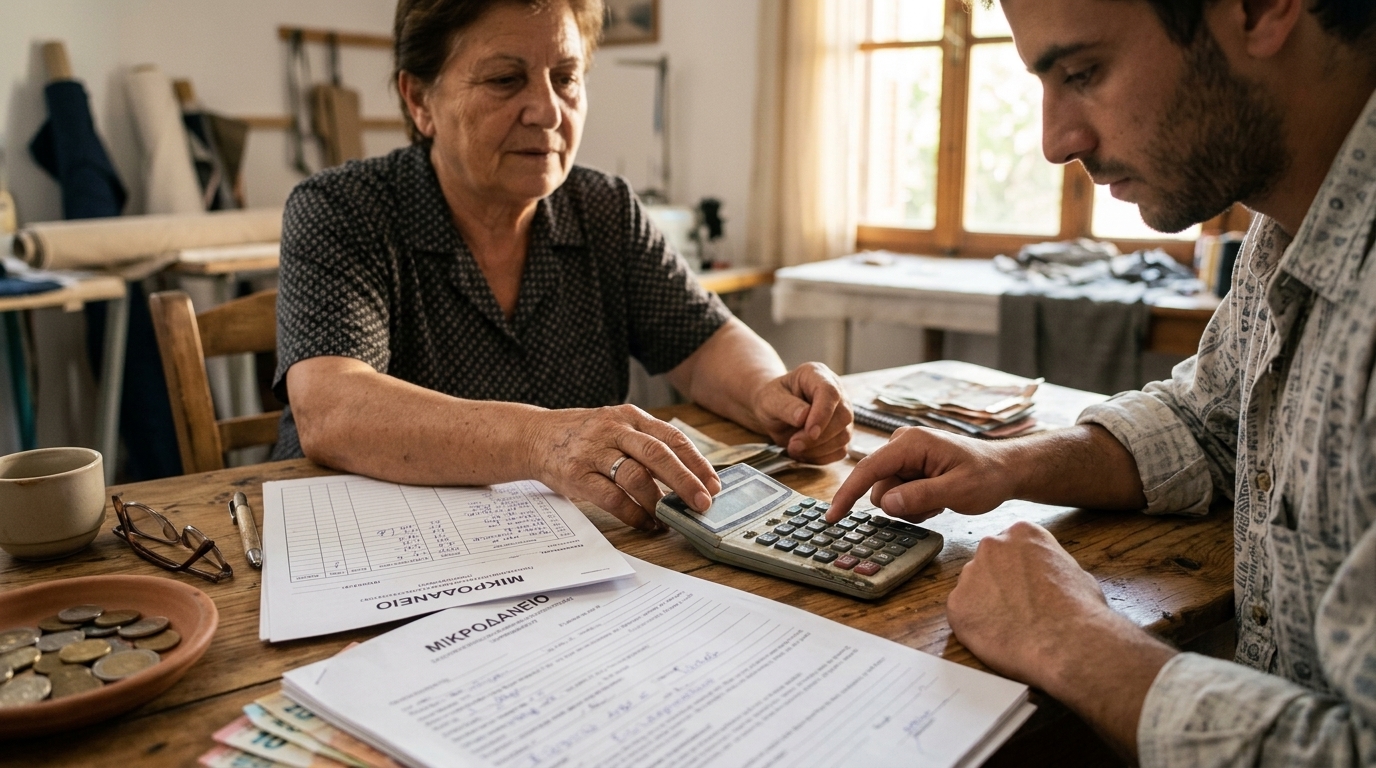
Microfinance institutions do not function like classic banks. Their approach is human-centric. Beyond working capital or investment expenditure, they offer consulting services (mentoring) and guidance. This is crucial, as many of the businesses applying for these loans are managed by individuals with limited experience in financial management. The "accompaniment" of the borrower reduces the risk of default and increases the business's chances of success.
Who Benefits: The Geography of Microfinance
The beneficiaries of microcredits cover a wide spectrum of society. First, micro-enterprises and the self-employed who need a small amount to upgrade their equipment or cover current needs. Second, young entrepreneurs and women who often face structural barriers in finding capital. Third, individuals from vulnerable social groups, such as the long-term unemployed, who see self-employment as a way out of inactivity.
- Startups: For a new team starting in a garage or a co-working space, 20,000 euros can be the difference between survival and closure.
- Agricultural Production: Small producers who want to invest in organic farming or new packaging methods.
- Social Enterprises: Entities aiming for social benefit that are often ignored by traditional investors.
"Microcredit is not charity. It is a tool that unleashes human potential and turns need into creation," industry executives state, highlighting the importance of trust.
The Role of European Resources and the Future
The momentum of microcredits in Greece is significantly bolstered by European programs, such as InvestEU and the European Investment Fund (EIF). These organizations provide guarantees that allow local institutions to lend at favorable, often subsidized, interest rates, reducing costs for the end-user. In a period of high interest rates from the ECB, this support is invaluable.
However, challenges remain. Bureaucracy continues to be a hurdle, while public awareness of these tools is still limited. Additionally, the digital divide may exclude some potential beneficiaries. The bet for the coming years is the digitalization of application processes and the expansion of the institutional network across the country, so that access to capital is not a privilege of major urban centers.
Conclusion: A New Economic Culture
Microcredits in Greece are not just a financial product; they are a statement of faith in the potential of small-scale endeavors. In a world that often focuses on "megaprojects," supporting the local merchant, the craftsman, and the young scientist creates a more resilient economic ecosystem. If Greece manages to fully integrate microfinance into its economic strategy, it will have taken a major step toward growth that includes everyone.