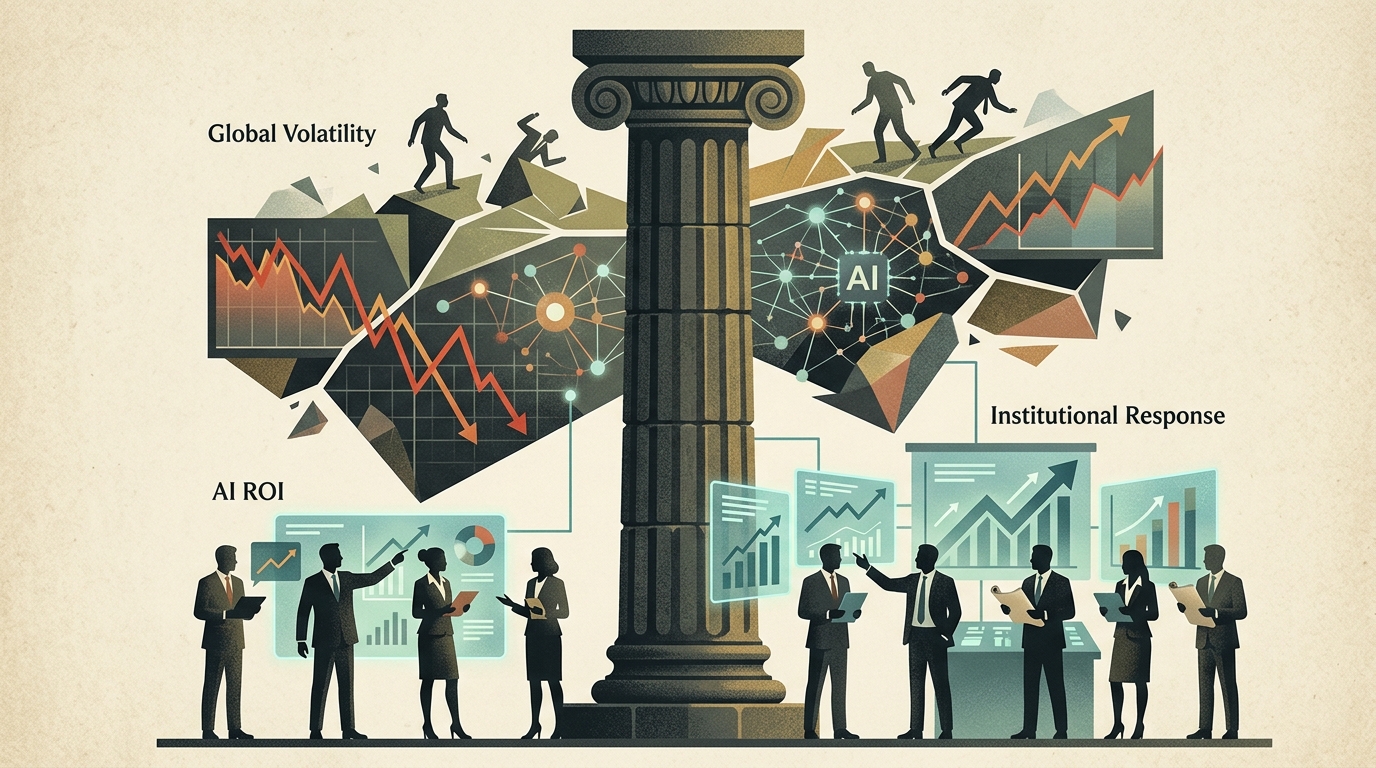
For decades, Ireland has served as the gold standard of European economic resurgence, transforming from an agrarian society into a global technology powerhouse. However, the country’s profound exposure to US tech multinationals—once hailed as its greatest strategic asset—is now manifesting as a significant systemic vulnerability. As of July 2026, data reveals a troubling contraction in high-tech employment, directly linked to the aggressive deployment of Artificial Intelligence (AI) by Silicon Valley giants headquartered in Dublin.
The Silicon Valley Dependency and the Domino Effect
Ireland’s economic architecture is uniquely intertwined with the fortunes of corporate America. With entities like Google, Meta, Apple, and Microsoft maintaining their European headquarters in Dublin’s 'Silicon Docks,' the nation has reaped immense rewards in terms of high-paying jobs and corporate tax receipts. Yet, the strategic pivot of these corporations toward 'AI-driven efficiency' is sending shockwaves through the local economy. Roles that were traditionally filled by Irish graduates and European expatriates—ranging from technical support and content moderation to mid-level software engineering—are being automated at a pace that few predicted.
Analysts argue that Ireland is more exposed than any other European peer due to its economic concentration. While nations like Germany or France possess a diversified industrial base, over 15% of Ireland’s GDP is directly or indirectly tied to the information and communications technology (ICT) sector. When a board of directors in Menlo Park or Mountain View decides to replace entire customer success departments with autonomous AI agents, the impact on Dublin’s labor market is immediate, profound, and disproportionate.
The Erosion of White-Collar High-Tech Roles
The current disruption is fundamentally different from previous cyclical downturns. This is not a temporary dip in demand but a structural shift in the production of digital services. Major tech firms are not merely downsizing; they are re-architecting their entire operations around Large Language Models (LLMs) and automated workflows.
- Software Development: The widespread adoption of AI copilots has drastically increased senior developer productivity, leading to a sharp decline in the hiring of junior and entry-level engineers.
- Content Moderation and Operations: AI-driven safety systems have replaced thousands of human moderators who previously monitored global platforms from Irish offices.
- Legal and Compliance: The processing of complex regulatory filings, a cornerstone of multinational operations in the EU, is now being handled by specialized AI systems with minimal human oversight.
This erosion of white-collar roles doesn't just affect the unemployed; it creates a secondary impact on the local economy, cooling the once-overheated Dublin property market and reducing discretionary spending in the services sector.
Fiscal Risks and the Need for a New Economic Model
Beyond the immediate concern of unemployment, the Irish government faces a long-term fiscal challenge: the potential erosion of its tax base. Ireland relies heavily on corporate tax revenue from a handful of US multinationals to fund its public services and infrastructure projects. If these companies significantly reduce their physical footprint and headcount, the political justification for maintaining favorable tax treatments may weaken, even as the actual revenue begins to plateau or decline.
"Ireland must recognize that the model of being a 'hospitable harbor' for US corporate interests is reaching its point of diminishing returns. We need a domestic AI strategy that focuses on value creation rather than just value hosting," says a leading Dublin-based economist.
The challenge for the coming years lies in workforce reskilling. However, the velocity of AI advancement is currently outstripping the state’s ability to implement effective retraining programs. Ireland finds itself in a paradoxical position: it is the home to the very companies developing the technology that is making its own workforce redundant.
Conclusion: A Lesson for the Continent
The Irish experience serves as a stark warning for the rest of the European Union. Reliance on exogenous technological forces provides rapid growth but lacks resilience during periods of radical technological shifts. Whether Dublin can successfully transition from being Silicon Valley's 'back office' to becoming a sovereign player in the AI economy will determine its prosperity for the next generation. The 'Celtic Tiger' must learn to hunt in a digital landscape where the rules are being rewritten by algorithms, not just by tax treaties.