

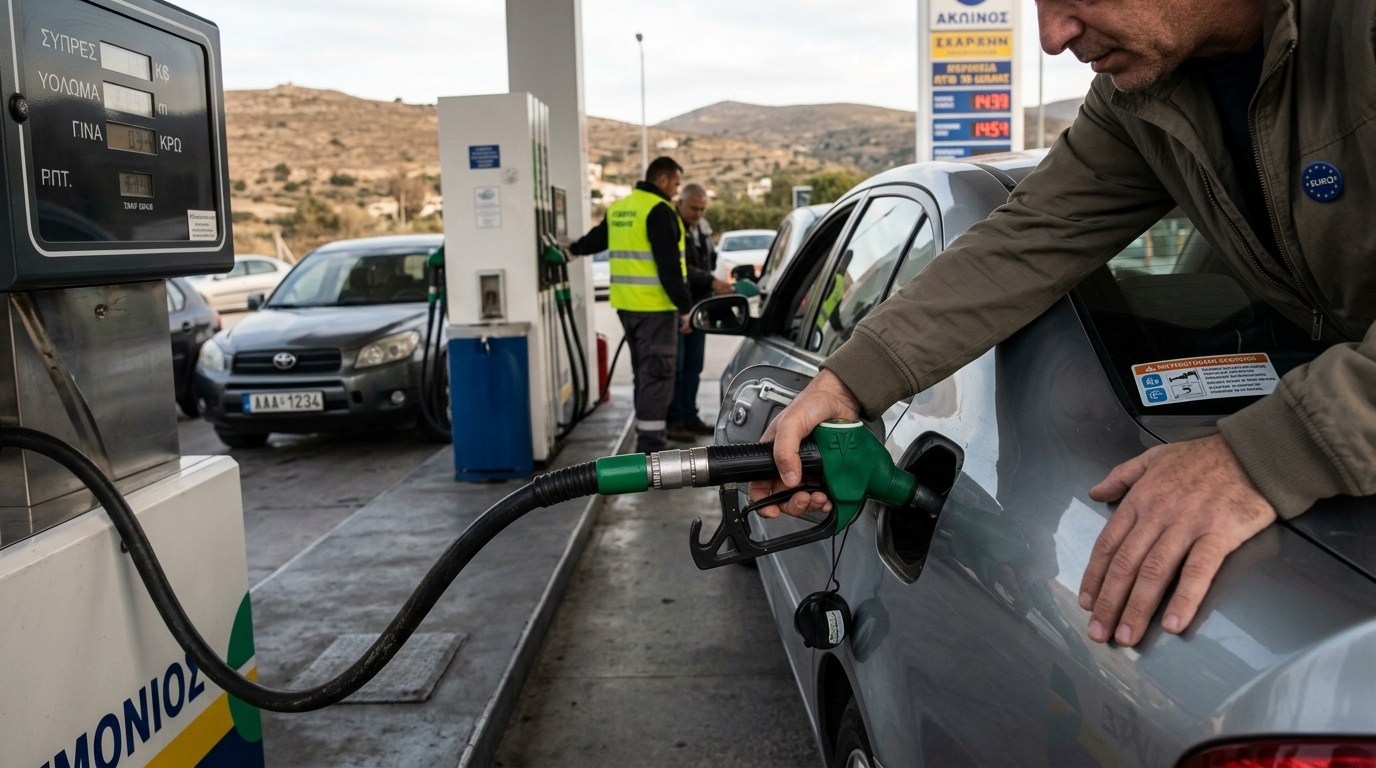
At a time when the global economy is still struggling to find its footing after the successive crises of the last five years, Fitch Ratings is issuing a clear warning to European capitals. The central concern revolves around the use of "horizontal" energy support measures—interventions that cover the entire population regardless of income. According to the agency’s analysis, this practice not only places a disproportionate burden on public finances but also undermines efforts toward energy conservation.
However, amidst this landscape of fiscal anxiety, Greece emerges as a notable exception. Fitch highlights that the Greek government was the only one in the Eurozone to move decisively toward "targeting" its measures, linking financial aid to actual need and consumption levels. This development is not merely a technical detail but a strategic choice that bolsters the country's credibility in international markets, especially as borrowing costs remain sensitive to the geopolitical shifts of 2026.
The Trap of Horizontal Measures and Fiscal Discipline
Why is Fitch so critical of horizontal measures? The answer lies in the structure of public deficits. When a government subsidizes electricity or fuel prices for everyone—from vulnerable households to large corporations and owners of luxury estates—the cost skyrockets into billions of euros. These funds, according to Fitch, could have been directed toward green transition investments or public debt reduction.
Furthermore, horizontal measures act as a disincentive for energy efficiency. When prices are kept artificially low for all, there is little incentive to reduce consumption or invest in renewable energy sources. Europe, aiming for full decarbonization, thus finds itself in an internal contradiction: on one hand, it calls for emission reductions, and on the other, it subsidizes the consumption of energy often derived from fossil fuels.
The Greek Model: A Strategy of Targeting
Fitch acknowledges that Greece, despite its heavy debt history, demonstrated unprecedented maturity in managing energy inflation. Instead of blind subsidies, Athens adopted tiered systems and income-based criteria. This allowed the state to protect the truly vulnerable while keeping the fiscal deficit at manageable levels.
- Income-Based Criteria: Support was funneled to those most affected by inflation.
- Efficiency Incentives: Subsidies were often linked to consumption reductions compared to the previous year.
- Fiscal Space: Resource savings allowed for a faster reduction in the debt-to-GDP ratio, a move welcomed by markets.
This approach served as a "shield" for the Greek economy, allowing it to maintain the investment grade status it fought so hard to regain. Unlike other European powers seeing their deficits widen dangerously, Greece appears to have found the golden ratio between social protection and economic stability.
European Comparison and the Road Ahead
Fitch's report does not limit its scope to Greece. It criticizes countries like Germany and France, which, despite their economic might, resorted to massive interventions that distorted the market. Fitch warns that if these nations do not adjust their policies, they will face rating pressures in the near future. The ongoing debate over the new EU Stability and Growth Pact makes these observations even more pertinent, as deficit rules become stringent once again.
"Fiscal responsibility is not a luxury, but a prerequisite for survival in an unstable global environment. Greece has shown that it is possible to protect society without mortgaging the future," a senior analyst from the agency noted.
In conclusion, Fitch's warning serves as a reminder that the era of "easy money" is over. While the energy crisis may have eased compared to 2022, the structural weaknesses of the European architecture remain. The Greek experience, as recorded by the international agency, offers a valuable lesson: targeting is not just a matter of economic efficiency, but of political foresight.





