The age of innocence—or rather, subsidized growth—in the field of Artificial Intelligence is drawing to a close. For nearly three years, users worldwide have grown accustomed to "free" or extremely cheap access to powerful large language models. However, the emergence of AI Agents is radically altering the equation. As an analysis by The Bamboo Works highlights, focusing on Chinese tech giants, the transition from simple Chat to autonomous Action entails an exponential increase in operational costs that companies can no longer afford to absorb.
The Leap from Chatbot to Agent
Until now, interaction with AI has been largely linear: a user provides a prompt, and the model returns a response. AI Agents, however, operate differently. They are designed to execute complex tasks—from travel planning and supply chain management to coding and debugging—without constant human intervention. This requires the model to "think" in iterative loops, perform internal checks, and call external APIs.
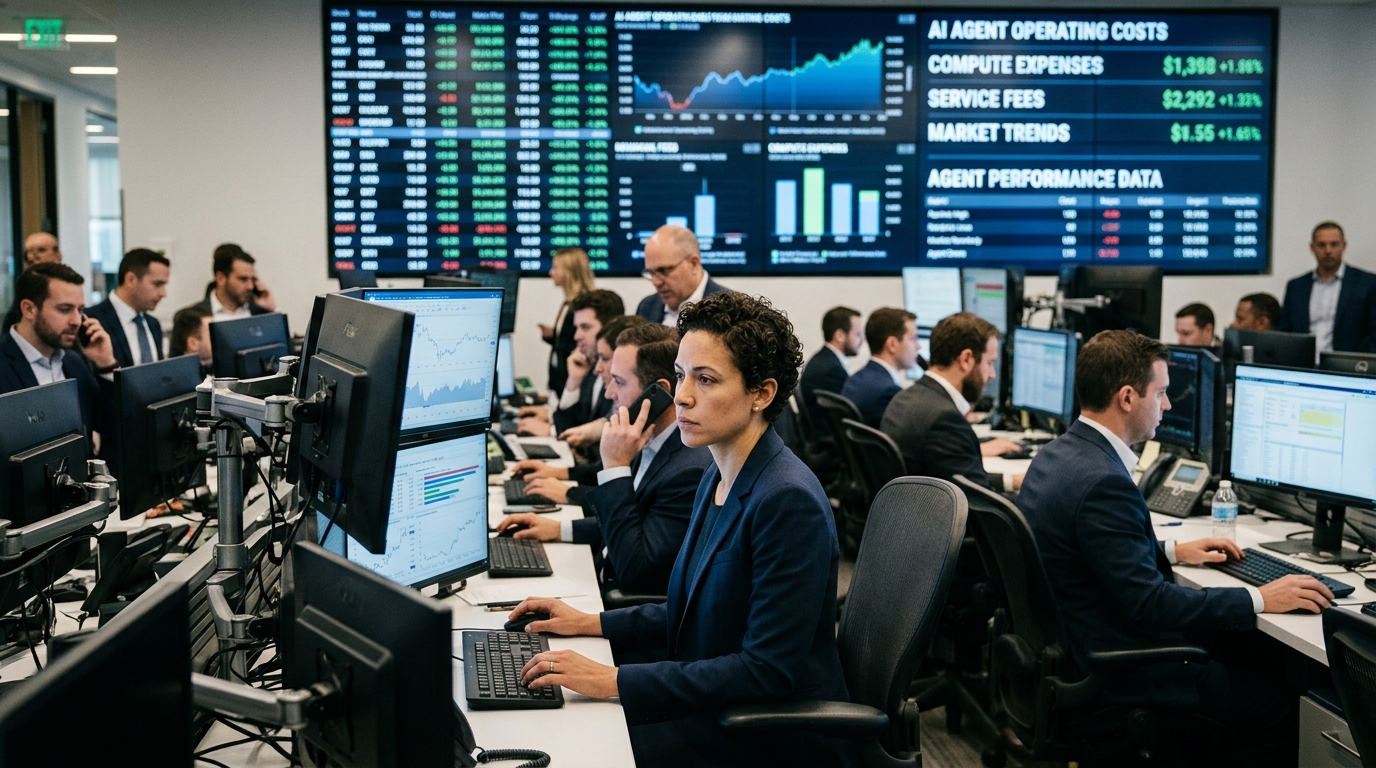
Each of these reasoning cycles consumes "tokens," which translate into processing power on GPU units. According to analyst estimates, executing a task via an agent can cost anywhere from 10 to 100 times more than a simple query to a chatbot. In China, companies like Baidu, Alibaba, and Tencent, which engaged in a grueling price war in 2024 and 2025 by slashing API prices to near zero, are now realizing that this model is unsustainable.
The Chinese Landscape and the Global Message
The case of China is particularly instructive. After a period where model access was offered almost for free to capture market share, the market is moving toward "value-based pricing." Chinese AI firms, also facing US restrictions on advanced Nvidia chip imports, must be extremely careful with resource management. It is no longer about who has the largest model, but who can provide an agent that generates real economic value for businesses, allowing for premium service charging.
- Baidu has already begun integrating agentic features into the Ernie ecosystem, focusing on B2B solutions.
- Alibaba Cloud is pivoting its Model Studio platform toward workflow automation, where billing is based on outcomes.
- Startups like Zhipu AI are exploring subscription models that reflect the actual cost of inference.
The End of VC Subsidies
For years, Silicon Valley and Beijing used venture capital to subsidize the cost of AI usage, hoping for future monopolization. But as interest rates remain relatively high and the pressure for profitability mounts, the "burn rate" era is ending. Investors now demand a clear path to revenue. AI is transforming from an impressive toy into a critical infrastructure, similar to electricity or cloud computing, where the user pays exactly for what they consume.
"Intelligence is the new oil, but unlike oil, the cost of extraction (compute) increases the more complex the refining (reasoning) becomes," a market analyst noted.
Societal and Business Implications
This shift will create a new digital divide. Large enterprises that can afford the cost of specialized agents will gain a massive productivity advantage, while SMEs and individual users may be restricted to "crippled" free versions or older generation models. Tech companies' strategies will shift from mass user acquisition to retaining high-value customers who can justify the cost of $0.50 or $1.00 per successful agent action.
In conclusion, the transition to AI Agents marks the industry's coming of age. The free lunch is over, and the market is bracing for a new reality where AI is priced not as software, but as labor.