

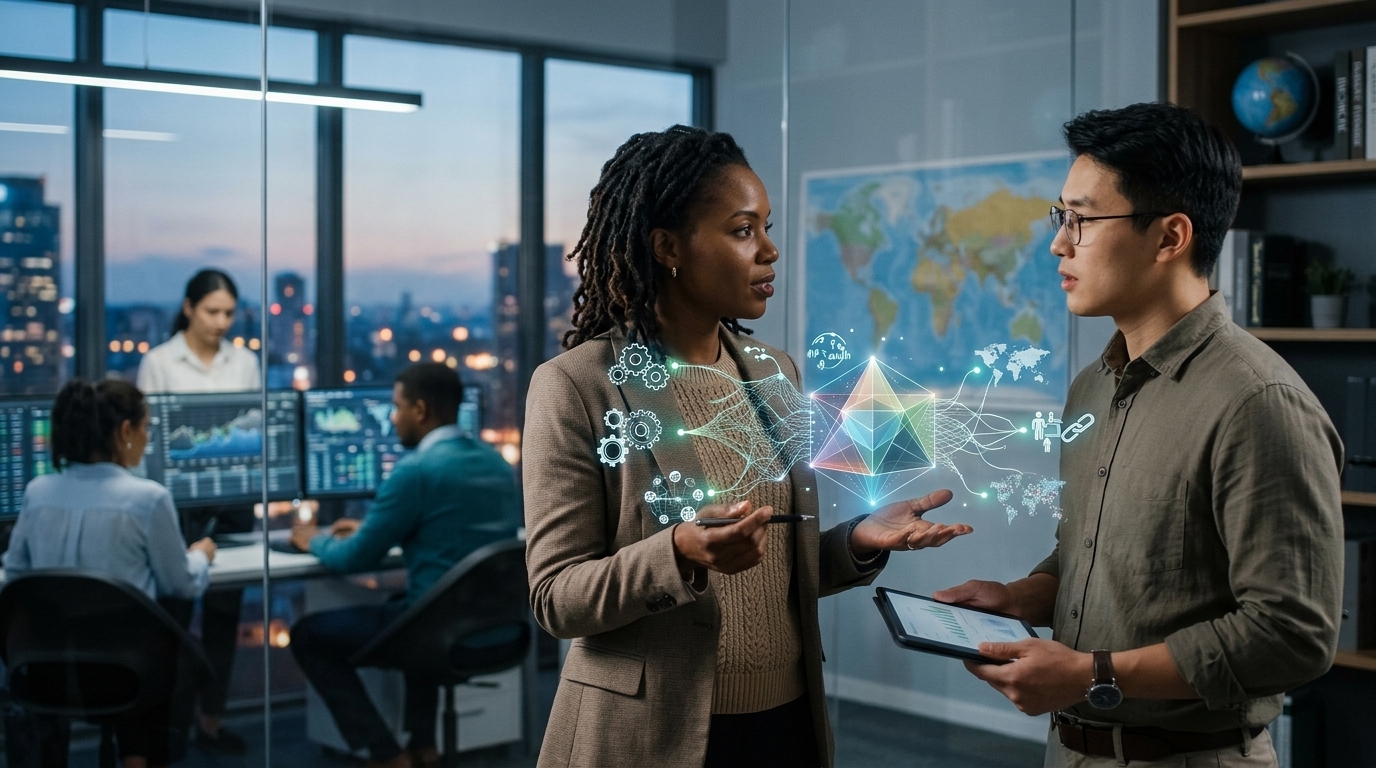
The era of the economist as an analyst confined to an office with endless Excel spreadsheets and static forecasting models is officially over. As we navigate through 2026, the advent of Artificial Intelligence (AI) has not merely changed the tools of the trade; it has transformed the very essence of economic science. The modern labor market, as highlighted by analysts and academics alike, is now seeking a new breed of professionals: hybrid economists who can navigate with equal ease between Keynesian theories and machine learning algorithms.
The Shift from Description to Real-Time Prediction
Traditionally, economic analysis relied on historical data that often suffered from significant time lags. Today, AI enables real-time data analysis, a process known as nowcasting. The economists of tomorrow utilize Generative AI and Predictive Analytics to process vast volumes of unstructured data—ranging from social media posts and satellite imagery of cargo ships to digital wallet transactions. This capability allows for faster identification of trends and early warnings for economic crises or emerging opportunities.
However, technology alone is insufficient. The challenge for the modern economist lies in interpreting the results of these models. The "black box" phenomenon, where an algorithm provides a prediction without explaining the underlying logic, represents a significant risk. This is where human value becomes indispensable: the ability to link algorithmic output with geopolitical context, social psychology, and the institutional nuances of each nation.
The New Skillset: Moving Beyond Mathematics
To survive and thrive in this new era, an Economics degree must be augmented by a suite of technical and soft skills. Programming languages like Python and R are no longer considered optional extras but fundamental requirements. Understanding the architecture of Large Language Models (LLMs) and the ability to manage Big Data are essential for creating reliable economic scenarios.
- Data Analysis & Machine Learning: The ability to build and train models that learn from data patterns.
- Strategic Decision-Making: Translating raw data into actionable business and policy strategies.
- Technological Ethics: Ensuring that algorithms do not perpetuate social or economic biases.
- Communication: The ability to explain complex technical findings to non-expert decision-makers.
In regions like Greece and Southern Europe, this need is even more pressing. As these economies strive to transform their production models, both the private and public sectors are searching for executives who can guide investments with technological foresight. The bridge between academic knowledge and market requirements remains a challenge that must be addressed through lifelong learning and the modernization of university curricula.
Ethics and Human Judgment: The Final Line of Defense
Despite the power of AI, economists remain the guardians of ethics and strategy. Algorithms often fail to predict "black swans"—unpredictable events with massive consequences—because they rely on historical patterns. A critically-thinking economist can challenge the data, recognize the ethical implications of an automated decision (e.g., in loan approvals or dynamic pricing), and propose solutions that balance profitability with social welfare.
"AI will not replace economists, but economists who use AI will replace those who do not," market leaders frequently remark.
In conclusion, the economist of 2026 is a "decision architect." They are no longer just the person of numbers, but the individual who understands how technology influences human behavior and market dynamics. Success in this new environment requires constant adaptability, curiosity, and, above all, maintaining a human-centric approach in a world dominated by data.





