In an era where the global community is still debating the theoretical implications of Artificial Intelligence (AI) on the labor market, China has decided to act with the characteristic, almost surgical, decisiveness of its one-party system. The country's Ministry of Education has announced a sweeping overhaul of the academic map, which envisages the abolition or suspension of approximately 12,000 university training programs by 2026. The goal is clear: to align human productivity with the needs of the "New Quality Productive Forces," a term introduced by President Xi Jinping to describe an economy based on high technology and innovation.
Anatomy of an Educational Revolution
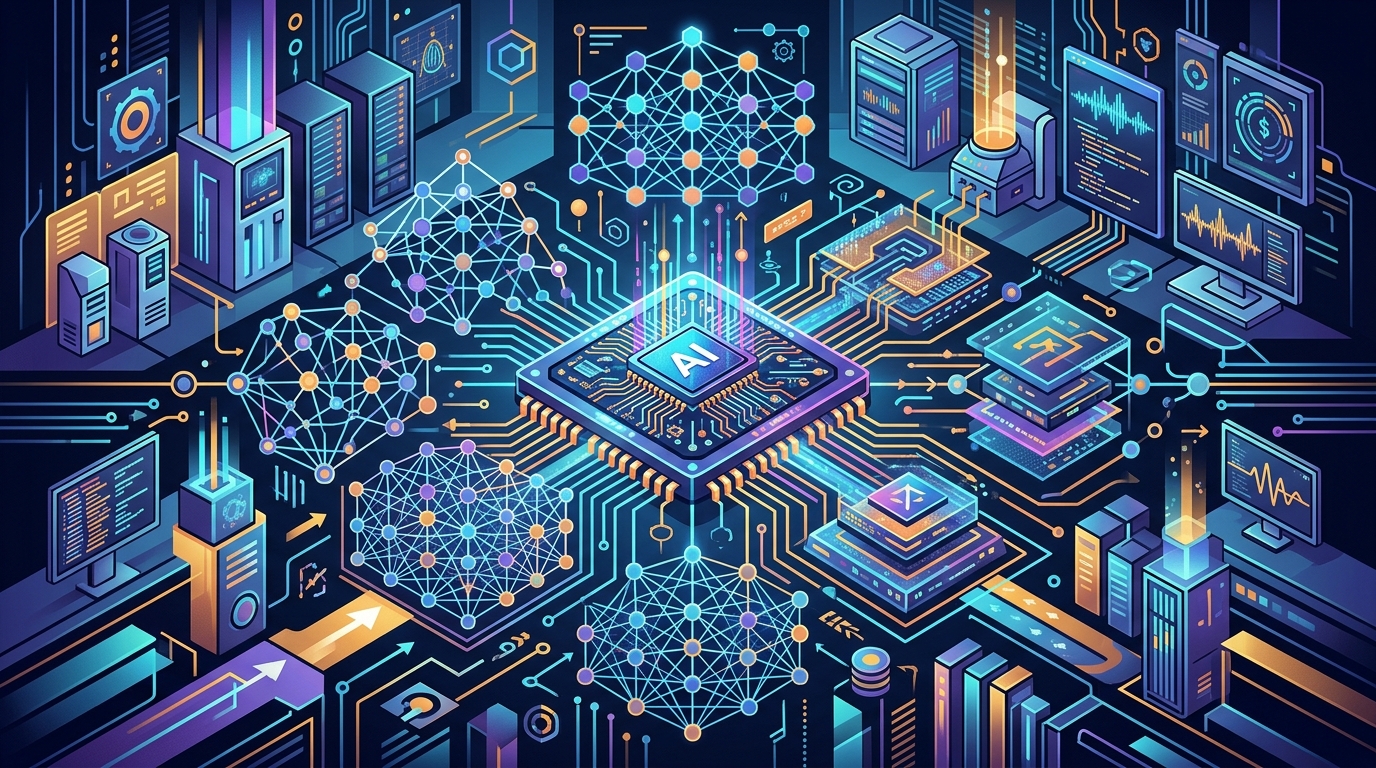
This decision is not a bolt from the blue, but the culmination of a plan that has been gradually implemented in recent years. The programs being targeted are primarily those considered to have "low employability" or whose skills can now be fully automated by Generative AI systems. Traditional majors in business administration, low-level accounting, certain humanities, and classical arts are making way for programs focused on semiconductors, quantum computing, robotics, and, of course, AI itself.
According to analysts in Beijing, China faces a sharp paradox: while youth unemployment remains at alarming levels (exceeding 15% in some metrics), high-tech industries suffer from staggering shortages of skilled personnel. The "abolition" of 12,000 programs is the state's response to this skills gap. This is not just about cuts, but a forceful transfer of resources to sectors that the Chinese Communist Party considers strategically important for global competition with the West.
AI as Both Catalyst and Competitor
The rise of models like GPT-4 and their Chinese alternatives, such as Baidu's Ernie Bot, has changed the landscape. Occupations once considered "safe" for the middle class—translators, copywriters, basic programmers, and data analysts—are seeing their demand evaporate. The Chinese government seems to have accepted that AI is not just a tool, but a new type of worker that requires humans to move higher up the value chain.
- Automation of Cognitive Tasks: Phasing out departments that teach repetitive mental work.
- Focus on Hardware: Heavy emphasis on schools supporting domestic chip production.
- Interdisciplinary Education: Combining AI with medicine, agriculture, and heavy industry.
This approach, however, carries risks. Turning universities into factories for producing technocrats could undermine critical thinking and social cohesion. Furthermore, the speed at which programs are being abolished leaves thousands of professors and academics in a state of uncertainty, forcing them into a painful process of retraining.
Social Implications and the Future of Work
This move sends a loud message to the rest of the world: the era of obtaining degrees with no market value is ending. In China, pressure on students is already immense, with the phenomenon of "involution" (nei juan)—an exhausting competition for no real gain—dominating. The abolition of programs may intensify this stress, as options for young people are narrowed down to fields requiring extreme specialization.
"We cannot train our youth for the jobs of yesterday, when the machines of tomorrow are already here," a senior Ministry of Education official stated at a recent forum.
The remaining question is whether other economies, such as those of Europe or the US, will be able to keep up with this pace. While in the West, educational reform is a slow process based on university autonomy, China uses its state power to enforce an immediate adjustment. If the experiment succeeds, China will possess the most "AI-proof" workforce on the planet. If it fails, it risks creating a generation of citizens who are highly skilled but socially alienated.