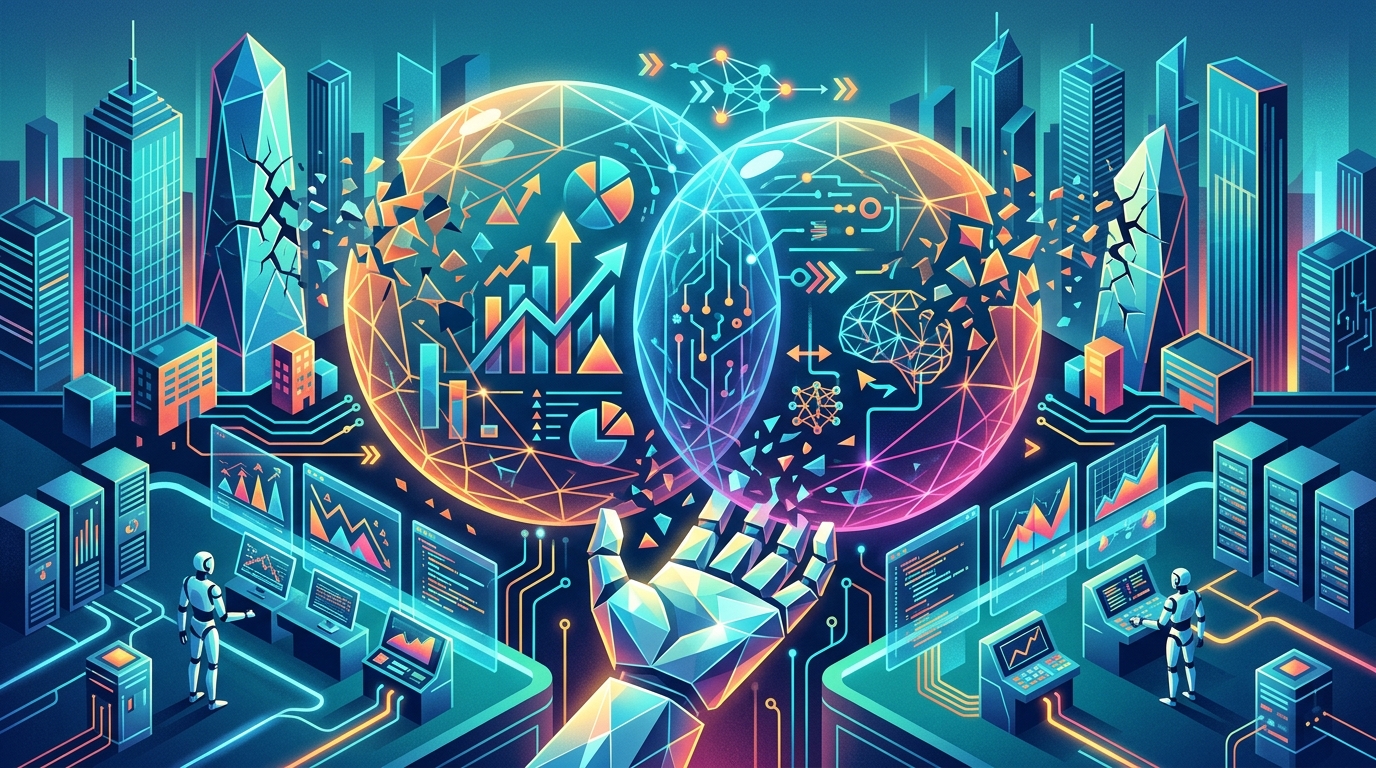
In a move that blurs the boundaries between social media dominance and life sciences, ByteDance, the Chinese titan behind TikTok, is proceeding with the spin-off and external financing of its "AI for Science" (AI4S) division. The news, first reported by 36Kr, marks the company's transition from experimental research to the full industrialization of AI-driven drug discovery. This shift is not merely a corporate restructuring; it is a declaration of intent to dominate a field that promises to slash drug development timelines from decades to months.
The Strategy of "Industrialization"
ByteDance’s AI4S division is not new, but the decision to spin it off suggests a critical stage of maturity. Until recently, the team operated as an internal innovation lab, developing algorithms for protein folding prediction and molecular design. Now, entering the "industrialization phase" means the technology is ready for clinical trials and commercial partnerships with major pharmaceutical firms. Independence allows AI4S to seek venture capital (VC) funding while distancing itself from the regulatory baggage and geopolitical scrutiny that follows ByteDance due to the ongoing TikTok controversies.
- Developing algorithms to identify novel biomarkers.
- Designing personalized therapies through computational biology.
- Reducing R&D costs for traditional pharmaceutical giants.
ByteDance is following in the footsteps of Google (DeepMind) and Microsoft, but with a Chinese twist: access to massive datasets and an unparalleled computational infrastructure that has, until now, been used to power video recommendation engines. The transition from "scrolling" to "science" represents the ultimate example of technological convergence.
Geopolitics and Data: The Spin-off Puzzle
The decision to spin off has deep political implications. In an era where the US and Europe view Chinese technological expansion with increasing suspicion, keeping a biotech unit under the direct umbrella of ByteDance would be a lightning rod for controversy. Biological data is now considered a matter of national security. By creating an independent entity, ByteDance hopes to build a firewall that will allow AI4S to collaborate with Western universities and hospitals without the immediate fear of sanctions. However, skepticism remains: can a company born in Beijing convince the international community of its ethical handling of sensitive medical data?
"AI for Science is no longer a thought experiment; it is the backbone of the next industrial revolution," say market analysts in Beijing.
Competition and the Road Ahead
AI4S will face off against giants. Google's AlphaFold has already mapped the protein universe, while NVIDIA is pouring billions into its BioNeMo platform. ByteDance’s advantage lies in its ability to scale AI systems at lightning speed. If it can translate the efficiency of its recommendation algorithms to the discovery of small molecules, it could become the premier "contractor" for the global pharmaceutical industry. The stakes are massive: the AI-in-pharma market is projected to reach $50 billion by 2030. For ByteDance, this is its ticket to a new era, far removed from the volatility of the creator economy.