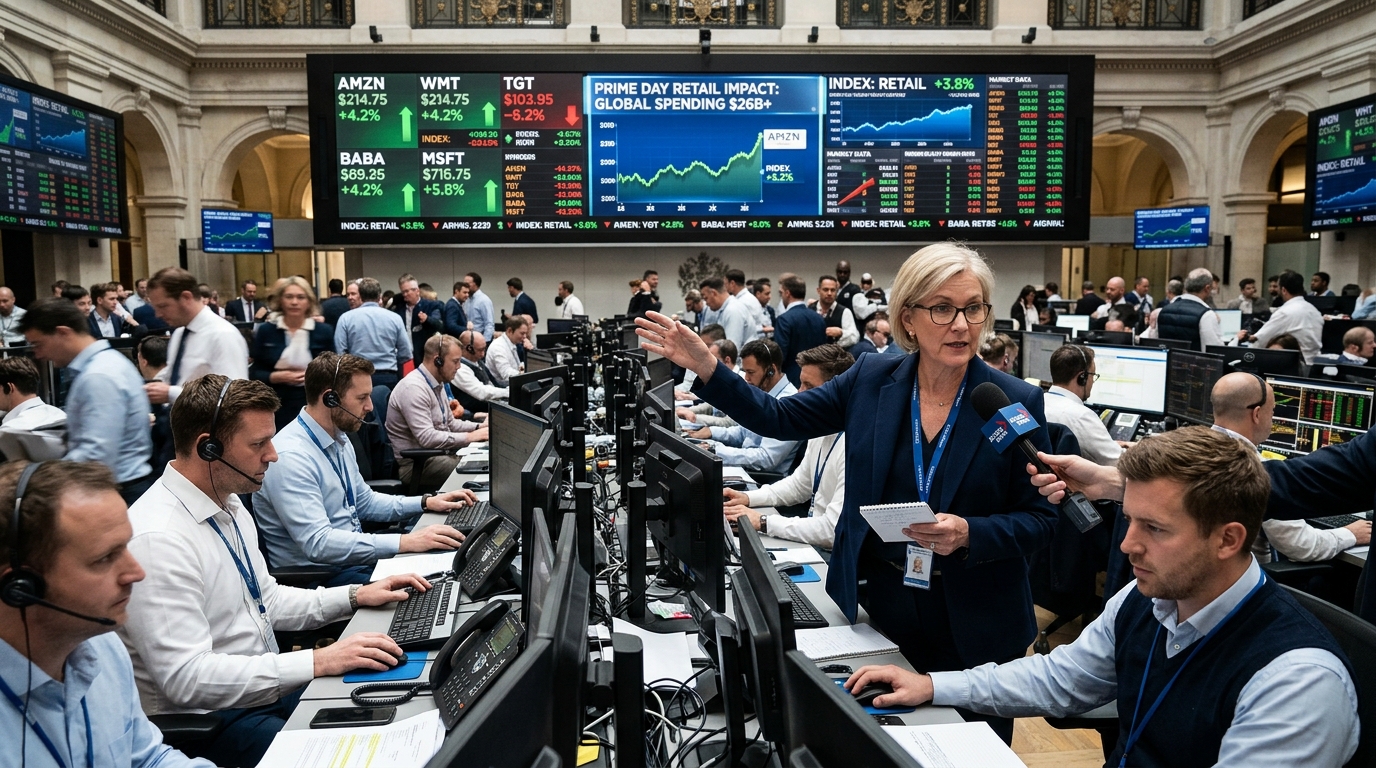
The dust from Amazon's annual consumer marathon, Prime Day, has begun to settle, leaving behind staggering figures and a clear picture of the global economy's state in mid-2026. According to final data from Adobe Inc., total online spending across all U.S. retailers during the 48-hour event reached an astronomical $26.4 billion. This figure is not just a new record; it slightly edges out Adobe's initial forecast of $26.3 billion, sending a strong signal to Wall Street analysts.
Consumer Resilience in a Shifting Landscape
Despite concerns about an economic slowdown and persistent, though cooling, inflationary pressures, the American consumer showed unexpected vitality. The success of this year's Prime Day is attributed not only to Amazon's aggressive pricing but also to the broader adoption of digital shopping as the primary channel for consumption. The approximately 11% increase compared to the previous year suggests that market sentiment remains positive, with shoppers actively seeking value through deep discounts.
Of particular interest is the shift toward "smart" shopping. In 2026, consumers are no longer just impulse buying. They are utilizing AI-driven tools to compare prices in real-time, track discount histories, and optimize their carts. This "algorithmic consumption" has forced Amazon and its competitors to become more transparent and competitive than ever before.
The 'Halo Effect' and the Competitive Response
While Prime Day is the brainchild of Jeff Bezos, its benefits ripple through the entire retail ecosystem. The so-called "halo effect" saw competitors like Walmart, Target, and Best Buy also recording significant sales spikes. These companies, having timed their own discount events to coincide with Prime Day, managed to capture a substantial slice of the $26.4 billion pie.
The strategy of "if you can't beat them, join them" seems to be paying off. Non-Amazon retailers saw an average 18% increase in sales compared to a typical June day. This highlights Prime Day not just as a corporate celebration, but as an unofficial kickoff to the Back-to-School season, which now starts significantly earlier than in the past.
The Surge of 'Buy Now, Pay Later' (BNPL)
One of the most notable trends of this year's event was the dominance of Buy Now, Pay Later services. BNPL transactions saw a 15.4% increase over 2025, serving as a critical tool for consumers looking to manage their cash flows. This trend suggests a delicate balance: while consumers are willing to spend, they are simultaneously cautious about upfront costs, preferring to spread their expenditures over time.
Analysts warn that an increased reliance on debt for consumer goods may hide future risks; however, for now, the liquidity provided by these tools is fueling e-commerce growth. Amazon, recognizing the trend, has further integrated its own financial solutions, turning Prime Day into a display of power not just in retail, but in fintech as well.
Implications for the Second Half of 2026
The $26.4 billion figure is a reassuring number for the Federal Reserve and investors. It shows that consumption—the main engine of the U.S. economy—has not frozen. On the contrary, it is adapting. This success sets a high bar for the upcoming year-end holiday season. If June's Prime Day is any indication, 2026 is expected to close with historic retail records, provided that supply chains and the labor market remain stable.
In a world dominated by AI and data, Amazon has once again proven that it holds the keys to consumer psychology. The remaining question is whether this growth rate is sustainable in the long term, or if we are witnessing an artificial inflation driven by an oversupply of cheap credit and aggressive algorithmic targeting.