The year 2026 will be remembered in technology history not for a breakthrough in large language models, but as the moment "digital intelligence" collided with the unyielding reality of physical infrastructure. As Silicon Valley titans continue to train models with trillions of parameters, the conversation has shifted from algorithms to amperes. Artificial Intelligence (AI) has an insatiable power problem, and paradoxically, the biggest winners are no longer just semiconductor designers, but the companies building transformers, cooling systems, and nuclear reactors.
The Great Thirst: Why the Grid is Buckling
For decades, electricity demand in developed economies remained relatively flat, thanks to energy efficiency gains. However, the advent of Generative AI has shattered that equilibrium. A single ChatGPT query requires approximately ten times more energy than a standard Google search. When multiplied by billions of users and thousands of enterprise applications, the result is a power requirement that existing infrastructure simply cannot sustain.
According to analysts at Goldman Sachs and Morgan Stanley, data centers are projected to consume up to 9% of total U.S. electricity by the end of the decade, up from roughly 3% in 2024. This steep growth curve has created a "generational opportunity" for industrial stocks that were traditionally viewed as low-growth or defensive plays.
The Infrastructure Kings: Eaton, Vertiv, and Schneider Electric
If Nvidia provides the "engines" of the AI revolution, companies like Eaton and Schneider Electric provide the fuel and the protection. Eaton, a leader in power management, is seeing its order backlogs reach record highs. Transformers and switchgear, which once had lead times of a few weeks, now require months or even years for delivery, allowing these firms to command significant pricing power and higher margins.
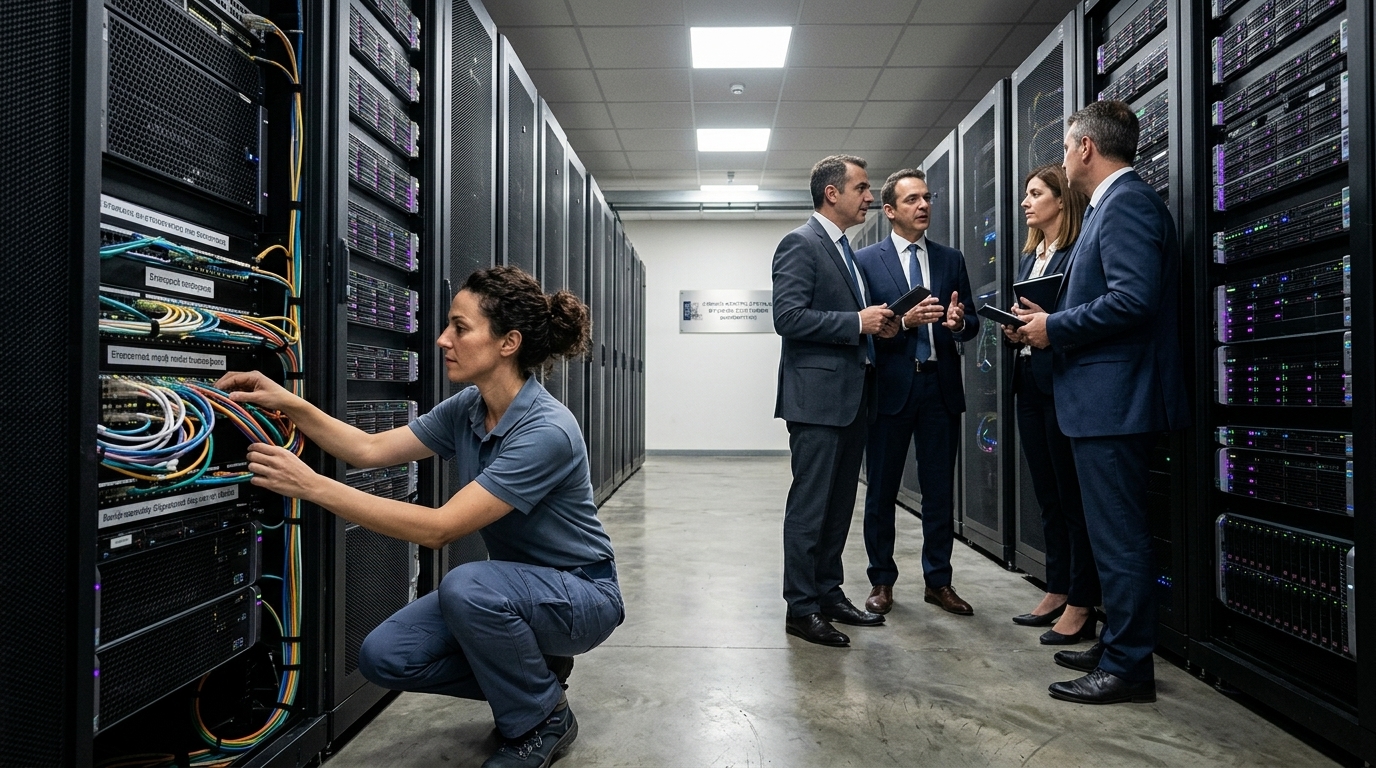
Special mention must go to Vertiv Holdings. The company specializes in thermal management and cooling systems for data centers. As Nvidia’s high-performance GPUs become more powerful, they generate immense amounts of heat. The transition from traditional air cooling to liquid cooling is no longer optional, and Vertiv sits at the epicenter of this technological shift. Its stock has outperformed many Big Tech names over the last twelve months, proving that hardware is indeed the new software moat.
The Nuclear Renaissance
Perhaps the most startling development is the revival of nuclear energy. Microsoft, Amazon, and Google are now directly investing in nuclear infrastructure to ensure a stable, carbon-free baseload power supply. Microsoft’s deal with Constellation Energy to restart a reactor at Three Mile Island is a landmark event. Industrial players involved in Small Modular Reactors (SMRs), such as GE Vernova, are positioning themselves as the ultimate guarantors of Silicon Valley’s energy security.
- Eaton (ETN): Dominance in electrical grid modernization and distribution.
- Vertiv (VRT): Leader in critical cooling infrastructure for high-density compute.
- Constellation Energy (CEG): The largest producer of carbon-free nuclear power in the US.
- Quanta Services (PWR): The specialized workforce building the actual transmission lines.
Political and Regulatory Bottlenecks
Despite the financial optimism, the core problem remains political. Building new high-voltage transmission lines in the US and Europe faces significant bureaucratic hurdles and local opposition (NIMBYism). Furthermore, there is a growing tension between ESG climate goals and the immediate demand for power, which is often forcing utilities to delay the retirement of coal and natural gas plants. Industrial companies that can offer "smart grid" solutions and large-scale energy storage will be the ones to navigate this complex regulatory landscape.
Conclusion: The Revenge of the Physical World
The winning investment strategy for 2026 is not about finding the next viral chatbot; it is about understanding the supply chain of electrons. As AI becomes the operating system of the global economy, value is shifting from the intangible to the material. Industrial stocks are no longer just a defensive hedge in a tech-heavy portfolio; they are the bedrock upon which the digital future is being constructed.