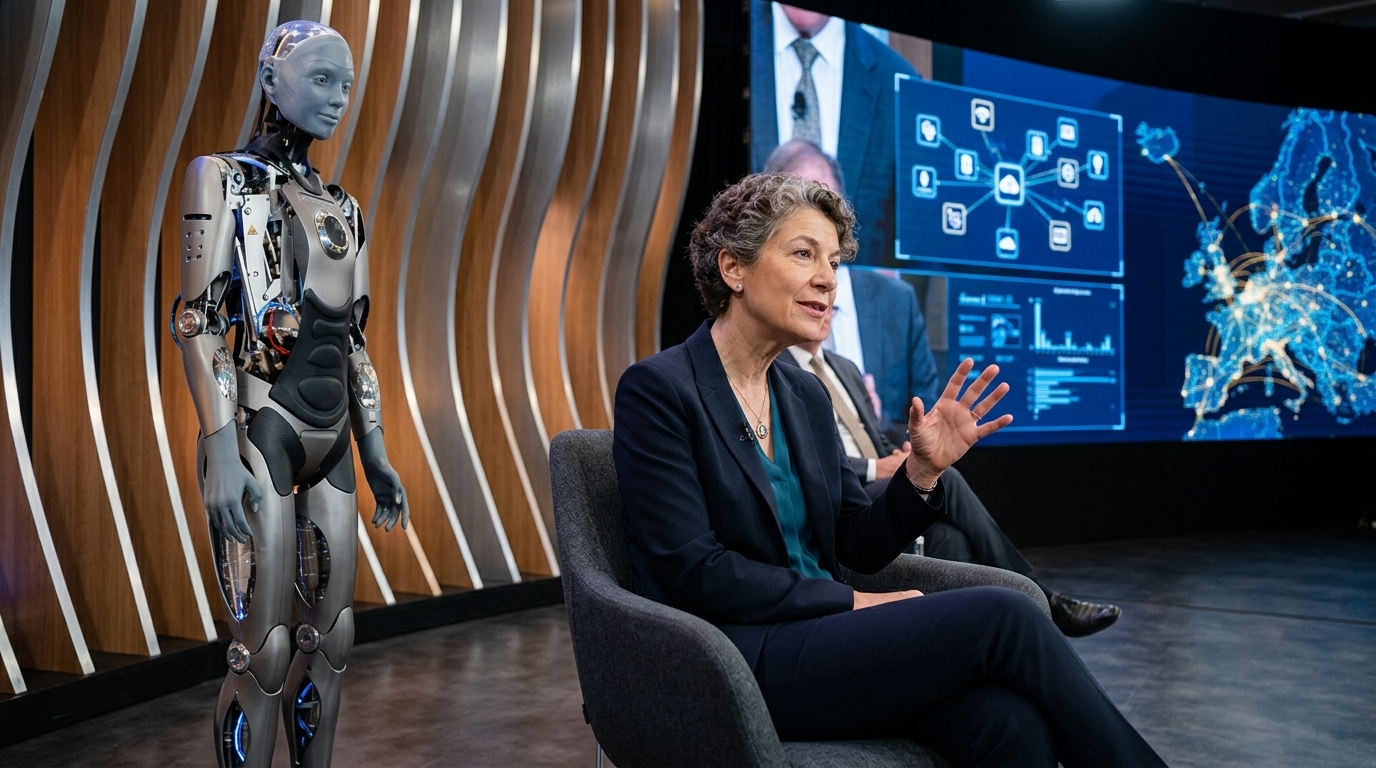
As we navigate the middle of 2026, the global media landscape stands at a defining threshold. A recent report from Vietnam.vn underscores a trend vibrating through newsrooms worldwide: the utilization of Artificial Intelligence (AI) not as a replacement for human intellect, but as a liberating force for the workforce. The premise is as compelling as it is transformative: by offloading repetitive, technical, and time-consuming tasks to algorithms, journalists are finally being empowered to reclaim the core tenets of their craft—investigation, ethical judgment, and nuanced storytelling.
Automation as a Catalyst for High-Stakes Journalism
For decades, the professional life of a journalist was bogged down by tasks that had little to do with high-level reporting. Transcribing hours of interviews, translating press releases, monitoring news feeds for keywords, and reformatting articles for various social media platforms consumed the vast majority of a reporter's day. Today, AI tools can process massive datasets in seconds, identifying patterns in government spending or corporate filings that would have previously required weeks of manual labor. They can generate first drafts of routine reports, such as market updates or sports summaries, with near-instant speed.
This liberation is more than just a technical upgrade; it is an economic and structural pivot. When the machine handles the 'what' and the 'when,' the human professional gains the breathing room to focus on the 'why' and the 'how.' Investigative journalism, which was often the first casualty of the 24-hour news cycle and the relentless pursuit of clickbait, is finding an unexpected savior in AI-driven efficiency.
- Automated transcription and real-time multi-language translation.
- Big Data analysis to uncover corruption and financial irregularities.
- Content personalization that doesn't require manual editing for every demographic.
Returning to Core Values Amidst the Ethical Labyrinth
However, this newfound freedom is a double-edged sword. The liberation of time brings with it a heightened responsibility for verification. In an era where AI can produce prose that is stylistically flawless yet factually hollow (hallucinations), the journalist’s role as the 'arbiter of truth' is more vital than ever. Focusing on core values means that critical thinking and ethical integrity have become a news organization’s primary product, rather than just the information itself.
"Artificial intelligence cannot replicate the courage of a reporter confronting power, nor the empathy required to tell a story of human suffering," the analysis notes.
In Vietnam, as in many emerging economies, AI adoption is seen as a vehicle for rapid media modernization. The ability to produce content in multiple languages and adapt it to local cultural contexts allows smaller outlets to compete on a global stage. The challenge remains maintaining the 'human signature' in an environment saturated with algorithmically generated content. The focus must shift from quantity to the unique perspective that only a human observer can provide.
Economic Sustainability and the Hybrid Newsroom
From a financial perspective, AI integration is becoming a prerequisite for survival. Production costs are plummeting while output efficiency is soaring. Yet, this raises a crucial question: will the resources saved be reinvested into high-quality journalism, or will they simply be used to pad corporate margins? The 'liberation' of the workforce can easily morph into the 'redundancy' of the workforce if media management views AI solely through the lens of payroll reduction.
The journalism of the future will be inherently hybrid. Modern newsrooms are evolving into hubs where reporters, software engineers, and data scientists work in tandem. The value of a news story will no longer reside in the mere speed of its delivery—since information now flows instantaneously—but in its credibility, its depth of analysis, and its ability to connect disparate facts into a coherent socio-political narrative. AI is the tool that clears the brush, but the human remains the architect of the truth.