Uber’s history with autonomous driving has been, to put it mildly, turbulent. After years of multi-billion dollar R&D, high-profile legal battles, and a tragic 2018 accident in Arizona that cast a long shadow over the industry, the company appeared to exit the hardware race in 2020 by selling its Advanced Technologies Group (ATG) to Aurora. However, May 2021 marks a surprising pivot: Uber is putting its own autonomous vehicles back on public roads through a new initiative called 'AV Lab'.
A Strategic Pivot: From Builder to Orchestrator
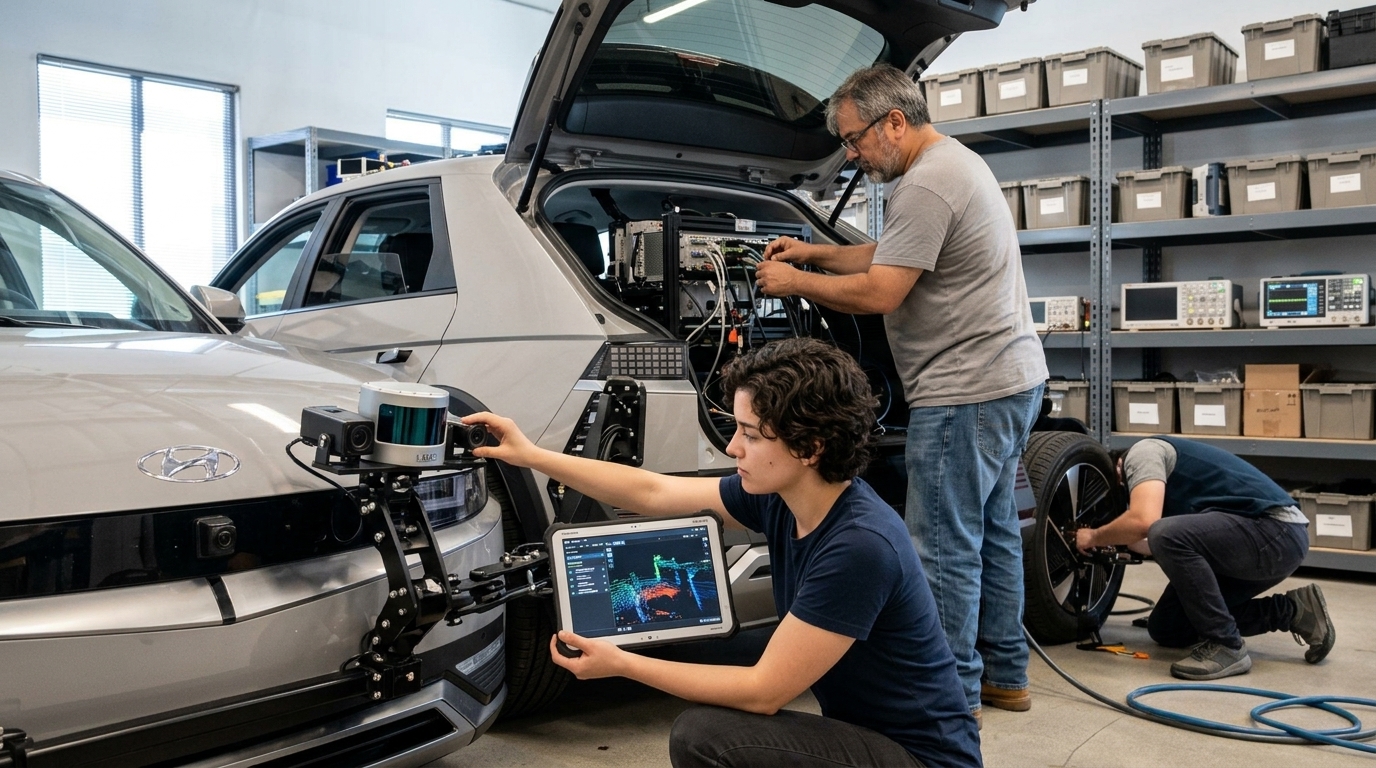
The AV Lab project is not a return to the 'arms race' of building a proprietary self-driving system to compete head-to-head with Alphabet’s Waymo or GM’s Cruise. Instead, Uber is positioning itself as the critical infrastructure layer for the entire autonomous ecosystem. The vehicles deployed under the AV Lab banner are equipped with a full suite of high-end sensors—Lidar, radar, and high-resolution cameras—but their primary mission is data collection, not passenger transport.
By collecting 'ground truth' data, Uber aims to create a feedback loop that benefits its growing list of partners, which includes companies like BYD, Waymo, and Aurora. This move underscores a shift in Uber’s identity: it no longer aspires to be the one driving the car, but rather the 'operating system' that manages the marketplace where autonomous fleets operate. To do this effectively, Uber needs to understand the granular details of urban navigation as well as the AV developers themselves do.
The Value of Ground Truth in a Crowded Market
One might wonder why Uber needs its own sensor-laden fleet when it already has access to billions of miles of telemetry data from its millions of human drivers. The answer lies in the fidelity of the data. Standard smartphone GPS and basic car telematics lack the centimeter-level precision required to train and validate Level 4 autonomous systems. AV Lab’s vehicles provide the high-fidelity environmental mapping and 'edge case' identification that consumer-grade hardware cannot capture.
- Ground Truth Mapping: Validating existing maps against real-time sensor data to ensure reliability.
- Edge Case Discovery: Identifying complex urban scenarios—like unpredictable pedestrian behavior or construction zones—to improve AI training.
- Partner Validation: Providing a neutral benchmark to assess how different AV stacks perform in the real world.
"We aren't rebuilding the AI driver; we are building the digital twin of the world that every AI driver needs to navigate safely," a source familiar with the project noted.
This 'Switzerland strategy' allows Uber to remain neutral while becoming indispensable. By providing the data and the marketplace, Uber ensures that regardless of which AV company wins the technology race, they will likely need to run on Uber’s platform to achieve commercial scale.
Economic and Safety Implications
The re-deployment of Uber-branded autonomous hardware inevitably invites scrutiny from regulators and safety advocates. The memory of the 2018 Tempe crash remains a cautionary tale for the entire industry. Uber has emphasized that the AV Lab vehicles will operate under strict safety protocols, often with human safety drivers behind the wheel, focusing purely on data harvesting rather than the complexities of ride-hailing logistics.
From a business perspective, this is a much more capital-efficient model than the original ATG unit. Instead of trying to solve the entire robotics problem, Uber is focusing on its core strength: network effects and data. This approach mitigates the massive financial burn that previously threatened the company's path to profitability while maintaining a strategic foothold in the future of mobility.
Conclusion: The Data-First Frontier
Uber’s AV Lab represents a sophisticated evolution of its corporate strategy. It is an admission that building a self-driving car is an incredibly difficult engineering feat, but also a bold claim that owning the data is the ultimate prize. As we move closer to a world where robotaxis are a common sight, Uber is ensuring it holds the keys to the digital infrastructure that makes it all possible. The company isn't just returning to the driver's seat; it's redesigning the seat itself to be the most valuable part of the vehicle.