At the southernmost tip of Texas, where the Rio Grande meets the Gulf of Mexico, one of the most radical geopolitical and economic transformations of the 21st century is unfolding. Boca Chica, once a secluded settlement for retirees and fishermen, has been rebranded as "Starbase," SpaceX’s nerve center for the development of the Starship. As we move through 2026, Elon Musk’s impact on the region is undeniable, serving simultaneously as an economic catalyst and a source of deep social and environmental friction.
The Transformation of Brownsville: From Obscurity to Global Spotlight
For decades, Brownsville and the surrounding Cameron County were ranked among the poorest regions in the United States. The arrival of SpaceX changed the narrative almost overnight. According to recent economic studies, the company's presence has generated over 12,000 direct and indirect jobs, offering wages that far exceed the local average. The city, which once relied on cross-border trade and agriculture, is now a global hub for aerospace technology.
Infrastructure investment has followed this explosive trajectory. New hotels, restaurants, and service businesses have sprouted to cater to the wave of engineers and tourists flocking to witness test launches of the largest rocket ever built. However, this growth is not without its costs. Gentrification is hitting long-time residents hard, as property values and rents have skyrocketed, forcing many low-income families to move away from urban centers.
Musk’s Economic Engine and the Texas Strategy
Musk’s decision to shift the weight of his operations from California to Texas was no accident. The favorable tax climate of Texas, combined with a less stringent regulatory environment, provided the ideal ground for SpaceX’s vision. Starbase is not just a factory; it is a fully integrated production and launch city. The company’s economic contribution to the region is estimated in the billions of dollars annually, boosting state tax revenues and funding local STEM education programs.
- Creation of 12,000+ jobs in the Rio Grande Valley region.
- Investments exceeding $6.5 billion in facilities and equipment.
- Increase in local GDP through space tourism.
- Partnerships with local universities to train the next generation of engineers.
The Environmental Price Tag and Local Resistance
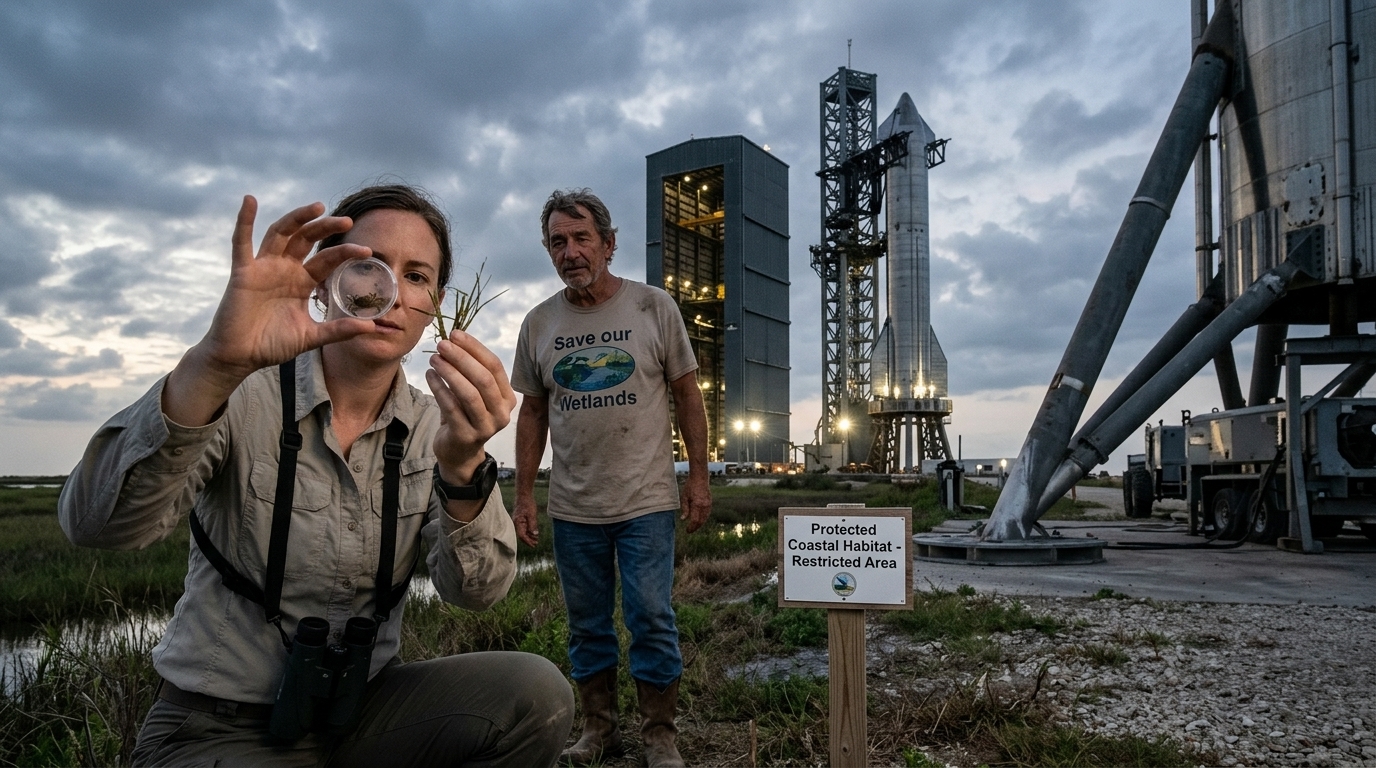
Despite the economic euphoria, the environmental dimension remains Starbase’s Achilles' heel. The Boca Chica area is surrounded by protected habitats, serving as a sanctuary for rare bird species and endangered sea turtles. Residents and environmental groups, such as the Sierra Club, have filed numerous lawsuits, accusing the company of violating clean water and wildlife protection laws. Launches generate massive sonic booms and scatter debris across sensitive ecosystems, while frequent road closures on the only path to the local beach have sparked outrage among locals.
"We are not against progress, but we cannot sacrifice our land's heritage for someone's dream of going to Mars," says one local activist.
The Federal Aviation Administration (FAA) is under constant pressure to tighten oversight as Starship tests become more frequent. The balance between the US national ambition to return to the Moon and the protection of the local environment is more fragile than ever.
Conclusion: A Model for the Future?
The SpaceX case in Texas serves as an experiment in how private corporations can reshape entire geographical regions. While economic indicators are thriving, social cohesion and ecological integrity are being tested. The question remains whether humanity can conquer the stars without destroying the corners of its own planet that host its ambitions. Starbase is the storefront of the future, but also a mirror of the challenges that accompany unbridled technological development.