In the world of contract catering, where profit margins are often as thin as a slice of prosciutto, the French giant Sodexo has decided to play the high-tech card. With a presence in 45 countries and millions of meals served daily in hospitals, schools, and corporate offices, the challenge of scaling quality while reducing costs is immense. At the helm of this digital transformation is Alice Guéhennec, Sodexo’s Group Chief Data and Digital Officer, who manages an annual investment budget of 500 million euros with a clear goal: to turn a traditional service company into a data-driven organization.
The War on Food Waste via AI
Perhaps the most impressive application of Artificial Intelligence at Sodexo is the effort to eliminate food waste. The company has committed to reducing food waste by 50% by 2025, and the key tool for this is the WasteWatch system, powered by Winnow technology. Using smart scales and cameras equipped with computer vision, the system automatically identifies what is being thrown into kitchen bins.
When a chef discards prep scraps, the AI recognizes whether they are potato peels or entire unconsumed portions of food. This data is analyzed in real-time, allowing kitchen managers to adjust raw material orders and menu planning. "It’s not just about sustainability," Guéhennec explains. "It’s a direct improvement to our operational efficiency. Every kilogram of food not wasted is pure profit and, simultaneously, a reduction in our carbon footprint."
Robotics: From the Dishwasher to the Serving Line
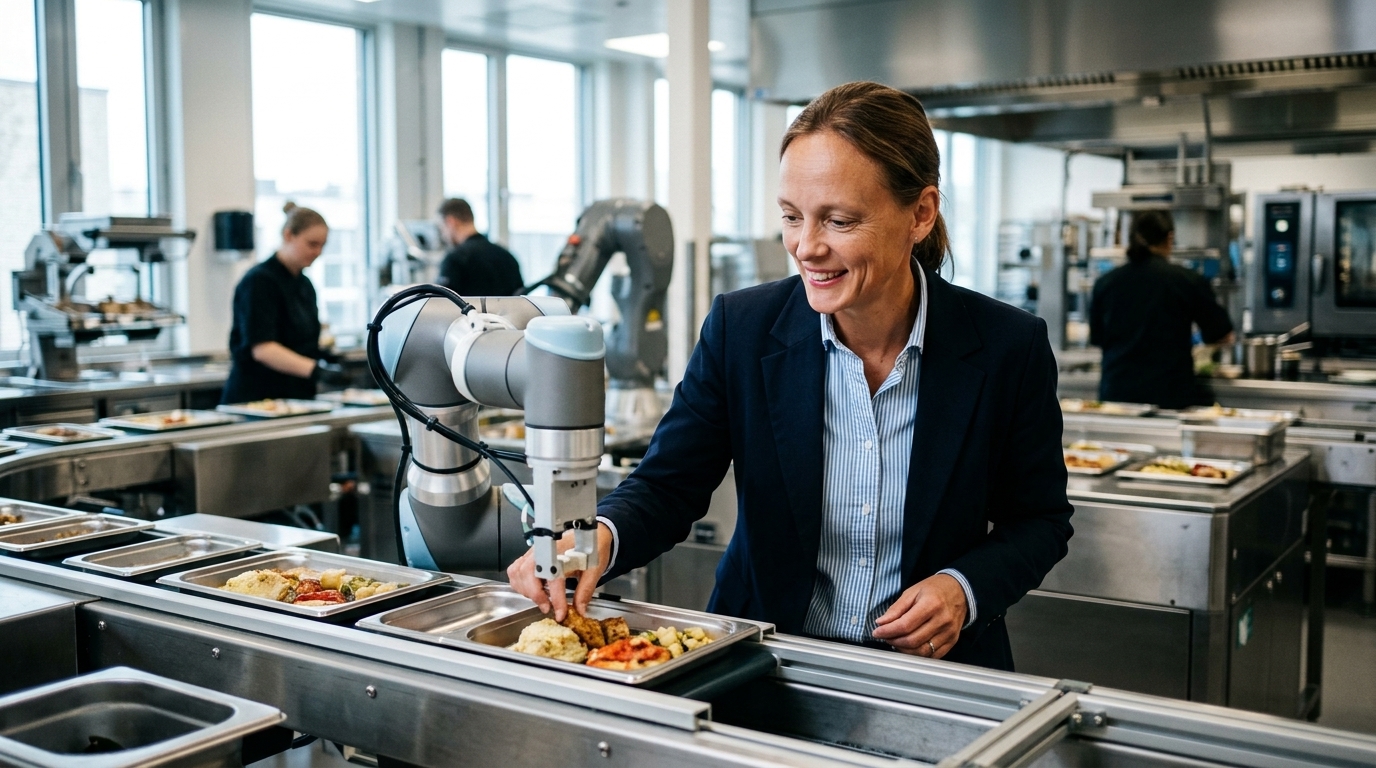
Labor shortages in the hospitality sector are a global phenomenon that has worsened in recent years. Sodexo is responding to this problem by integrating robotics into daily operations. In many university campuses and hospitals, robots from Bear Robotics take over tray transport and table clearing, allowing human staff to focus on customer service and solving complex issues.
However, robotics doesn't stop at service. The company is experimenting with automated meal preparation systems, such as robotic arms that can grill burgers or assemble salads with absolute precision. This ensures consistency in taste and portions, which is vital for large organizations. Guéhennec emphasizes that the goal is not to replace humans, but to relieve them of "3D" tasks: Dull, Dirty, and Dangerous.
"Technology is the catalyst that allows us to redefine the human touch in foodservice by removing the burden of repetitive manual labor," says Alice Guéhennec.
Personalized Nutrition and the Consumer Experience
Beyond the kitchen, AI is changing how consumers interact with their food. Sodexo is investing in applications that use AI to offer personalized nutritional advice. By analyzing user preferences, allergies, and health goals, the system can recommend specific meals from the daily menu.
Furthermore, "autonomous markets" (cashierless stores) are becoming increasingly common in corporate environments. Using sensors and AI, employees can grab their meal and leave, with billing happening automatically. This reduces queues during peak hours and improves the user experience, while providing Sodexo with valuable data on consumption habits, allowing for better inventory management.
The Challenge of Scale and Ethics
With a budget of 500 million euros, the challenge is not just buying the technology, but integrating it into an organization with hundreds of thousands of employees. Staff training and the adoption of new tools are critical. Guéhennec highlights that the ethical use of data and transparency are at the core of their strategy. As Sodexo collects more data on what we eat and how we move in dining areas, privacy protection becomes as important as food quality.
In conclusion, Sodexo no longer sees itself merely as a catering company, but as a technology company that happens to serve food. The investment in AI and robotics is a strategy for survival and dominance in a world that demands speed, sustainability, and absolute precision.