In the high-stakes theater of global technology, where compute power has become the ultimate strategic asset, Nvidia Corp. has once again raised the bar. During a high-profile announcement on June 1, 2026, CEO Jensen Huang revealed that the company’s latest microprocessor architecture, codenamed "Vera," has secured an elite roster of early adopters: OpenAI, Anthropic, and Elon Musk’s SpaceX. This announcement solidifies Nvidia's position not just as a chipmaker, but as the primary architect of the AI era.
The move comes at a critical juncture. While competitors like AMD and Intel have made strides in catch-up efforts, and hyperscalers like Amazon and Google continue to develop proprietary silicon, Nvidia’s relentless annual release cycle is proving difficult to break. The Vera chip succeeds the Blackwell and Rubin platforms, promising a quantum leap in processing density and energy efficiency—addressing the two biggest bottlenecks in modern AI development.
The Strategic Significance of the 'Big Three'
Securing OpenAI and Anthropic—the two leading forces in Large Language Model (LLM) research—ensures that the next generation of AI breakthroughs will be forged on Nvidia hardware. However, it is the inclusion of SpaceX that signals a broader shift. SpaceX’s reliance on Vera chips suggests that the intersection of aerospace, satellite telecommunications (Starlink), and autonomous systems is becoming the next frontier for heavy-duty AI computation.
Industry analysts suggest that for companies like OpenAI, which is backed by billions from Microsoft, the choice to stick with Nvidia despite Microsoft’s own chip efforts (Maia) is a testament to the superiority of Nvidia’s software ecosystem, CUDA. The integration between Vera’s hardware and Nvidia’s software stack remains a moat that few can cross, providing a seamless transition for researchers moving from training to large-scale deployment.
Technical Prowess: Performance Meets Efficiency
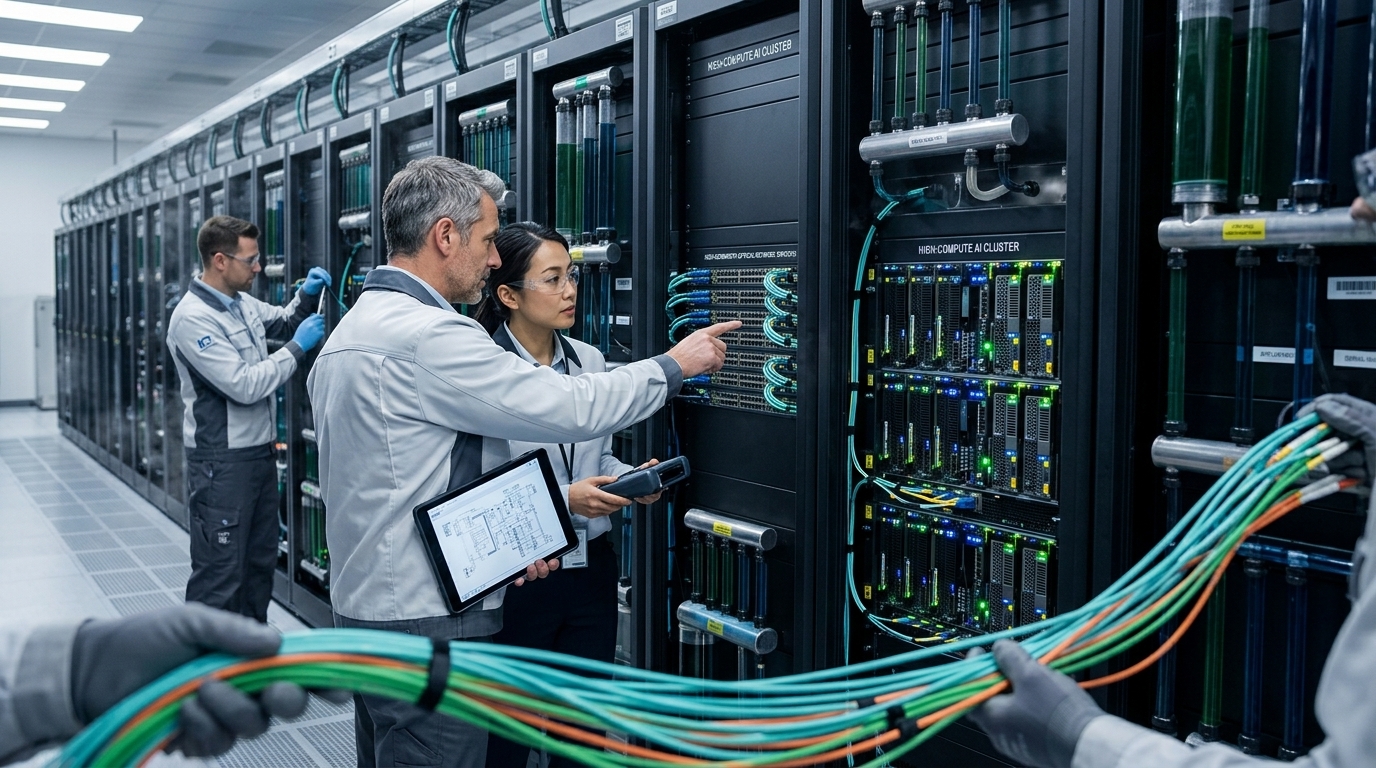
The Vera architecture introduces several key innovations designed to handle the staggering parameters of future models. With the 6th generation NVLink interconnect, Vera allows data centers to operate as a single, massive GPU cluster with unprecedented bandwidth. This is essential for the training of models like GPT-5 or Claude 4, which are expected to be multi-modal and require trillions of parameters to be processed simultaneously.
- Energy Efficiency: Vera delivers a 40% improvement in performance-per-watt, a critical metric as AI data centers face increasing scrutiny over their carbon footprint and power grid impact.
- Inference Optimization: Beyond training, Vera is designed for high-speed inference, significantly reducing the latency and cost of running AI agents in real-time.
- Supply Chain Integration: By leveraging TSMC’s most advanced nodes, Nvidia ensures that Vera remains at the cutting edge of semiconductor manufacturing.
"We are no longer building individual components; we are building the AI factories of the future," Jensen Huang remarked during the keynote.
The Economic and Geopolitical Ripple Effects
Nvidia’s dominance is not without its critics. The concentration of so much power in a single company creates a potential monopoly that could stifle innovation elsewhere. The price tag for a single Vera-based rack is estimated to be in the hundreds of thousands of dollars, further widening the gap between the "compute-rich" and the "compute-poor." Small startups and academic institutions find themselves increasingly priced out of the hardware necessary for top-tier research.
Furthermore, the geopolitical implications are profound. As the US continues to tighten export controls on high-end AI chips to China, Nvidia’s Vera becomes a tool of soft power. The ability of a nation’s companies to access Vera chips could determine their economic competitiveness for the next decade. For now, Nvidia stands alone at the summit, with OpenAI, Anthropic, and SpaceX as its most powerful allies in a race that shows no signs of slowing down.