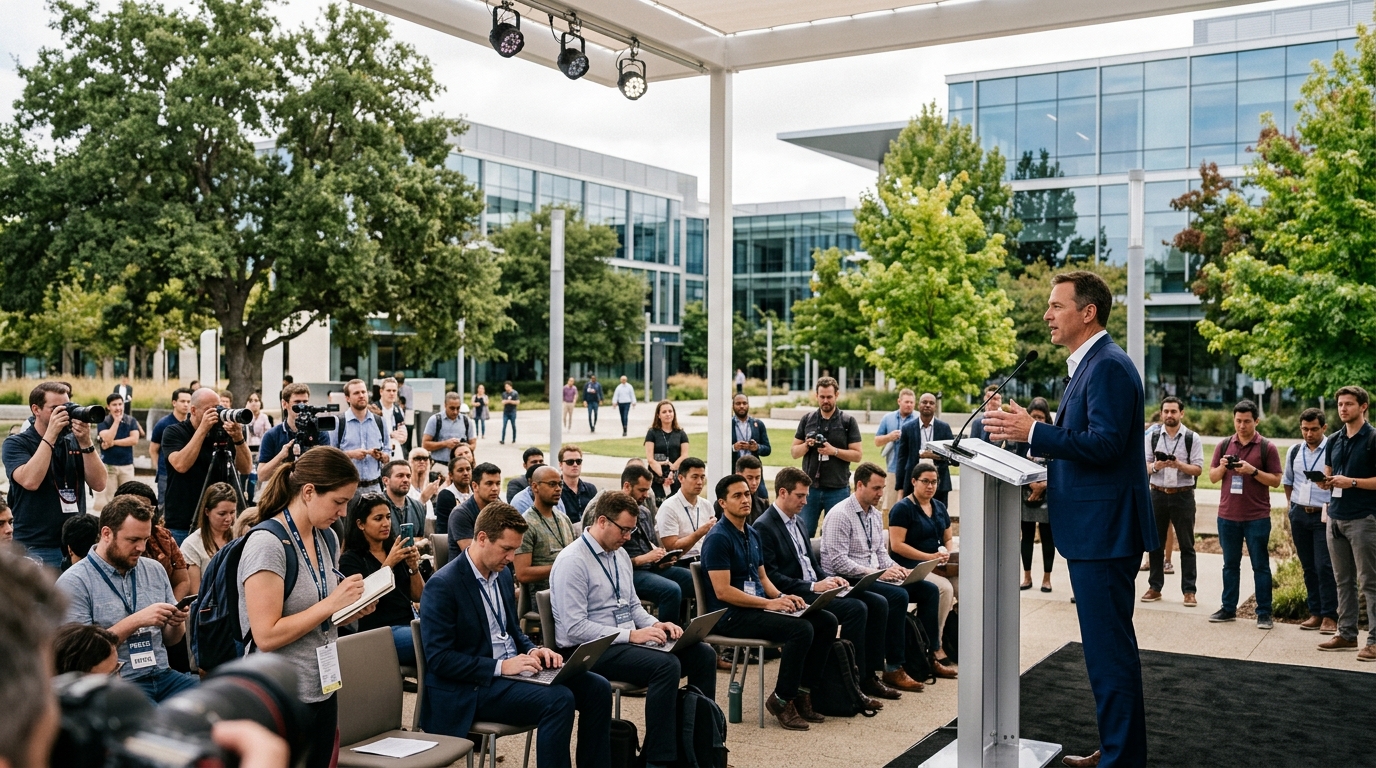
In a move poised to redefine the artificial intelligence landscape, Nvidia has announced a series of initiatives aimed at dismantling the barriers to entry for startups. As the demand for compute power continues to outstrip supply, the Santa Clara-based tech giant is moving beyond hardware sales, aggressively entering the cloud services sector and establishing strategic revenue-sharing partnerships.
The new program, an expansion of the successful 'Nvidia Inception' ecosystem, grants startups preferential access to the company’s DGX Cloud infrastructure. This step is viewed as critical, as the cost of training Large Language Models (LLMs) has become prohibitively expensive for all but the largest market players. By providing compute power in exchange for future revenue or other flexible payment models, Nvidia is positioning itself as the ultimate arbiter of AI innovation.
The Strategic Shift: From Manufacturer to Service Provider
For decades, Nvidia was known as the premier manufacturer of graphics cards. However, the current AI boom has forced the company to reinvent its identity. The creation of DGX Cloud represents a fundamental pivot in its business model. Rather than waiting for startups to purchase expensive hardware—a move that often requires massive capital expenditure (CAPEX) that fledgling firms lack—Nvidia is allowing them to "lease" the power they need directly from the source.
This "AI-as-a-Service" approach enables the company to retain control over its hardware while generating a steady stream of recurring revenue. The most intriguing element, however, is the revenue-sharing scheme. In certain instances, Nvidia appears willing to provide compute resources at a reduced cost in exchange for a percentage of a startup's future profits or even equity stakes. This transforms Nvidia from a mere supplier into a unique kind of venture capitalist—one that invests in compute cycles instead of cash.
Democratization or Digital Feudalism?
This move has sparked intense debate within Silicon Valley. On one hand, "democratizing" access to H100 and Blackwell GPUs is a lifeline for thousands of startups that have been stuck on months-long waiting lists. Without Nvidia’s direct intervention, many of these companies might have folded before ever training their first model.
On the other hand, analysts warn of the risks associated with a "walled garden" ecosystem. When a startup bases its entire existence on the cloud and software (CUDA) of a single corporation, decoupling becomes nearly impossible. Nvidia isn't just offering chips; it’s providing the software libraries, the networking, and now the cloud infrastructure itself. This vertical integration ensures that Nvidia remains at the heart of the AI revolution, regardless of which specific startup eventually dominates the application layer.
Market Impact and Competition
Traditional cloud providers, such as Amazon (AWS), Microsoft (Azure), and Google (GCP), are watching closely. While Nvidia collaborates with these giants to host DGX Cloud, its new initiative effectively makes it a competitor. By offering specialized solutions directly to AI startups, Nvidia bypasses the middlemen and builds direct relationships with the developers of tomorrow.
Furthermore, the revenue-sharing model poses a challenge to traditional banks and venture capital firms. If a company can acquire coveted compute power without issuing new shares or taking on high-interest loans, the dynamics of tech financing shift. Nvidia is essentially creating a new currency in the tech economy: the "GPU-hour." In a world where machine intelligence is the most valuable commodity, whoever controls the means of production holds the true power.
Conclusion: The Future of Innovation Under Nvidia’s Umbrella
Nvidia’s initiative is a clear signal that the company views itself not merely as a manufacturer, but as the gatekeeper of AI progress. For startups, this means faster development cycles and lower barriers to entry. For the broader market, it signifies a further concentration of power in the hands of an already dominant player. Whether this strategy leads to a new golden age of innovation or a monopolistic stagnation remains to be seen. What is certain is that the road to artificial intelligence now runs, almost entirely, through Nvidia’s data centers.