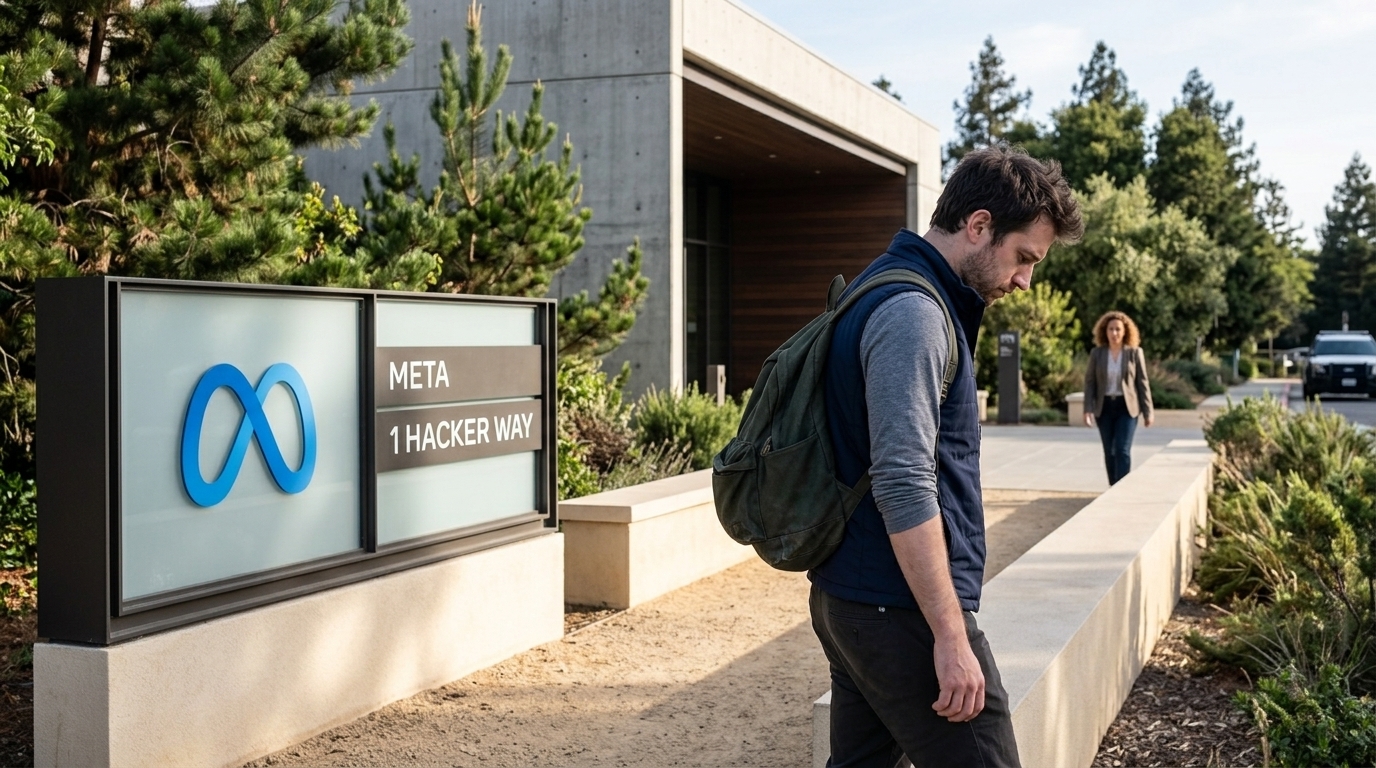
Meta, the giant once defined by the mantra "Move fast and break things," seems to be breaking its own internal foundations in its rush to dominate the Artificial Intelligence era. According to recent reports and internal leaks, employee morale at Mark Zuckerberg’s company has hit historic lows. The pressure to develop cutting-edge AI models is clashing with the scars of mass layoffs and the friction caused by strict return-to-office mandates.
The Admission of Andrew Bosworth and the Harsh Reality
Andrew "Boz" Bosworth, Meta's Chief Technology Officer, recently admitted in internal discussions that the company is navigating a period of intense turmoil. This admission didn't come as a surprise, but rather as a confirmation of a situation that has been simmering for two years. The transition from 2023’s "Year of Efficiency" to a state of perpetual AI-driven emergency has exhausted the workforce. Employees, who once enjoyed some of the most generous perks in Silicon Valley, now face constant reorganizations and the lingering fear of further cuts.
Zuckerberg’s strategy to pivot Meta from a social media company into an "AI-first" powerhouse requires startup-like speed at a multinational scale. This paradox has created an environment where innovation stems not from inspiration, but from a necessity to survive internal competition. Teams working on Llama models and GPU infrastructure receive the lion's share of resources, leaving other departments—such as the once-hyped Metaverse—in a state of "managed decline."
The Cost of "Efficiency" and the Loss of Trust
The layoff of over 20,000 employees has left deep psychological wounds. Meta’s culture was always built on a sense of "mission" and faith in its founder’s vision. However, the abrupt shift from investing billions in Reality Labs to the frantic acquisition of hundreds of thousands of Nvidia chips has shaken employee confidence in leadership’s foresight. "We don't know who we will be in six months," said one staff member under the condition of anonymity.
- Increased workloads to fill the gaps left by departed colleagues.
- The mandatory three-day-a-week office attendance, which retracted previous remote-work promises.
- Internal "hunger games" for access to limited compute resources.
- A perception that management prioritizes stock price over employee well-being.
Meta is not just competing with Google or OpenAI in the product market; it is competing in the talent market. With morale at an all-time low, the drain of top-tier engineers to smaller, more agile AI firms is now an existential threat. Competitors offer not only high compensation but also environments with less bureaucracy and clearer objectives.
The Challenge of the Next Day
Mark Zuckerberg is now walking a tightrope. On one hand, Wall Street demands continuous growth and dominance in Generative AI. On the other, the engine that generates this technology—the people—is on the verge of burnout. While Meta's stock price surge might satisfy investors, inside the company, this success feels like a pyrrhic victory.
"Morale is not something you can buy with bonuses once the fundamental trust has been broken," industry analysts note.
In conclusion, Meta is undergoing a phase of "violent maturation." The pivot to AI is not merely a technological upgrade but a test of the resilience of its corporate culture. If management fails to restore a sense of security and purpose to its employees, it risks winning the technological race while losing the soul of the company that brought it to the top in the first place.