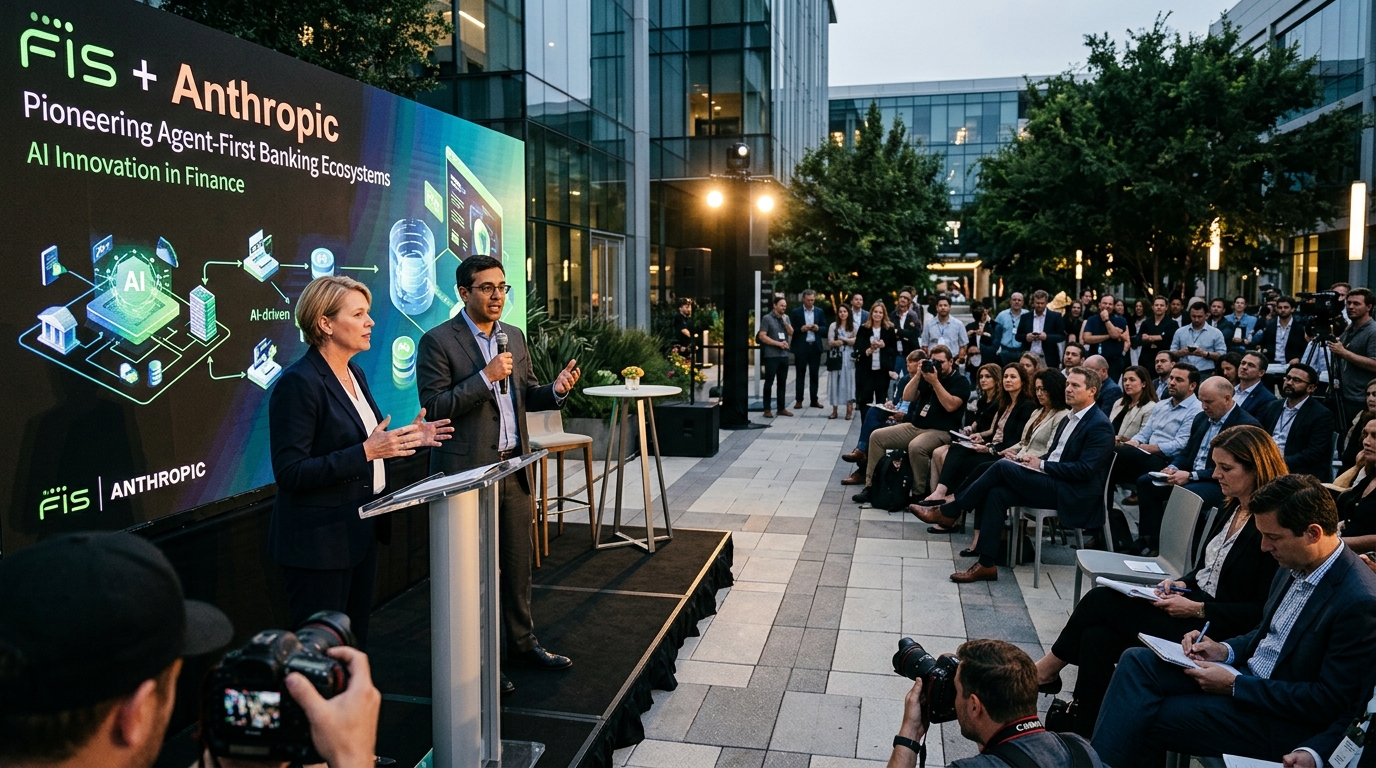
The banking industry is on the cusp of one of the most radical transformations in its history. The recent announcement of a collaboration between FIS, a global leader in financial technology solutions, and Anthropic, the pioneering AI company behind the Claude model, marks the dawn of the "Agent-First" banking era. This is not merely about adding another chatbot to customer service; it is a fundamental restructuring of how capital, data, and users interact.
The Strategic Significance of the Partnership
FIS, which powers the software for thousands of banks worldwide, chose Anthropic for a very specific reason: the safety and ethical dimensions of its technology. In an industry where trust is the most valuable currency, Anthropic’s approach through "Constitutional AI" provides the necessary guardrails required by regulators. Integrating Claude models into FIS’s infrastructure will allow banks to deploy sophisticated AI agents capable of executing complex tasks with minimal human intervention.
"Agent-First" banks are defined by their ability to turn passive account management into active financial guidance. Instead of a customer searching for loan information or trying to decipher their spending habits, an AI agent will be able to predict needs, suggest investment optimizations, and detect fraud in real-time with precision that surpasses traditional systems.
From Chatbots to Autonomous Agents
The difference between a traditional AI chatbot and an AI agent is profound. While the former is limited to answering questions based on predefined data, an agent has the capacity for action. Within the FIS-Anthropic framework, this means AI will be able to connect with core banking systems to perform transfers, restructure portfolios, or negotiate credit terms on behalf of the user or the institution.
- Credit Automation: Faster loan approvals through data analysis performed in seconds.
- Hyper-Personalization: Creating savings plans based on each customer's unique financial profile.
- Fraud Prevention: Dynamic transaction monitoring that identifies anomalies before they are finalized.
This evolution is expected to drastically reduce operational costs for banks, enabling them to offer high-quality services to a broader segment of the population, thereby enhancing financial inclusion.
Challenges and the Regulatory Landscape
Despite the promise, the transition to an agent-based model carries risks. FIS and Anthropic must address concerns regarding data privacy and the potential for AI "hallucinations" in critical financial calculations. The European Union, through the AI Act, sets strict rules for the use of AI in critical infrastructure, and banking is considered a high-risk sector.
"Artificial intelligence is no longer an experiment for us; it is the backbone of the next generation of financial services," stated FIS executives.
The success of this venture will depend on how smoothly Claude’s technology integrates with the legacy systems still used by many banks. FIS promises a bridge between the traditional and the future, ensuring that innovation does not sacrifice systemic stability.
Conclusion
The FIS-Anthropic partnership is more than just a business deal; it is the hallmark of a new era. Banks are ceasing to be static institutions and are becoming dynamic digital partners. In the future, our relationship with money will be mediated by intelligent agents that understand context, needs, and goals, making banking more human—ironically—through the power of technology.