Greece, strategically positioned at the crossroads of three continents, is emerging as a critical hub for global and regional trade. The recent activities of two major players in the logistics sector, FedEx Express and BOX NOW, signal a new era for deliveries in the country. This is not merely a fleet expansion; it is a structural shift in how products travel from the factory or warehouse to the consumer's doorstep.
FedEx’s Strategic Investment at Athens International Airport
FedEx Express Europe recently inaugurated its new transit hub at Athens International Airport (AIA), a move that changes the game for Greek exporting businesses. The new hub is more than just a warehouse; it is a technological sorting center that allows for faster processing of parcels to and from abroad. By utilizing automated systems and enhancing connectivity with FedEx's global network, delivery times for the US and Asia are being drastically reduced.
According to company executives, this investment responds to the growing demand for express services, fueled by the rise of cross-border e-commerce. FedEx is betting on the stability of the Greek market and Athens' potential to serve as a gateway for the Balkans and Southeast Europe. This move also boosts local employment, creating jobs in specialized sectors of the supply chain.
"Our new infrastructure in Athens is a vote of confidence in the Greek economy and the prospects of the logistics sector in the region," states the company's official announcement.
The BOX NOW Revolution and the Locker Model
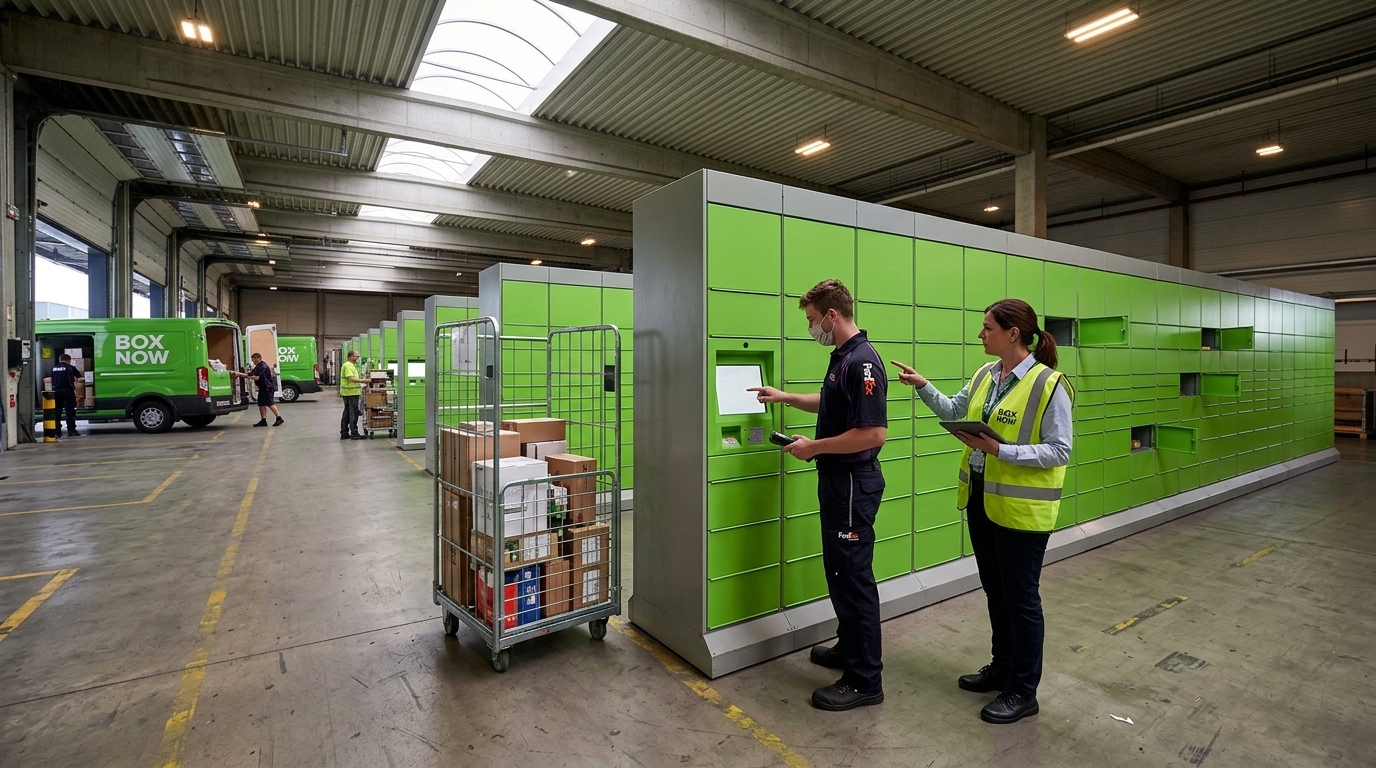
While FedEx focuses on international flows and large-scale infrastructure, BOX NOW has managed to dominate the "Last Mile" within Greek territory. The company, which started as an innovative idea, has now developed the largest network of Automated Parcel Machines (lockers) in Greece, changing consumer habits. BOX NOW does not deliver to your home; it delivers to the point that serves the customer, 24/7.
The company’s strategy is based on green growth and efficiency. The lockers are solar-powered, reducing the carbon footprint of deliveries, while grouping parcels at central points reduces vehicle trips and urban traffic congestion. With the recent expansion of its central hubs in Athens and Thessaloniki, BOX NOW is now able to offer same-day or next-day delivery, even to remote areas.
Competition and the Digital Transition
The convergence of these two models—FedEx’s global network and BOX NOW’s flexible local network—creates a new competitive environment. Traditional courier companies are forced to invest in technology and automation to remain relevant. The use of Artificial Intelligence for route optimization and the integration of real-time tracking systems is no longer a luxury but a prerequisite for survival.
- Automation: New hubs feature robotic sorting systems that minimize human error.
- Sustainability: The shift toward electric vehicles and solar-powered lockers is a priority for reducing emissions.
- Flexibility: Consumers now demand control over the time and place of delivery via their smartphones.
The future of deliveries in Greece is set to be digital and green. The battle for the "Last Mile" will be decided by the companies' ability to combine speed with low costs and environmental consciousness. FedEx and BOX NOW are leading the way, transforming Greece from a simple destination into a dynamic hub of the global supply chain.