In the global landscape of artificial intelligence, few names have generated as much buzz over the past year as DeepSeek. The Chinese firm, which began as a research lab under High-Flyer Capital Management, proved that model intelligence does not necessarily require the infinite resources of Silicon Valley. However, DeepSeek now faces an existential wall: U.S. export restrictions on advanced semiconductors, such as NVIDIA’s H100 and B200. The company’s response, according to recent reports, is a bold move toward vertical integration: designing and producing its own AI chips.
The Necessity of Autonomy in a Polarized World
DeepSeek’s decision to enter the hardware arena is not merely a business choice; it is an act of geopolitical survival. As the U.S. government tightens the noose around China’s access to cutting-edge technologies, Chinese AI giants are realizing that reliance on Western supply chains is a strategic vulnerability. DeepSeek, having already succeeded in developing models like DeepSeek-V3 and DeepSeek-R1 at a fraction of the cost of its competitors, is now looking to translate that efficiency into silicon.
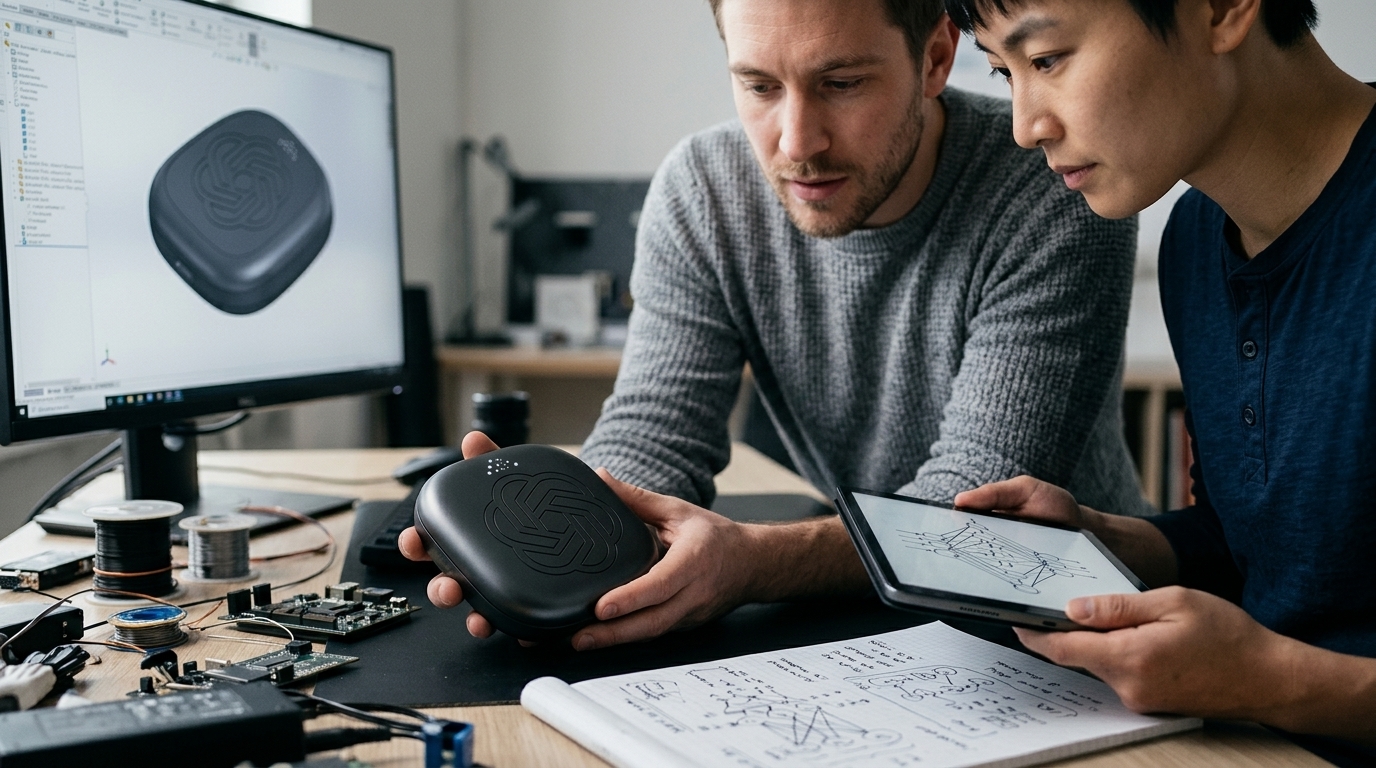
Designing specialized Application-Specific Integrated Circuits (ASICs) allows the company to optimize hardware specifically for its own architectures, such as Mixture-of-Experts (MoE). Instead of using general-purpose GPUs designed for a wide range of tasks, DeepSeek can create processors that execute specific algorithms with significantly lower power consumption and higher speeds. This is the model followed by Google with its TPUs and Apple with its M-series chips, but for DeepSeek, the stakes are much higher.
The Manufacturing Barrier and the SMIC Alliance
The biggest hurdle for DeepSeek is not design, but fabrication. While companies like NVIDIA rely on Taiwan’s TSMC for 3nm or 5nm chip production, DeepSeek is forced to turn to domestic providers, primarily SMIC (Semiconductor Manufacturing International Corporation). SMIC has made progress, reaching 7nm and experimenting with 5nm, but it lacks the advanced EUV (Extreme Ultraviolet) lithography machines held by the Dutch firm ASML due to international sanctions.
Nevertheless, DeepSeek appears to be betting on architectural innovation to bridge the manufacturing gap. By utilizing techniques such as advanced packaging and the RISC-V architecture—an open-source alternative to ARM and Intel designs that is not subject to the same licensing restrictions—the company hopes to create chips that are competitive, if not in absolute raw power, then at least in performance-per-dollar metrics.
The Emergence of a Silicon Iron Curtain
This move signals a broader trend in the Chinese tech scene. Huawei, Baidu, and Alibaba have already invested billions in their own AI processors (Ascend, Kunlun, Hanguang). The entry of DeepSeek, a company regarded as the "tip of the spear" for Chinese AI software innovation, confirms that the decoupling of the global tech supply chain is now irreversible.
- Vertical Integration: Controlling everything from the AI model to the chip it runs on offers unprecedented optimization advantages.
- National Security: For Beijing, DeepSeek represents a national asset that must be shielded from external leverage.
- Training Costs: With proprietary chips, DeepSeek can further reduce the cost of training future models, making AI more accessible to the Chinese market.
In conclusion, DeepSeek’s push to develop its own chips is a declaration of independence. If successful, it will prove that innovation can flourish even under strict constraints, reshaping the balance of power in the 21st century. If it fails, it will highlight the limits of technological self-sufficiency in a world that remains deeply interconnected.