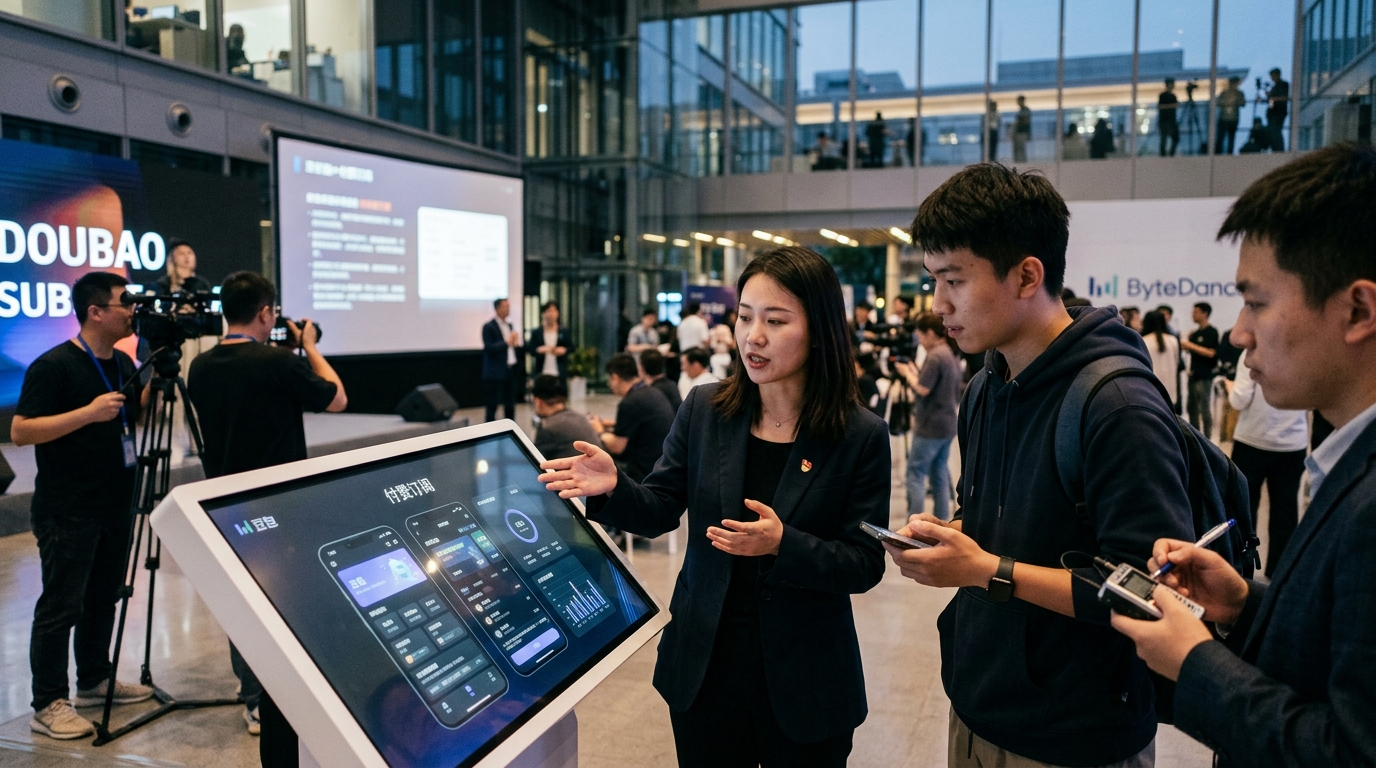
In a move that underscores the maturation of the artificial intelligence market in China, ByteDance, the tech giant behind global phenomenon TikTok and its Chinese sibling Douyin, has officially announced the introduction of subscription services for Doubao, its flagship AI chatbot. This decision is more than just a tactical business move to increase revenue; it is a strategic assertion in a market previously defined by a brutal price war and free-to-use offerings.
The Dominance of Doubao and the Imperative for Monetization
Doubao, powered by ByteDance’s proprietary large language model (LLM), has rapidly ascended to become China’s most downloaded AI application, surpassing Baidu’s Ernie Bot, which long held the mantle of the country's AI pioneer. With millions of monthly active users, Doubao has become deeply integrated into the ByteDance ecosystem, offering everything from coding assistance to emotional companionship and sophisticated content creation. However, maintaining these models requires astronomical investments in compute power—primarily GPUs—and energy, making a purely free model unsustainable in the long run.
The new subscription tier promises users access to more advanced iterations of the model, faster response times, and priority access during peak usage periods. This move mirrors the trajectory of OpenAI’s ChatGPT Plus, indicating that the Generative AI industry is converging on the "freemium" model as the standard for sustainable monetization.
Competition and the Price War Context
The Chinese AI landscape is uniquely volatile due to the intense rivalry between domestic titans. Companies like Alibaba, Tencent, and Baidu, alongside well-funded startups like Moonshot AI, are locked in a battle for dominance. Only months ago, ByteDance sent shockwaves through the industry by slashing the prices of its enterprise APIs, forcing competitors to follow suit in a race to the bottom. The introduction of consumer-level (B2C) subscriptions suggests that ByteDance now feels confident enough in its user retention and product superiority to begin recouping its massive R&D costs.
- Strategic Advantage: ByteDance leverages data from Douyin to train models that possess a superior understanding of Chinese internet culture and regional nuances.
- Infrastructure Resilience: Despite US-led chip sanctions, ByteDance has optimized its inference architecture to remain highly competitive.
- Ecosystem Integration: The synergy between Doubao and creative tools like CapCut provides a seamless workflow for the world's largest creator economy.
Challenges and the Regulatory Landscape
Despite its commercial momentum, ByteDance operates within a complex framework. The regulatory environment in China is rigorous; the Cyberspace Administration of China (CAC) mandates that AI models must strictly adhere to "core socialist values." Consequently, a significant portion of development resources must be dedicated to sophisticated content filtering and alignment, a factor that could theoretically impact the creative fluidity of the model compared to its Western counterparts.
"The shift to paid subscriptions is the ultimate litmus test for AI's utility. If users are willing to pay, AI ceases to be a novelty experiment and becomes a legitimate utility," noted industry analysts in Beijing.
In conclusion, ByteDance’s move to monetize Doubao signals the end of the 'Wild West' era of Chinese AI, where growth was pursued at any cost. The focus has now shifted toward profitability, sustainable scaling, and the delivery of specialized services that justify their price tag in an economy increasingly looking toward high-tech innovation as its primary growth engine.