As we cross into the midpoint of 2026, the technology industry is facing a sobering reality: selling AI licenses is the easy part; making them work within the messy, legacy-laden structures of global enterprises is a different beast entirely. According to recent reports, Microsoft and Amazon Web Services (AWS) have initiated a massive mobilization of personnel, deploying legions of “forward-deployed engineers” (FDEs) directly to client offices. This move marks a fundamental shift in the Silicon Valley business model, which has historically favored the scalable nature of Software-as-a-Service (SaaS) over the labor-intensive world of professional services.
The Implementation Gap and the Human Prerequisite
For nearly three years, the promise of Generative AI has dominated boardroom agendas. However, the chasm between a polished demo and a production-ready application that delivers measurable ROI has proven wider than anticipated. Large enterprises, from global banking institutions to heavy manufacturing, often grapple with fragmented data silos, antiquated legacy systems, and stringent security protocols that make “plug-and-play” AI deployment an impossibility.
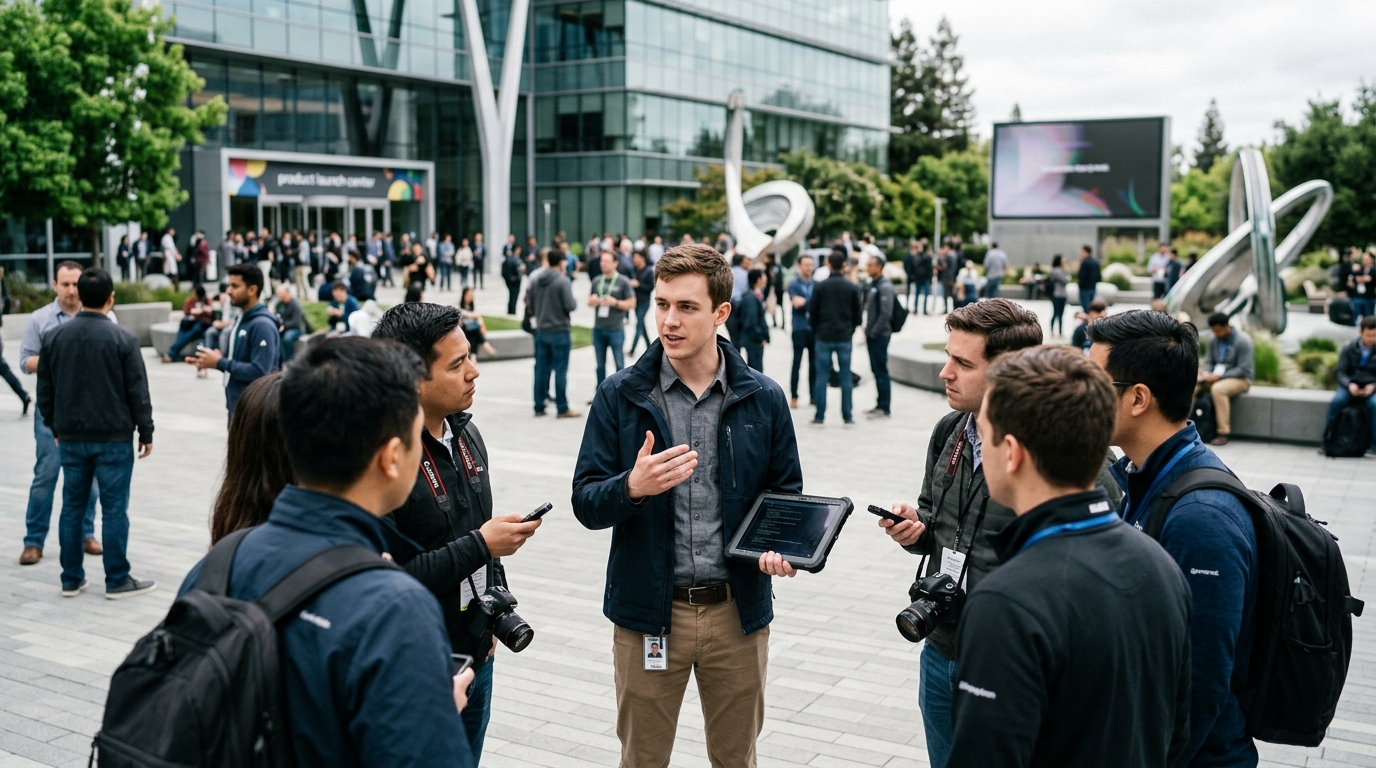
Forward-deployed engineers are not mere support technicians. They are hybrid professionals—part elite software engineer, part strategic consultant. Their mandate is to get their hands dirty with client data, build custom bridges between Large Language Models (LLMs) and proprietary systems, and ensure that multi-million dollar AI investments don't end up as expensive, unused novelties. This “boots on the ground” strategy is a direct response to the complexity of the current AI stack.
Mainstreaming the Palantir Playbook
This approach isn't entirely novel, but its adoption by cloud computing giants is unprecedented. Palantir Technologies pioneered this strategy, famously refusing to decouple its software from the implementation process. For years, Silicon Valley purists looked down on this model, labeling it “unscalable” and too reliant on human capital. But in the AI era, complexity is so high that the self-service model is failing to convert hype into revenue.
- Microsoft: Has established dedicated units within Azure focusing on “Strategic Accounts,” embedding engineers for months at a time with clients like Coca-Cola and Walmart.
- Amazon (AWS): The “GenAI Innovation Center” has expanded its scope, functioning more like an elite commando unit than a traditional customer success department.
- Google Cloud: Is pursuing a similar vertical strategy, emphasizing industry-specific AI expertise in sectors like healthcare and retail.
This shift has profound implications for financial structures. While traditional software boasts margins in the 80-90% range, human-centric services operate on much thinner margins. However, Big Tech seems willing to sacrifice short-term profitability to ensure “customer lock-in” in a market where the cost of switching AI providers is becoming a major strategic consideration.
Challenges: From Security to Dependency
The presence of external engineers deep within a company’s infrastructure raises significant questions. First, there is the issue of data sovereignty. When a Microsoft engineer helps a bank train a model on sensitive financial data, the lines between the client’s intellectual property and the provider’s expertise become blurred. Furthermore, there is the risk of a new form of “digital colonialism,” where major corporations become entirely dependent on Big Tech’s resident engineers to maintain their core operations.
“We are no longer just selling code; we are selling outcomes. And to deliver outcomes in AI, we have to be where the work happens,” says an AWS executive who requested anonymity.
In conclusion, the decision by Microsoft and Amazon to send workers into the field is an admission that AI is not yet the “magic wand” many hoped for. It remains a remarkably stubborn tool that requires human ingenuity to mold. The battle for AI supremacy will not be won solely in massive data centers, but in the hallways of Fortune 500 companies, where engineers fight the daily battle of practical implementation.