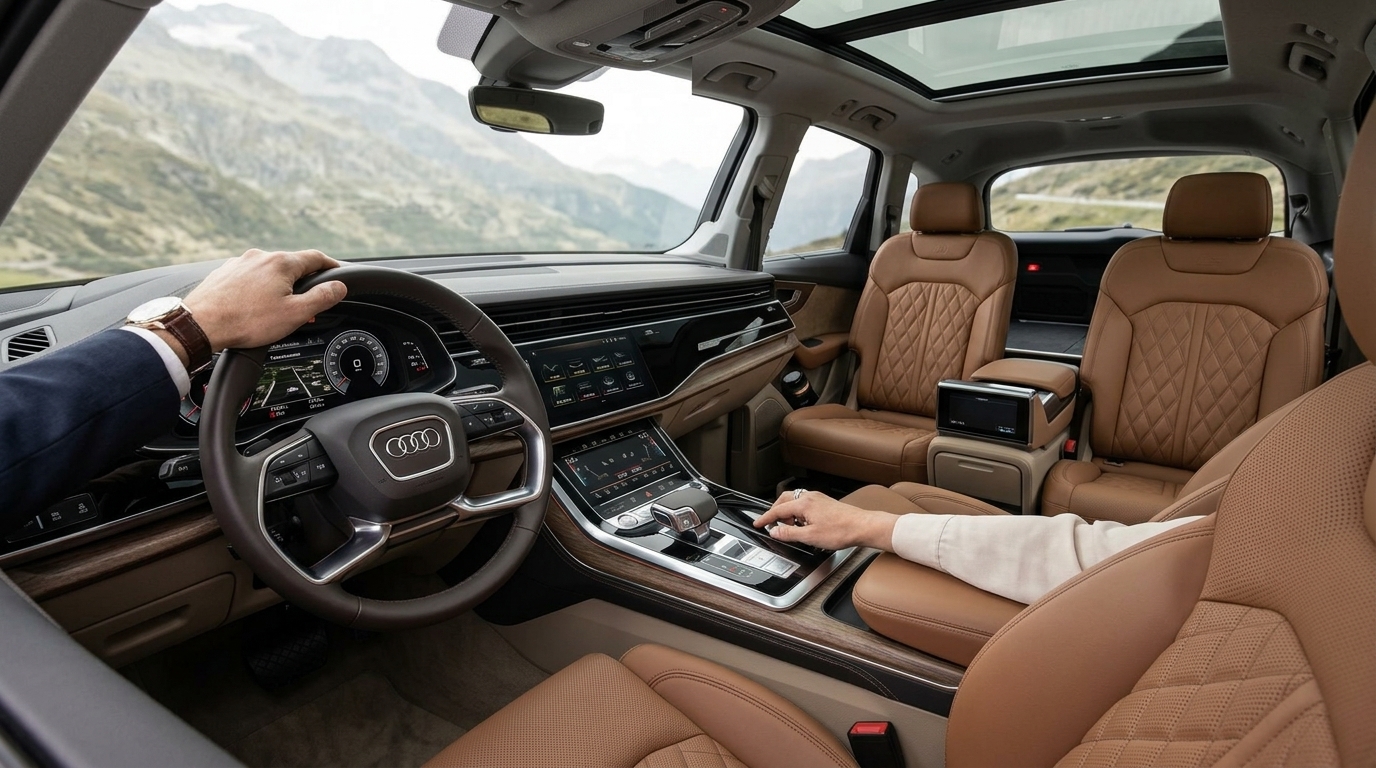
For years, Audi has watched from the sidelines as its domestic rivals, BMW and Mercedes-Benz, dominated the lucrative full-size SUV segment. While the Q7 was an excellent vehicle, it lacked the sheer scale and presence of the X7 and GLS, particularly in the crucial United States market. This is set to change definitively with the arrival of the Audi Q9, a flagship that promises not just more space, but a radical reset of the brand’s interior experience.
The Digital Stage: A Technological Sanctuary
The interior of the Q9, which recently surfaced in detailed leaks, reveals what Audi calls the "Digital Stage." This is a panoramic screen layout spanning the entire width of the dashboard. A curved OLED display houses the digital instrument cluster and the central infotainment screen, while a third, separate screen is dedicated exclusively to the front passenger. This approach isn't just about visual flair; it is built on the new E3 1.2 electronic architecture, enabling lightning-fast software updates and deep integration of Google services.
The quality of materials appears to have moved up a notch, with Audi pivoting toward "sustainable luxury." Instead of the traditional leather that dominated in the past, we see extensive use of high-end recycled fabrics, such as Dinamica microfibre, paired with natural wood and brushed aluminum. The ambiance is less "clinical" and more "inviting," reminiscent of a contemporary Scandinavian lounge rather than a traditional German cockpit.
Tailored for American Tastes
It is no secret that the Q9 was designed with a focus on the US and China. The third-row seating, which was often criticized in the Q7 for its cramped dimensions, is fully functional for adults in the Q9. Audi reportedly consulted American focus groups to ensure that cupholders, USB-C ports (totaling up to 10 throughout the cabin), and storage bins meet the needs of families traversing long distances.
"The Q9 is not just a larger Q7. It is a statement of dominance in a segment where size and comfort are the ultimate currencies," say sources close to the company.
Comfort is further bolstered by a new air suspension system tuned to "iron out" road imperfections, while acoustic insulation has been enhanced with double-glazed windows and active noise cancellation via a 22-speaker Bang & Olufsen sound system.
Powertrains and Strategic Vision
Despite the push for full electrification, the Q9 is expected to launch with a range of hybridized powertrains. The flagship plug-in hybrid (PHEV) version promises an electric range of over 100 kilometers (62 miles), making it ideal for emission-free daily commutes while maintaining long-distance capability. The use of the heavily modified MLB Evo platform allows Audi to offer all-wheel steering, making the massive SUV unexpectedly agile in urban environments.
The strategic importance of the Q9 for Audi AG cannot be overstated. In an era where profit margins on smaller vehicles are under pressure, luxury SUVs serve as the "cash cow" that will fund the company’s transition to the e-tron era. With the Q9, Audi closes the last major gap in its portfolio and prepares for a head-on collision with the segment's establishment.