In the ruthless world of artificial intelligence, reliability is the currency that buys enterprise trust. For Anthropic, the company that positions itself as the 'ethical counterbalance' to OpenAI, recent weeks have served as a harsh reminder: good intentions and advanced architecture mean little if servers cannot withstand the crushing weight of global demand. The company’s urgent struggle to bring its most powerful models, Claude 3.5 Sonnet and Opus, back to full stability highlights a deepening infrastructure crisis within Silicon Valley.
The Infrastructure Wall and Big Tech Dependency
Despite its multi-billion dollar valuation, Anthropic finds itself in a paradoxical position. While it develops some of the world’s most sophisticated algorithms, its operational survival depends on the compute capacity provided by its primary investors: Amazon and Google. The recent instability in its services is not merely a technical glitch; it is a symptom of 'GPU asphyxiation.' As demand for Claude 3.5 Sonnet skyrocketed—driven by its superior performance in coding and nuanced reasoning—Anthropic’s allocated infrastructure hit a hard ceiling.
The strategy of relying on Amazon Web Services (AWS) and Google Cloud creates a complex power dynamic. On one hand, Anthropic gains access to a scale no independent startup could achieve. On the other, it is beholden to the priorities of these giants, who are simultaneously racing to deploy their own AI products. The fight to keep Claude online is, in reality, a battle for resource allocation in an era where high-end compute is scarcer than gold.
Reliability as a Product: The Enterprise Stakes
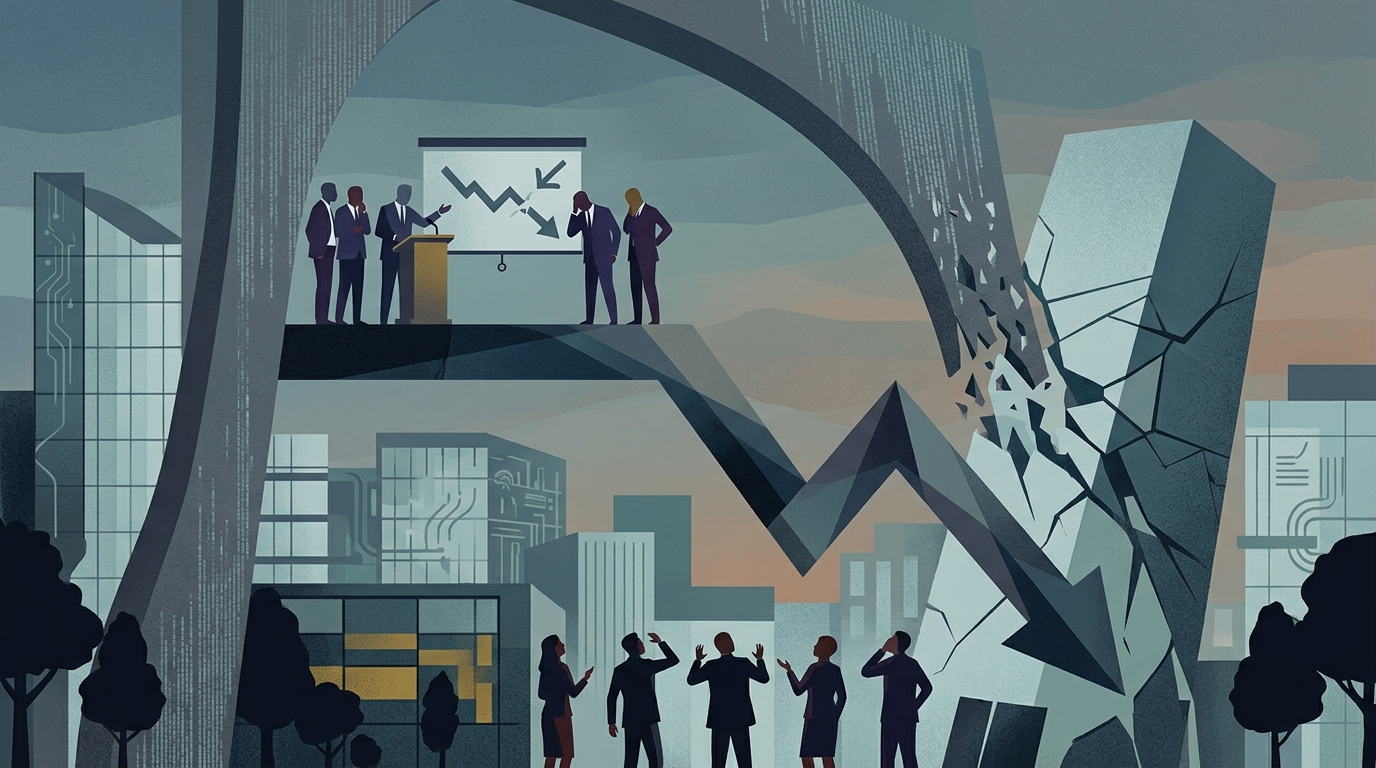
Why does this downtime matter so much? In the current market phase, companies are moving from experimentation to full-scale production. An enterprise integrating Claude into its daily workflow cannot tolerate even a few minutes of downtime. When models lag or go offline, Anthropic loses more than just subscription revenue; it loses its standing as a viable alternative to OpenAI’s GPT-4.
- Loss of trust from enterprise clients can be irreversible in a competitive market.
- Competitors like Meta, with the open-source Llama, offer solutions that companies can host themselves for guaranteed uptime.
- Instability undermines Anthropic’s core 'safety' narrative—what is the value of a safe AI if it isn't available when needed?
The leadership of Dario and Daniela Amodei must now prove that Anthropic can evolve from a high-minded research lab into a robust service provider. This transition requires a radical overhaul of how they manage load balancing and model distribution across global data centers.
The Collision of Ethics and Velocity
There is another dimension to this struggle: Anthropic’s 'Constitutional AI.' The additional computational overhead required to ensure the model adheres to its ethical guidelines adds a layer of complexity that some competitors might bypass. Anthropic refuses to sacrifice safety for speed, but the market is unforgiving. If the effort to bring models back online requires cutting corners on safety alignment, the company faces an existential dilemma.
"We aren't just building a tool; we are building a standard for how AI should coexist with human values," Dario Amodei once remarked.
However, values do not pay the electricity bills for massive data centers. The current crisis forces Anthropic to walk a tightrope between technical integrity and commercial survival. The outcome of this struggle will determine whether the future of AI becomes an OpenAI monopoly or if there is room for players who put safety and alignment at the heart of their mission.