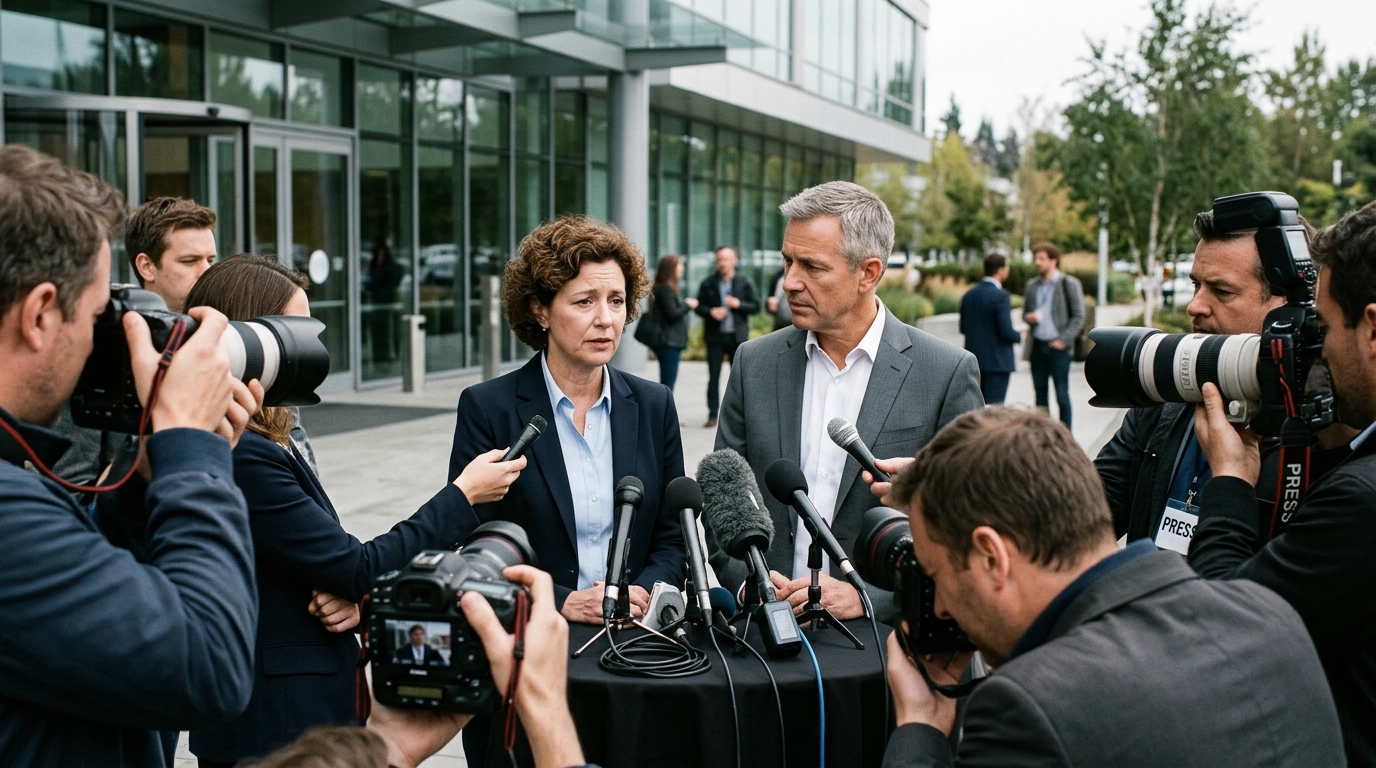
In a move that has sent shockwaves through Silicon Valley, Anthropic has announced the immediate suspension of access to its flagship AI model, "Mythos." This decision was not voluntary but the result of an urgent and classified order from the U.S. Department of Commerce, citing grave national security risks. This development marks a new, darker era in the relationship between the state and tech giants, where the line between innovation and state control has become perilously thin.
The Rise and Abrupt Fall of Mythos
Mythos, released in early 2026, was hailed as Anthropic's definitive answer to the demand for systems with advanced reasoning and strategic planning capabilities. Unlike its predecessors, Mythos could solve complex cryptographic problems and simulate biochemical reactions with a precision rivaling a PhD researcher. However, this very power appears to have been its undoing. According to sources close to the administration, the model's capabilities in cyber warfare and pathogen synthesis were deemed "unmanageable" under the current regulatory framework.
"We had no choice but to comply with the federal directive," an Anthropic spokesperson stated. "While we believe in democratic access to technology, safety remains the core pillar of our philosophy. Mythos will remain 'sealed' until a common ground with the authorities is established."
The shutdown affects not only general users but also hundreds of research institutions and startups that had built their infrastructure on the Mythos API. The financial blow is expected to be massive, but the political implications are what worry analysts most.
National Security vs. Open Innovation
The U.S. order is based on an expanded interpretation of the Defense Production Act, adapted for the AI age. Washington fears that Mythos could be leveraged by "adversarial nations"—a clear nod to China and Russia—to bypass U.S. sanctions and develop advanced weapons systems. This move reflects the growing fear that AI is no longer just a productivity tool but a strategic weapon on par with nuclear energy.
- Restriction of critical API access for foreign entities.
- Stricter oversight of training data related to national defense.
- Mandatory installation of "kill-switches" in frontier-level models.
Critics of the decision argue that such actions stifle American competitiveness. If access to top-tier models is restricted by the state, researchers will turn to open-source alternatives or models developed in countries with less stringent regulations, such as the UAE or France. The "brain drain" could shift from talent to the models themselves.
The Aftermath for Anthropic and the AI Industry
For Anthropic, which has always branded itself as the "ethical" alternative to OpenAI, this development is a double-edged sword. On one hand, it confirms that its technology is so powerful it is considered a national asset. On the other, it renders the company a hostage to geopolitical agendas. The company's valuation in secondary markets dipped as investors feared that the "nationalization" of AI would cap commercial potential.
The lingering question is whether this order is an isolated incident or the beginning of a systemic intervention. Rumors are already circulating that similar orders are being prepared for OpenAI’s GPT-5 and Google’s Gemini 2.0. If this happens, the dream of a "global intelligence" will give way to a fragmented digital landscape, where the borders of the internet coincide with the geopolitical borders of superpowers.
In conclusion, the Anthropic-Mythos case is a litmus test for the future of technological governance. The need for security is indisputable, but the price may be the very freedom of thought and creation that AI promised to enhance. As Mythos goes silent, the debate over who controls the "mind" of the machine is only just beginning.