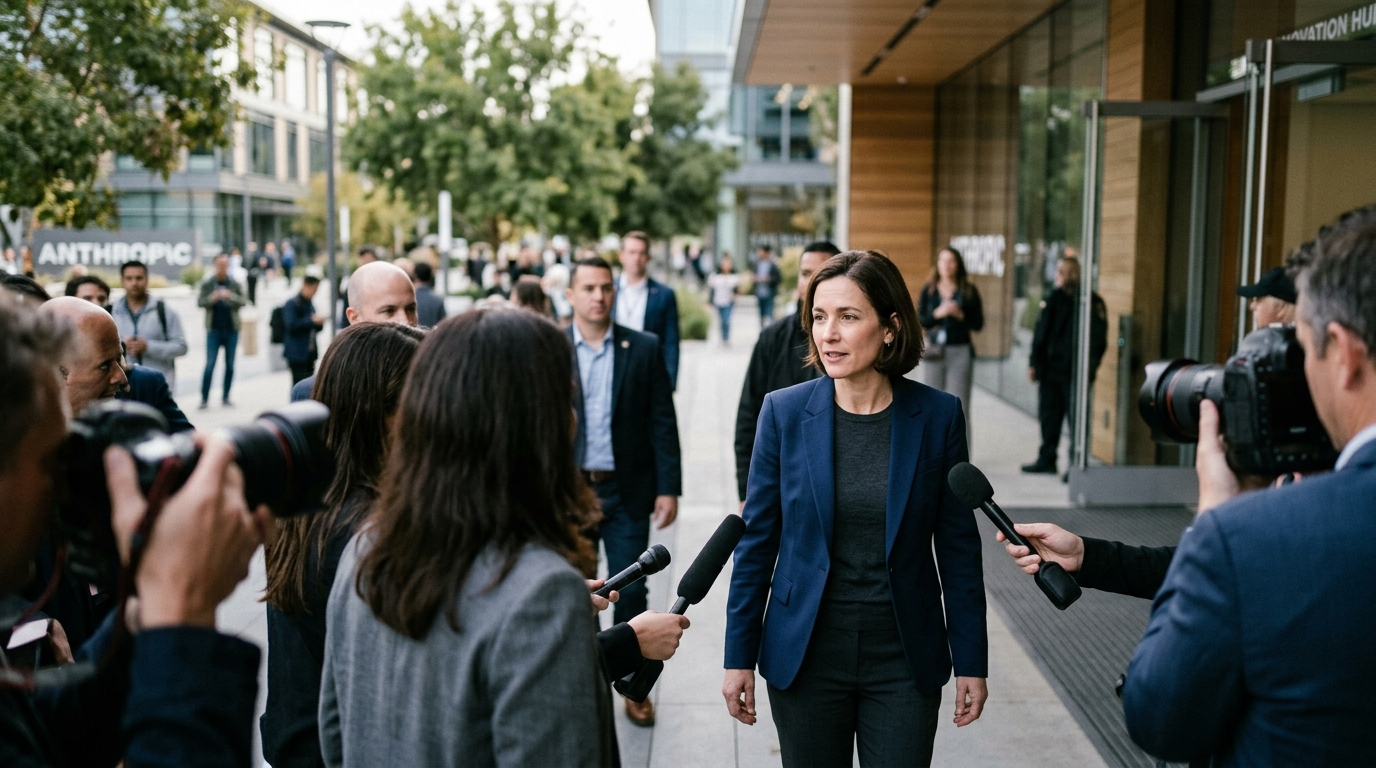
In a move poised to redefine the global technology landscape, Anthropic, the AI powerhouse behind the Claude model family, has officially filed paperwork for its initial public offering (IPO). The news, first reported by NPR, confirms a long-standing suspicion among analysts in mid-2026: the era of unchecked private venture funding is transitioning into the rigorous scrutiny of public markets. Anthropic, founded by former OpenAI executives with a focus on safety and "Constitutional AI," must now prove that its ethical mandates can survive the relentless pressure for quarterly growth.
The Transition from Research Lab to Wall Street
Anthropic is not your typical tech firm. Founded in 2021 by siblings Dario and Daniela Amodei, it was born out of a fundamental disagreement with OpenAI’s Sam Altman regarding the rapid commercialization of powerful AI systems. Their philosophy centered on the idea that AI should be governed by an internal "constitution" of rules to prevent harmful outputs. However, developing frontier models like Claude 3.5 and the upcoming Claude 4 requires billions in compute resources—capital requirements that even the deepest-pocketed VCs are beginning to find daunting to fund in isolation.
The decision to go public comes as Amazon and Google have already funneled billions into the company. For Amazon, Anthropic is the cornerstone of its AWS cloud strategy; for Google, it serves as a strategic hedge against its own Gemini development. A public listing will allow these early corporate backers to potentially liquidate portions of their holdings while providing Anthropic with the massive war chest needed to compete with OpenAI and Meta in the race toward Artificial General Intelligence (AGI).
The Challenge of 'Constitutional AI' Under Pressure
The central question haunting the tech community is whether Anthropic can maintain its identity as the "safe alternative." Public markets are notoriously impatient, often forcing companies to prioritize short-term profits over long-term societal goals. In its IPO prospectus, Anthropic reportedly includes specific governance clauses designed to protect its safety mission, reminiscent of the "Benefit Corporation" structures used by other mission-driven entities.
- Governance: The corporate structure includes a "Long-Term Benefit Trust" empowered to oversee board decisions regarding safety protocols.
- Financials: Despite generating billions in revenue, the company remains deeply unprofitable due to the astronomical costs of model training and inference.
- Competition: Anthropic must convince investors that its "safety-first" moat is superior to OpenAI’s GPT-5, which is expected to dominate the market in the coming year.
"The IPO is the ultimate stress test for Anthropic. It will demonstrate whether capitalism has the stomach for a company willing to throttle its own growth in the name of human safety," notes a leading Silicon Valley analyst.
Strategic Implications for the AI Ecosystem
Anthropic’s IPO is about more than just one company; it is a barometer for the entire AI sector. If the offering is a success, it will pave the way for other late-stage AI startups to tap public markets. Conversely, if investors react with skepticism toward the high burn rate and regulatory risks, we may see a period of consolidation and defensive acquisitions across the industry.
Furthermore, this move brings Anthropic under a new level of regulatory oversight. As a public entity, it will be required to disclose more granular details about its data sourcing, energy consumption, and the catastrophic risks associated with its technology. In an era where the EU AI Act and US executive orders are tightening the screws on developers, the transparency required by the SEC could be a double-edged sword.
Conclusion
As we move through 2026, the Anthropic IPO will remain the focal point of the tech world. The company that began as a group of OpenAI defectors is now at the heart of the global financial system. Its success will be measured not just by its share price, but by its ability to remain faithful to its "constitution" while answering to shareholders. It is a delicate balancing act that will likely set the precedent for responsible innovation in the age of intelligence.