June 2, 2026, will likely be recorded in the annals of technological history as the moment the Artificial Intelligence bubble refused to burst, choosing instead to fortify itself with unprecedented capital. According to reports from Bloomberg Tech, Alphabet, Google’s parent company, has announced its intention to raise $80 billion through a new equity issuance. Simultaneously, Anthropic, the primary rival to OpenAI, has filed confidentially for an initial public offering (IPO), beating Sam Altman’s firm in the race to Wall Street.
Alphabet’s Strategy: Infrastructure Above All
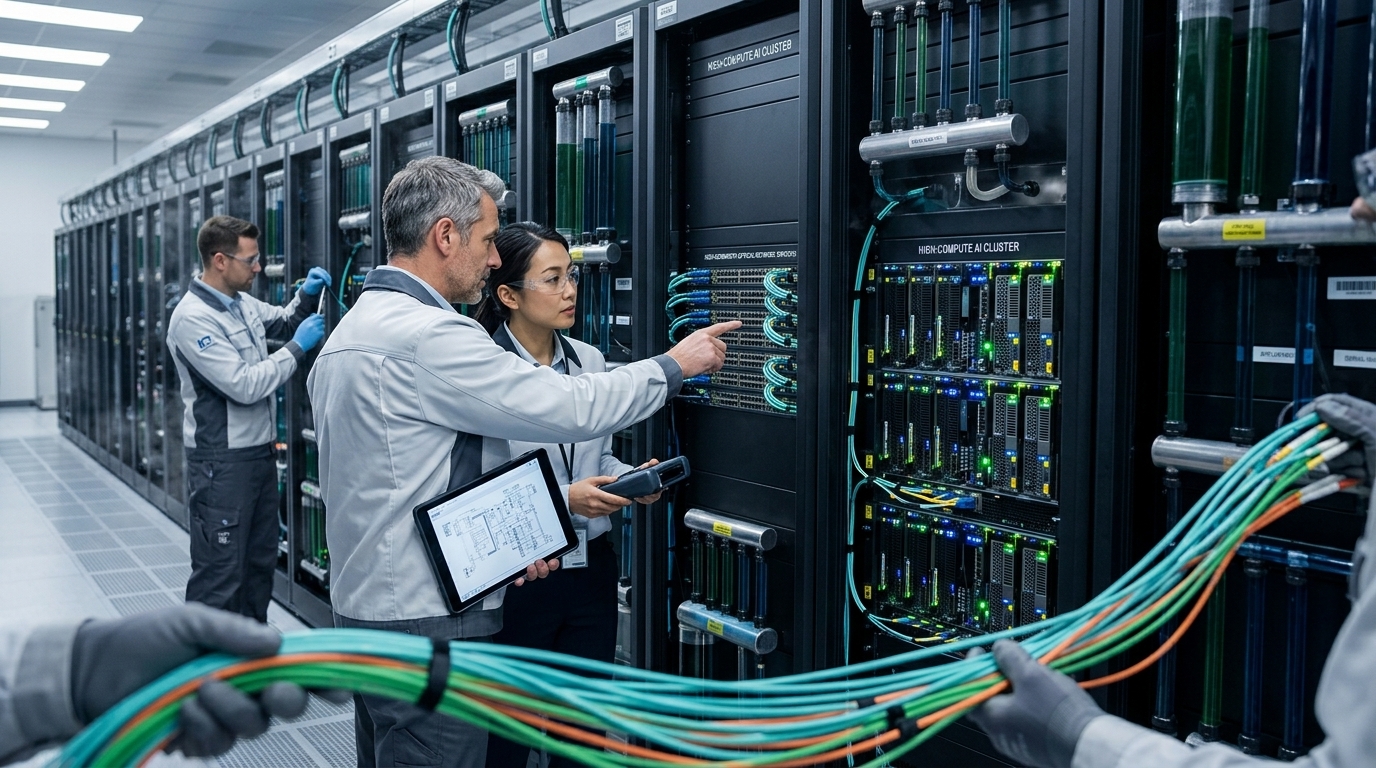
Alphabet’s decision to pursue such a massive capital raise is not a sign of weakness, but an aggressive move for dominance. In a world where computing power (compute) has become the new oil, Google realizes that its cash reserves, though vast, are insufficient to cover the construction of the gargantuan data centers required for the next generation of its Gemini models. The $80 billion is earmarked for expanding proprietary TPU (Tensor Processing Units) production and securing energy resources, including investments in Small Modular Reactors (SMRs).
Analysts point out that this move reflects the need for "sovereign infrastructure." Alphabet doesn't just want to run AI models; it wants to own every layer of the value chain, from subsea data cables to the processors themselves. The choice of equity over debt suggests that Sundar Pichai’s leadership believes the company’s valuation remains attractive, despite ongoing antitrust pressures from the U.S. Department of Justice.
Anthropic: The IPO That Changes the Game
While Alphabet bolsters its defenses, Anthropic is making a move many thought impossible for 2026: going public. Founded by former OpenAI executives with a focus on "safe" AI, the company has confidentially filed its IPO paperwork. This move positions it strongly against OpenAI, which remains entangled in a complex non-profit/for-profit structure and a deep reliance on Microsoft.
As a Public Benefit Corporation (PBC), Anthropic promises investors a balance between profit and ethical responsibility. However, the real stake is liquidity. Training the Claude 4 model requires capital that only public markets can consistently provide. This move is expected to trigger a wave of IPOs for many AI unicorns that had previously hesitated.
The SpaceX Factor and the Secondary Market
On the sidelines of these developments, Elon Musk’s SpaceX continues to redefine private valuations. Negotiations for secondary share sales indicate a valuation approaching $210 billion. While SpaceX is not directly related to LLMs, its Starlink infrastructure is key to global AI data transmission, especially in remote areas where Google and Microsoft’s data centers are expanding.
"We are no longer in the era of software. We are in the era of heavy industrial intelligence," a Goldman Sachs executive told Bloomberg.
Analysis and Outlook
The scale of investment seen today is staggering. When a company of Alphabet’s size asks the market for $80 billion, it sends a clear message: the winner in AI will not be decided by algorithms alone, but by the ability to raise and deploy capital. Anthropic, on the other hand, is betting that the transparency of a public company will attract institutional investors who fear OpenAI’s opacity.
Risks remain. An oversupply of shares could pressure prices, while the need for immediate profitability from AI remains the big question mark for shareholders. However, for now, the strategy is clear: build as fast and as large as possible before the cost of compute becomes prohibitive for everyone except the chosen few.
- Alphabet aims for total control of the AI supply chain.
- Anthropic seeks to become Wall Street’s "ethical" AI benchmark.
- The market is preparing for a new era of capital intensity reminiscent of the 19th-century railroad expansion.