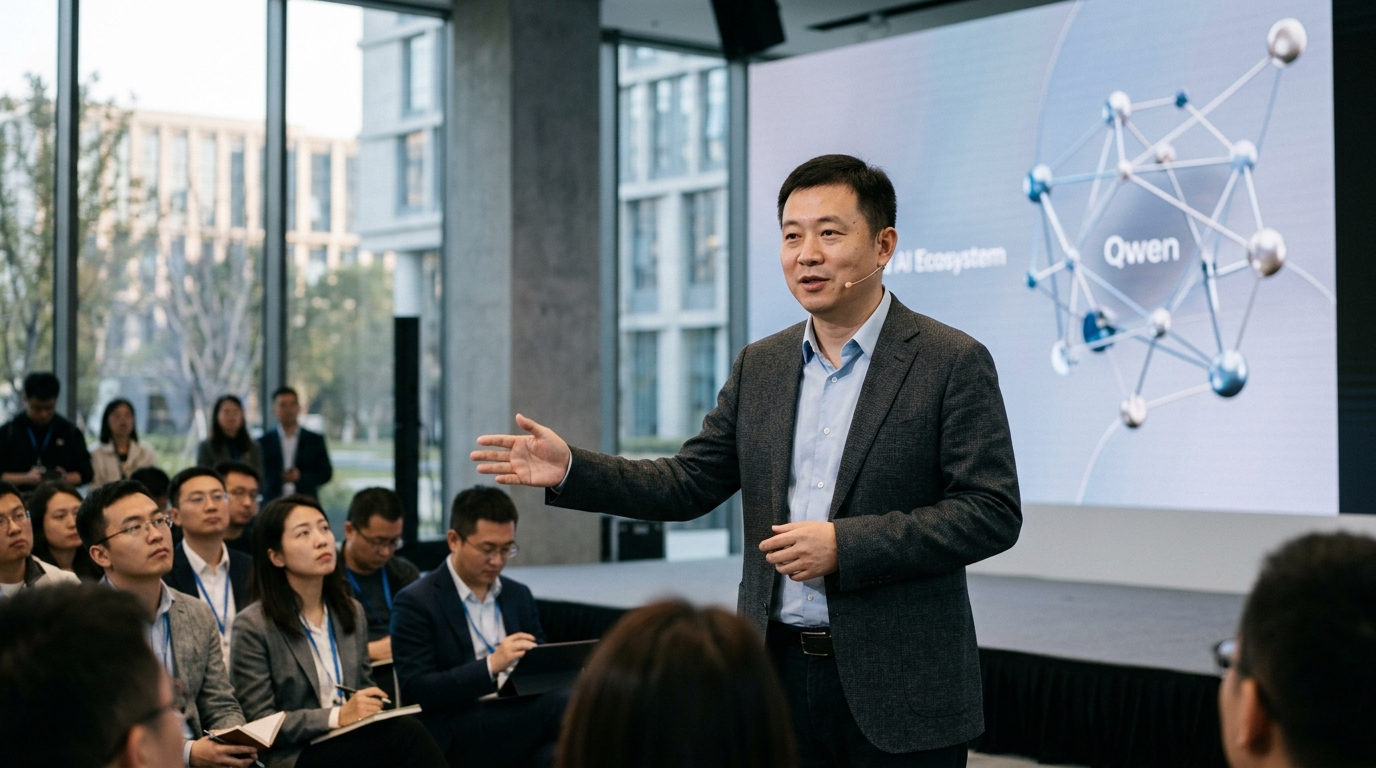
In a strategic move reminiscent of the arrival of the App Store for smartphones, Alibaba Cloud has announced the opening of its large language model (LLM) ecosystem, Qwen (Tongyi Qianwen), to third-party developers and enterprises. This development allows for the integration of specialized "agents" and "skills," with global brands such as KFC, Luckin Coffee, and MIXUE being among the first major adopters. This shift marks the transition from the era of "general responses" to the era of "specialized services," placing Alibaba at the center of China's new digital economy.
The Transition from Chatbot to Platform
For a long time, competition in the field of Artificial Intelligence focused on parameters and the ability of models to generate text. However, Alibaba Cloud quickly realized that the true value lies in utility. By opening Qwen to external partners, the company is creating a "connective tissue" between AI and daily consumption. Users will not just chat with an AI; they will be able to perform complex tasks through it, such as ordering meals or managing loyalty programs.
The inclusion of KFC and Luckin Coffee is no coincidence. These are companies with massive databases and millions of daily transactions in China. Luckin Coffee, in particular, which has surpassed Starbucks in the number of stores in the country, already relies heavily on digital innovation. Integrating Qwen will allow these giants to offer hyper-personalized recommendations to their customers, analyzing their preferences in real-time and providing a user experience that goes beyond traditional apps.
"We are not just building a model; we are building an ecosystem where AI becomes the personal assistant of every consumer, understanding context and needs in depth," an Alibaba Cloud executive stated during the presentation.
Strategic Competition and the Open-Source Edge
Alibaba follows a dual strategy: on one hand, it keeps its most powerful models proprietary for corporate use, and on the other, it promotes the open-source version of Qwen to gain the support of the developer community. This approach puts it in direct conflict with Baidu and its Ernie model, as well as Tencent. The difference lies in the speed of integration into the real economy. While others focus on search, Alibaba focuses on commerce and services, areas where it traditionally dominates.
MIXUE, the bubble tea giant with thousands of low-cost stores, represents an interesting case study. Using AI agents in a business of such scale can optimize the supply chain and reduce operational costs, while offering interactive experiences to the younger consumers who form the core of its clientele. Qwen's ability to understand local dialects and cultural nuances in China gives it a clear advantage over Western competitors.
Challenges and the Future of AI in China
Despite the optimism, significant challenges remain. Data privacy remains a sensitive issue, especially when third parties gain access to the capabilities of a central LLM. The Chinese government has set strict rules for the ethical use of AI, and Alibaba must balance innovation with compliance. Furthermore, technical competition is relentless. The need for massive computing power and the shortage of advanced chips due to international sanctions are forcing Alibaba to become more creative in its model architecture.
In conclusion, opening Qwen to third-party agents is a statement of intent. Alibaba does not just want to be a cloud provider, but the architect of China's new operating system. Partnering with brands like KFC and Luckin Coffee is just the beginning. In the near future, we expect to see AI permeate every aspect of industry, from healthcare to education, turning static data into dynamic actions that facilitate citizens' lives.