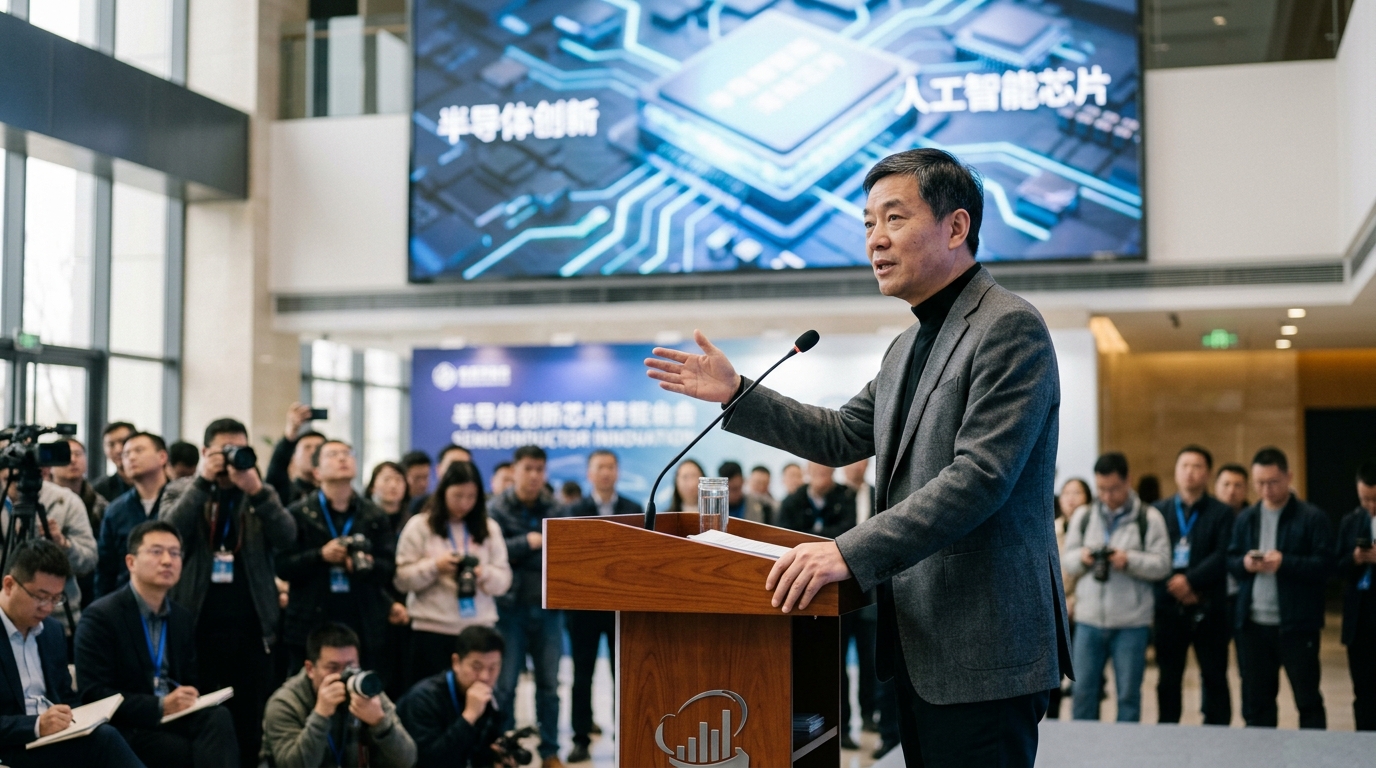
In a move that underscores China’s unwavering resolve to achieve technological self-sufficiency, e-commerce and cloud titan Alibaba has announced the launch of a sophisticated new artificial intelligence processor. Developed by its in-house semiconductor division, T-Head (Pingtouge), the new chip is designed to tackle the dual challenges of training massive large language models (LLMs) and executing high-speed real-time inference. This announcement transcends corporate news; it is a calculated response to the escalating export restrictions imposed by the United States, which have systematically throttled Chinese access to NVIDIA’s industry-leading hardware.
Engineering Autonomy: The Architecture of the New Silicon
Alibaba’s latest silicon represents the zenith of years of investment into the RISC-V architecture and specialized AI compute structures. Preliminary data suggests that the processor is deeply optimized for the Alibaba Cloud ecosystem, delivering substantial gains in energy efficiency and data throughput. Unlike its predecessors, this iteration is engineered to handle the staggering parameter counts of contemporary Generative AI models, such as Alibaba’s own Qwen (Tongyi Qianwen) series.
The strategic decision to internalize hardware development is multifaceted. Firstly, it drastically reduces operational expenditures (OPEX) for its sprawling data centers. By leveraging proprietary chips, Alibaba bypasses the significant price premiums commanded by external vendors. Secondly, it grants the company total control over the technology stack—from the raw silicon to the software layers—ensuring that the infrastructure is meticulously tailored to the requirements of its diverse client base across Asia and beyond.
The Geopolitical Chessboard and the Semiconductor War
The timing of this reveal is pivotal. As Washington continues to tighten the noose around the export of high-end AI accelerators (such as NVIDIA’s H100 and the new Blackwell series) to China, Chinese tech giants are locked in a high-stakes race against time. Alibaba, alongside Huawei and Baidu, is at the vanguard of this domestic push. However, the elephant in the room remains fabrication. While design can be mastered internally, the manufacturing process relies on advanced lithography techniques largely controlled by Western-aligned entities like ASML.
"Technological sovereignty is no longer contested solely in the realm of code, but in the foundry. The ability to produce proprietary hardware is the ultimate fortress in a fragmented global market," industry analysts suggest.
This move is poised to bolster Alibaba’s standing in the fiercely competitive cloud computing market, where it vies for dominance against Amazon Web Services (AWS) and Microsoft Azure. By offering cost-effective and powerful AI compute solutions, Alibaba can attract startups and enterprises seeking alternatives that operate outside the sphere of US regulatory influence.
The Road Ahead: Alibaba Cloud and the Qwen Ecosystem
The new chip will serve as the backbone for the next generation of Tongyi Qianwen models. Alibaba has signaled that its future is predicated on an "AI-First" philosophy. With the capacity to train models faster and at a lower cost basis, the company can accelerate its innovation cycle, deploying solutions in sectors ranging from autonomous mobility to medical diagnostics and supply chain optimization.
Ultimately, Alibaba’s announcement is more than a mere technical upgrade; it is a manifestation of power. In a world where access to compute is synonymous with geopolitical leverage, China is demonstrating that it will not be easily sidelined. The success or failure of this endeavor will not only shape the trajectory of Alibaba but will define the contours of the global technological landscape for decades to come.