In a move that fundamentally redraws its strategic roadmap, Alibaba Cloud has announced the launch of new artificial intelligence models designed exclusively for integration into robotic systems. This development, presented as part of China's push to dominate 'new quality productive forces,' signals a broader industry pivot: moving from chatbots that merely generate text to 'agents' capable of perceiving and acting within the physical world.
Embodied AI: The New Frontier
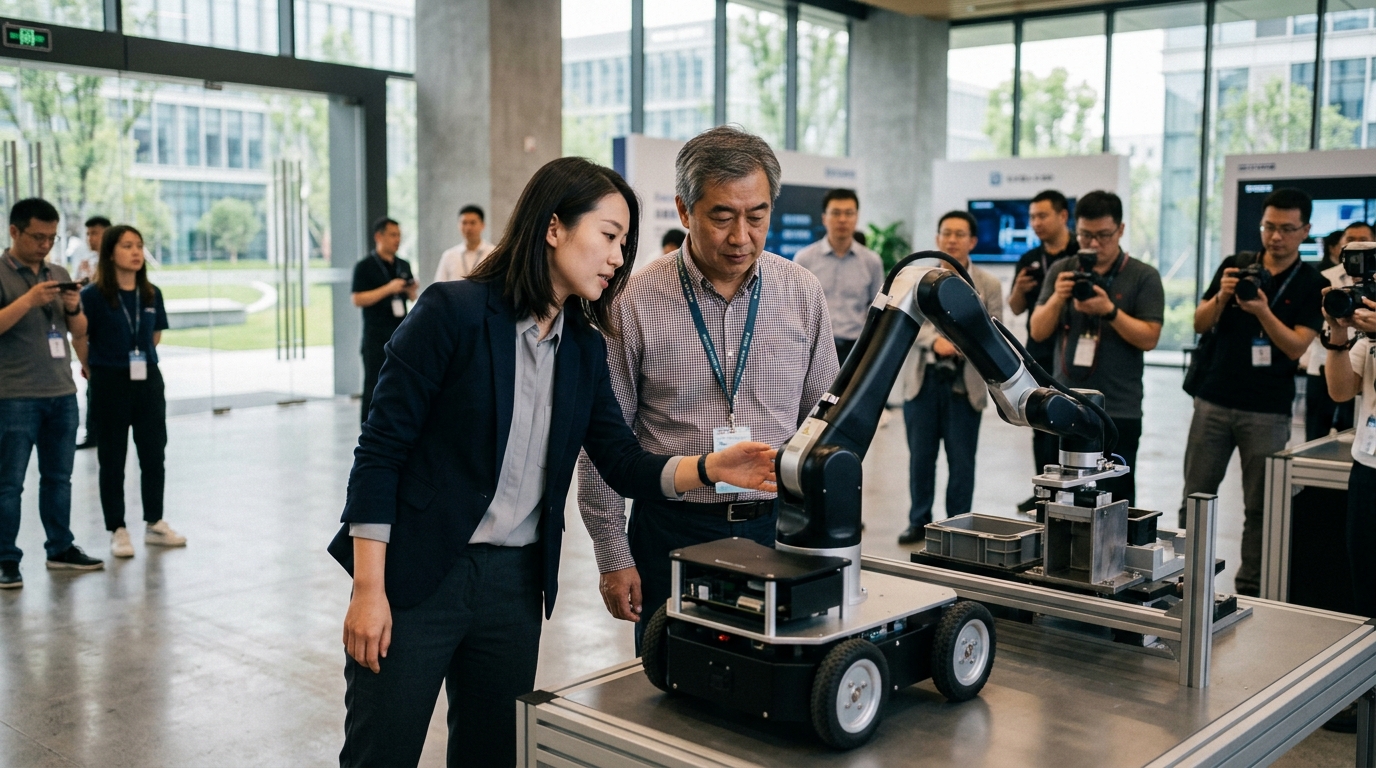
The concept of 'Embodied AI' lies at the heart of Alibaba's new strategy. While the tech world has spent the last few years obsessed with Large Language Models (LLMs) like Qwen, the next phase involves connecting these 'brains' with 'bodies'—robotic arms, autonomous vehicles, and industrial automation systems. Alibaba's new models allow robots to process visual data in real-time and make decisions without the need for constant human intervention.
According to market analysts, this move is not just a technological upgrade but a response to the urgent need for higher productivity in a China facing demographic shrinkage. Automating the supply chain and manufacturing sectors through AI agents is seen as the only viable path to maintaining the competitiveness of the Chinese economy.
From Chatbots to Autonomous Agents
The difference between a chatbot and an AI agent is fundamental. While a chatbot is limited to providing information, an agent has the capacity to execute complex, multi-step tasks. For instance, a robot equipped with Alibaba’s new model can identify a defective product on a production line, remove it, log the error in the system, and order the necessary replacement part—all autonomously.
- Integration of visual and motor perception.
- Reduction of latency for immediate physical reaction.
- Self-improvement capabilities through on-site reinforcement learning.
Alibaba Cloud aims to offer these models as a service (Model-as-a-Service), allowing third-party robot manufacturers to 'rent' the intelligence required for their machines rather than developing it from scratch.
Geopolitics and Technological Self-Reliance
The announcement comes during a period of intense competition with the United States. With ongoing export restrictions on advanced chips (such as those from Nvidia), Alibaba and other Chinese giants like Baidu and Tencent are focusing on optimizing their software to perform maximally on domestic hardware. The pivot to robotics is also part of China's national strategy for 'smart manufacturing.'
"We are not just building better language models; we are building the operating system for the industry of the future," said an Alibaba Cloud executive during the launch event.
Challenges and the Future of Work
Despite the excitement, significant challenges remain. The safety of human-robot interaction and the ethical implications of job displacement remain at the forefront of the discussion. However, Alibaba argues that AI agents will take over the 'dangerous, dull, and dirty' jobs, freeing up human capital for more creative roles. The ultimate gamble for the company is whether it can convince international markets of the reliability of its systems amidst a polarized geopolitical climate.