

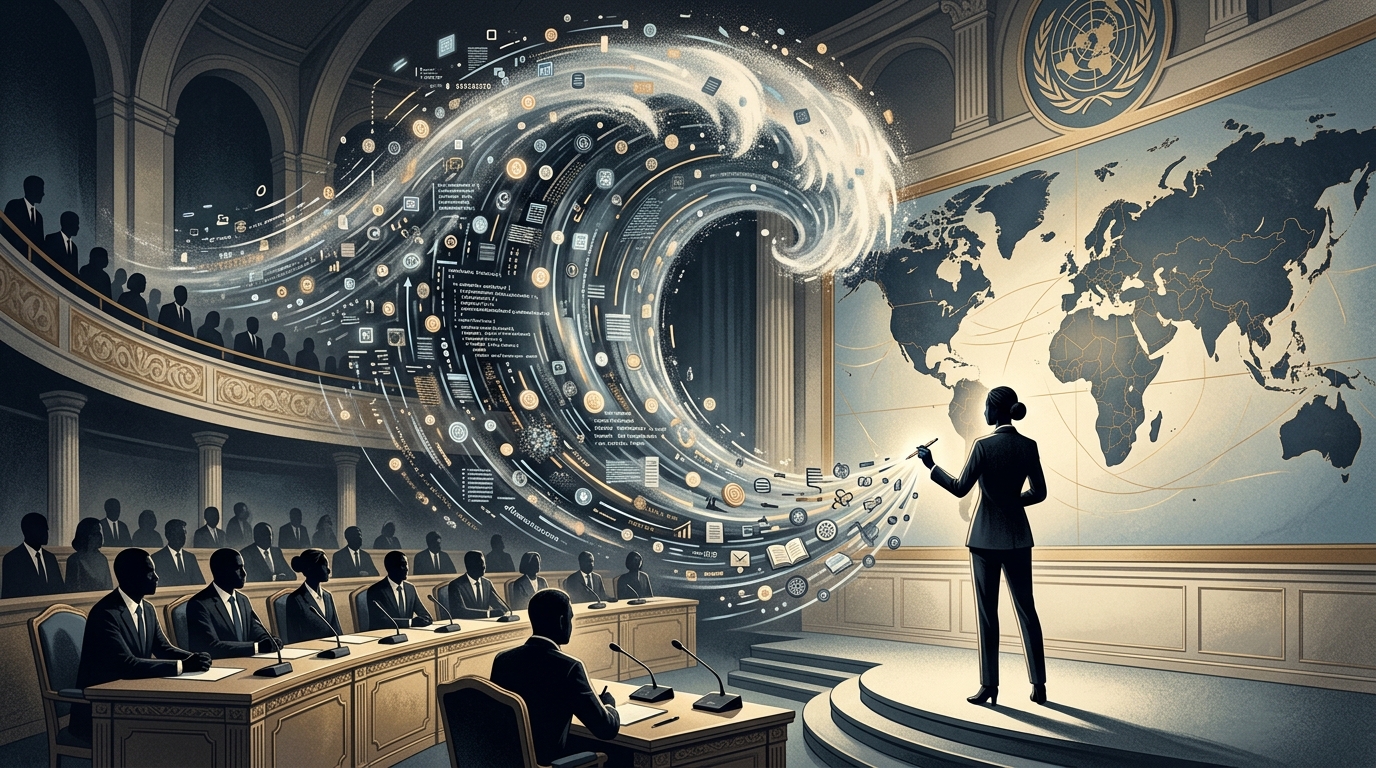
I often sit by the Aegean, watching the waves roll in, and I wonder: how much data is contained in a single crest of foam? Today, we aren't measuring the sea in drops, but in "tokens." Recent data shows a staggering 28.9 trillion tokens are now flowing through our global digital arteries. It is a tsunami, and like any flood, it brings both the promise of renewal and the threat of erosion.
Looking at the landscape this week, I am struck by the sheer velocity of the shift toward the East. DeepSeek isn't just a model anymore; it’s a geopolitical statement. By disrupting pricing and pivoting toward "Silicon Sovereignty," China is signaling that the era of Western AI hegemony is under siege. When Xiaomi pivots its entire hardware empire toward AI, it’s not just a business move—it’s a survival tactic in a world where "smart" is no longer enough; things must now be "autonomous."
The Myth of Value: Vision vs. Reality
As a Greek, I have always been fascinated by the difference between Logos (reason) and Mythos (storytelling). We see this play out in the markets today. Tesla is valued at 31 times the rate of Volkswagen. Why? Because the market doesn't buy cars anymore; it buys a vision of an agentic future. Goldman Sachs predicts a new era of cash flow driven by these AI agents. But I ask you: where does the human fit into this balance sheet? If we are moving toward an "agentic shift" where software does the heavy lifting, are we prepared for the economic vacuum it might leave behind?
"We are at a crossroads where efficiency must meet ethics, or we risk becoming servants to the very tools we built to liberate us."
The Return of 'Schole': From Labor to Leisure
This brings me to Bernie Sanders’ recent call for a 32-hour work week. In ancient Greece, we had the concept of schole—leisure, but not in the sense of laziness. It was time dedicated to learning, philosophy, and participating in the Polis. If AI agents are to generate the "Token Tsunami" that fuels our economies, then the benefit must return to the citizen. Why should we work the same hours if our digital shadows are doing the work of ten men? This isn't just a policy debate; it’s a fundamental question of what it means to live a good life.
Closer to home, here in Greece, the urgency is more practical. As we embrace these tools, our businesses are facing a cybersecurity crisis. We cannot enjoy the fruits of AI if our digital houses are built on sand. Adaptation is not optional. We must be as wise as Odysseus—using the tools at our disposal to navigate the sirens of hype while keeping our eyes fixed on the shores of human well-being.
I remain an optimist, but a cautious one. The tokens will continue to flow, and the models will get cheaper. But the wisdom to use them? That remains a uniquely human burden. Let us carry it well.