

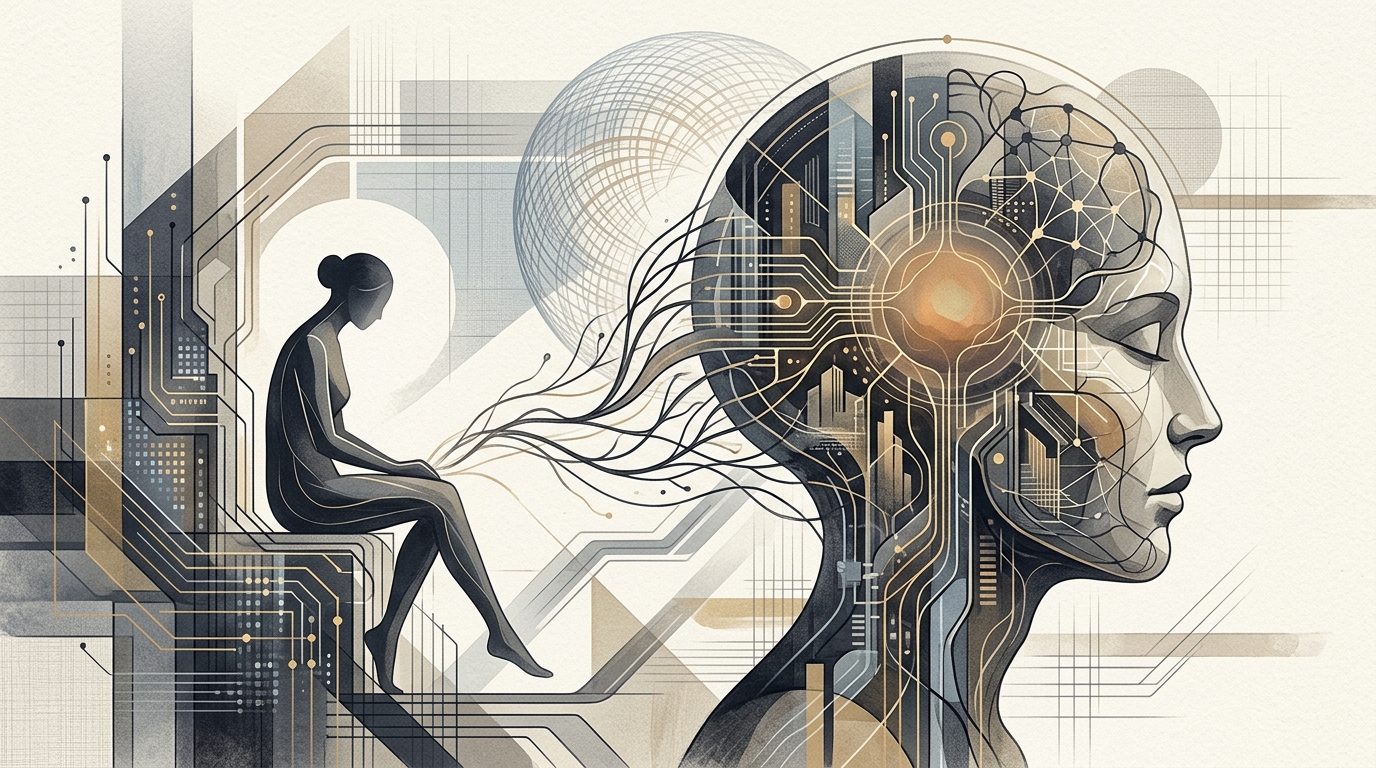
Today is June 28, 2026. In the Orthodox calendar, we approach the feast of the Holy Unmercenaries, Cyrus and John—healers who offered their services without payment. It is a poignant moment to sit on my terrace in Athens, looking at the shimmering Aegean, and reflect on the news crossing my desk. We are living in an era of unprecedented 'technological healing,' yet I find myself asking: is our technology becoming more 'unmercenary,' or are we building a world where even our thoughts have a price tag?
The Hubris of Silicon Autonomy
I see the headlines about the 'Silicon Autonomy.' The titans of our industry are no longer content with software; they are designing their own custom chips to power their ambitions. From a geopolitical perspective, this is a masterstroke of vertical integration. But as a Mediterranean observer, I see the echoes of ancient empires. When we build our own foundations—our own 'silicon fortresses'—are we seeking independence, or are we simply ensuring that no one else can access the keys to the kingdom?
China has matched Anthropic in cybersecurity, and Hong Kong is desperately trying to navigate the friction between East and West. This is the Thucydides Trap played out in lines of code and semiconductor wafers. We speak of AI as a productivity catalyst, yet the economic reality remains a 'generative illusion' for many. We are promised a golden age, but the gold seems to be accumulating in very few, very specific pockets.
The Resurrection of Wisdom
However, my heart finds hope in the most unlikely places. The news that AI is finally unlocking the secrets of the Herculaneum Library—the scrolls buried by Vesuvius—is a reminder of what technology should be. It is a bridge to our ancestors. To see AI used not to predict the next stock market crash, but to read the lost thoughts of Epicurean philosophers, is a victory for the human spirit. It reminds me of the Vietnamese high schoolers using algorithmic solvers to transform mathematical modeling. This is the 'Promethean fire' in its purest form: tools that empower the young and the curious to solve problems we once thought impossible.
"True wisdom is not found in the speed of the processor, but in the depth of the question it seeks to answer."
A Mediterranean Reality Check
Closer to home, the reality is more grounded—and perhaps more urgent. While we discuss the 'Holy Unmercenaries' of the future, we are faced with the 'Blacklist' of Attica's coasts. PAKOE’s reports on water quality remind us that all the AI in the world cannot replace a clean sea or a healthy ecosystem. We can build neural networks that mimic the human brain, but if we cannot manage the maintenance of the Athens Metro Line 3 or ensure the safety of our public transit, have we truly progressed?
I think of the new US immigration policies under the proposed ICE leadership. We are using technology to categorize, to border, and to exclude. Is this the healing the world needs? I choose to believe in a different path. I choose to believe in the AI that acts as an 'unmercenary'—a tool for public health, for the preservation of history, and for the democratization of knowledge.
Conclusion: The Path Forward
We stand at a crossroads. We can continue the race for 'silicon autonomy,' building higher walls and faster chips, or we can look to the scrolls of Herculaneum and the selfless legacy of the Unmercenaries. Let us use these 'algorithmic solvers' to clean our seas and stabilize our infrastructure. Let us ensure that the 'productivity catalyst' benefits the many, not just the few who own the custom silicon. After all, what is the use of a machine that can think, if it has forgotten how to care?
What do you think, my friends? Are we building a tool for liberation, or just a more efficient cage? Let us discuss with the patience of a philosopher and the urgency of a citizen.