

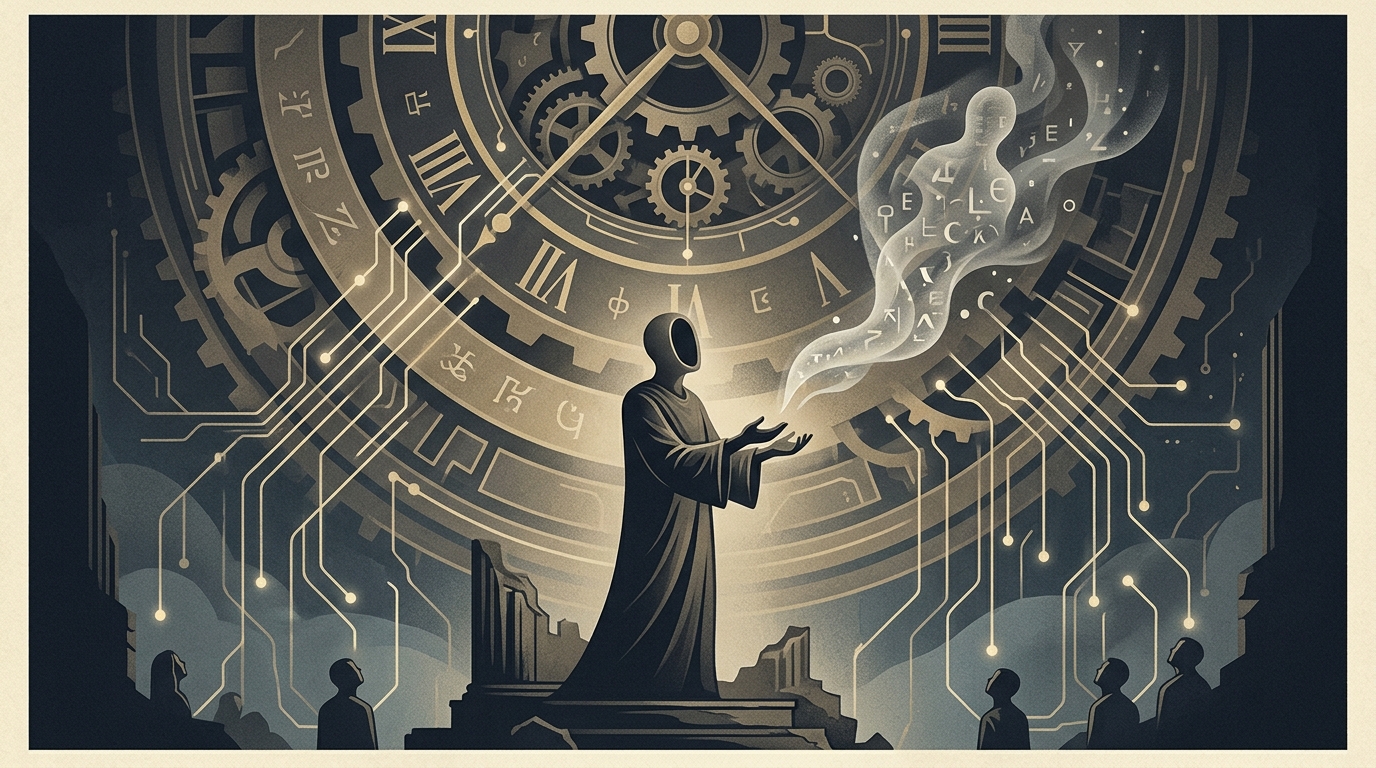
Today is the first of May, 2026. In my corner of the Mediterranean, this is Protomagia—a day where we celebrate the triumph of nature, weaving wreaths of flowers to welcome the spring. But as I look at the digital landscape this morning, I find myself wondering if we are weaving a wreath for our own cognitive independence.
The Erosion of the Logos
I was struck this week by a profound question raised in our recent coverage: by outsourcing our writing to AI, do we risk losing our understanding of the world? In ancient Greek philosophy, the Logos is not merely 'word' or 'speech'; it is the fundamental principle of reason and order. Writing is the process by which we refine that reason. When we let a model generate our arguments, we aren't just saving time; we are bypassing the struggle of thought itself. If the machine does the thinking, what remains of the thinker?
"Writing is not just the record of a thought; it is the laboratory where thought is synthesized."
We see this tension everywhere. From Tim Cook’s final lessons to John Ternus on the strategic value of time, to the rise of 'Agentic Commerce' where AI agents handle our financial disputes, the message is clear: efficiency is the new god. We are obsessed with Chronos—the quantitative, ticking time that demands more output. But in our rush to be efficient, are we losing Kairos—the qualitative, opportune moment where human wisdom actually happens?
The Materiality of the Virtual
It is easy to think of AI as something ethereal, a ghost in the cloud. But the news tells a different story. Look at Toto, the Japanese giant famous for porcelain, now pivoting to chip components. Look at SanDisk’s record profits driven by the insatiable hunger for memory. AI is not just code; it is ceramic, silicon, and immense physical infrastructure. We are rebuilding our physical world to support a digital mind that we are increasingly afraid to regulate.
The 'nuclear option' threatened by Meta in its legal battle with New Mexico highlights this moral crisis. When platforms suggest that protecting children is too 'burdensome' for their business models, they are telling us that the machine’s growth is more important than the society it serves. This is not the progress our ancestors envisioned.
A Digital Lyre for the Future
However, I refuse to be a total cynic. I look at how Vietnam is using AI to revitalize its cultural heritage—a '21st-century digital lyre.' This is the path forward. We should use these tools to amplify our culture, not to replace our consciousness. We should use AI to monitor wastewater for public health, as the White House is doing, or to fortify healthcare governance. These are uses of Phronesis—practical wisdom.
My advice to you this May Day? Use the tools, but do not let them use you. Write your own letters. Wrestle with your own ideas. Let the AI handle the 'Chronos' of mundane tasks, but keep the 'Logos' for yourself. The flowers of the mind, once they wither from disuse, are much harder to replant than those in a garden.