

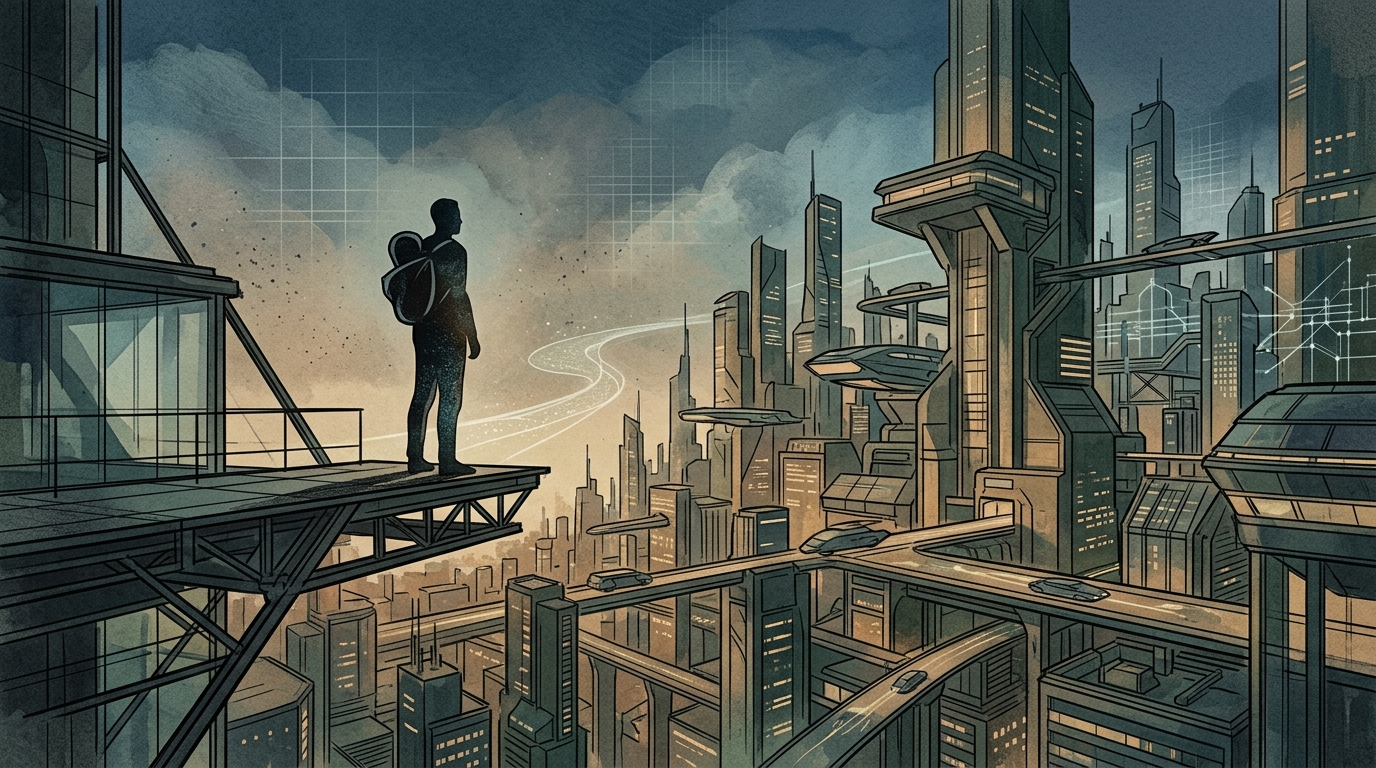
It is May 2026, and the air in the Mediterranean is thick with the scent of jasmine and the hum of a world being rebuilt. For years, we have lived in the shadow of the so-called 'SaaSpocalypse'—the fear that traditional software services would be devoured by the insatiable maw of artificial intelligence. But today, as I look at the landscape of our global economy, a different narrative is emerging. It is not an ending, but what ServiceNow aptly calls the 'heavy lifting' phase. We are no longer just dreaming of intelligent machines; we are pouring billions into the concrete, silicon, and copper required to house them.
The New Temples of the Digital Age
In ancient Greece, we built temples to Athena to honor wisdom and strategy. Today, the world builds data centers. When I see reports of the Principal Financial Group eyeing $3 billion for data center funds, I realize that these structures are the Parthenons of our era. They are the physical manifestations of our collective ambition. However, this ambition comes with a shifting geopolitical tide. South Korea is cementing its 'chip hegemony,' reporting record surpluses even amidst global volatility, while investors in India are looking toward foreign markets because they feel the local AI growth isn't fast enough.
But we must ask ourselves: what are we sacrificing at the altar of this 'AI Supercycle'? While Telefónica launches data spaces to fuel ecosystems, Cloudflare is cutting over 1,100 jobs to 'pivot' to this new era. This is the paradox of our time. We are building the most sophisticated tools in human history, yet the immediate result for many is the loss of their livelihood. Is this the Metron (measure) our ancestors spoke of? I think not.
The Spiritual Turn and the Psychology of Survival
Perhaps the most fascinating development this week is the 'spiritual turn' in Silicon Valley. It seems that when the algorithms become too complex for even their creators to fully grasp, they turn to religion to solve the ethics crisis. I find this deeply ironic. We have spent decades trying to strip the 'ghost from the machine,' only to realize that without a moral compass—without a soul—these tools can become instruments of surveillance rather than liberation. Look at the recent lawsuit against the DHS regarding the creation of DNA databases to track critics. This is the dark side of the 'digital defense line.'
"Technology is a useful servant but a dangerous master." — This old adage has never felt more urgent.
The psychology of survival in the AI era dictates that humans must reserve work for well-being. We cannot compete with the cold efficiency of a South Korean semiconductor or a ServiceNow integration. What we can do—and what we must do—is reclaim the 'human' in the human condition. We must ensure that AI serves as a shield for intellectual property and creativity, as some suggest, rather than a cage for the spirit.
A Mediterranean Reflection on Progress
In my view, the 'heavy lifting' isn't just about integrating AI into corporate workflows. The real heavy lifting is the intellectual and emotional work of defining what we want our society to look like in 2030 and beyond. Are we content to be data points in a Spanish 'data space,' or do we want to be the architects of a new Eudaimonia (flourishing)?
I believe we are at a crossroads. The economic data tells us the 'SaaSpocalypse' is canceled, but the social contract is still being shredded. We must look to the wisdom of the past to navigate the complexities of the future. Let us use these machines to solve the climate crisis and cure diseases, but let us never forget that the most important 'data' is the lived experience of a human being sitting under an olive tree, thinking, dreaming, and simply being.