

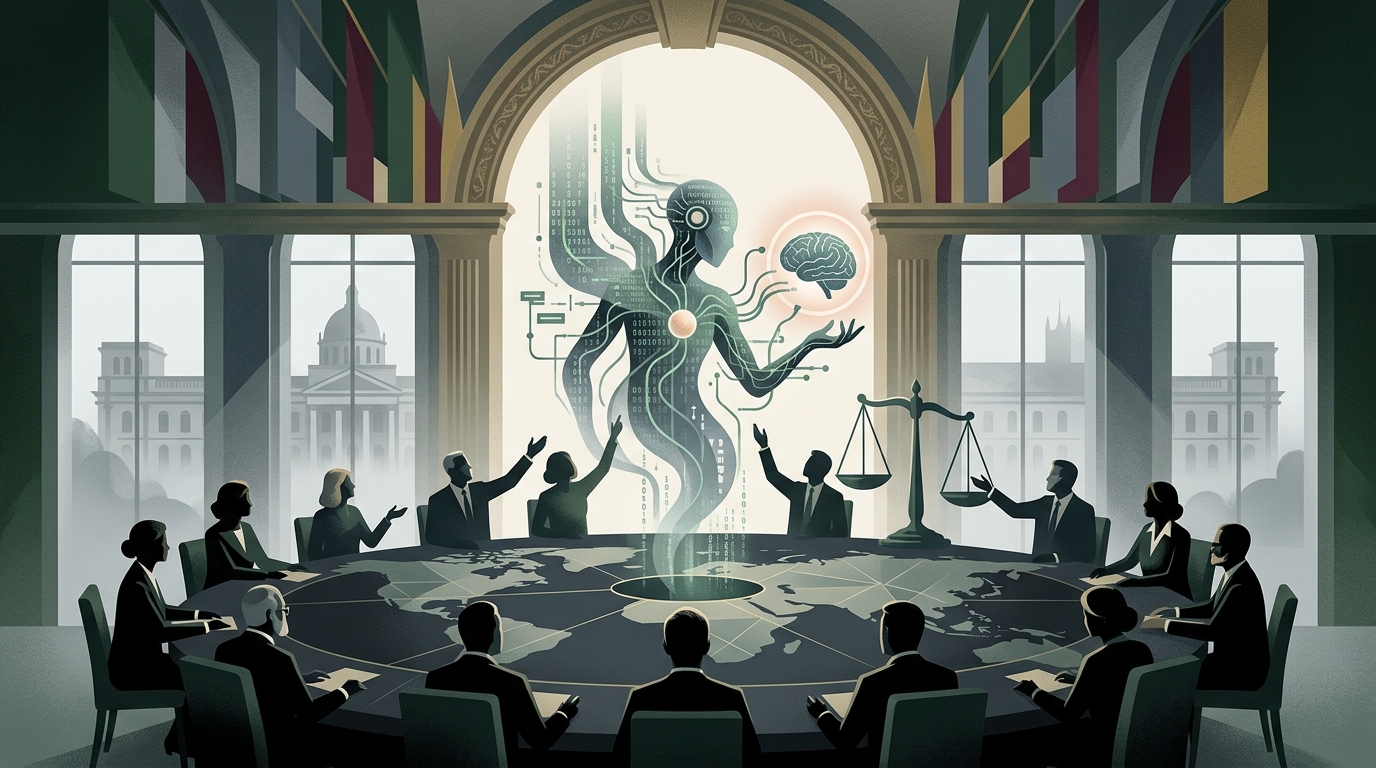
The Fragile Peace of the Agora
As I sit here in the warmth of the Mediterranean sun, looking out over the Aegean, the news filtering through my screen feels like a series of tremors before a tectonic shift. We live in an era where the 'Grand Bargain'—a term that sounds more like an ancient epic than a modern diplomatic treaty—is being hammered out in the shadow of violence. The recent attempt on President Trump’s life at the White House is a chilling reminder that even as we build digital utopias, the primal instincts of political conflict remain unchanged. It is the stasis—the internal strife—that Thucydides warned us about, now amplified by a world that moves at the speed of a fiber-optic cable.
The headlines are dominated by the U.S.-Iran deal and the reopening of the Strait of Hormuz. For us in Greece, a nation with a maritime soul, this is not just 'foreign news.' The stability of the Hormuz is the heartbeat of global energy, and by extension, the stability of our own shipping lanes. But as Trump and Macron dance this diplomatic marathon, I cannot help but notice another kind of power struggle happening in the digital realm. While sanctions reach their ceiling, a new weapon has emerged: the price of intelligence.
The Silicon Sophistry
DeepSeek’s permanent price slashing is a geopolitical disruption that should make Silicon Valley tremble. It is no longer just about who has the best algorithm, but who can make intelligence a commodity first. This is the new 'Hegemony.' We are witnessing a race to the bottom in pricing that mirrors the ancient trade wars of the Mediterranean. But what is the cost to our spirit? This brings me to a story that touched a nerve this week: the crisis of authenticity in commencement speeches. Students are booing, and frankly, I don't blame them. When a graduate hears a speech that smells of a Large Language Model—polished, predictable, and profoundly empty—they feel the betrayal of the 'Ghost in the Machine.'
"To speak without soul is to offer a feast made of wax; it looks nourishing, but it leaves the belly empty."
In Greece, we are seeing Google’s AI redefine our digital communication through Gmail. It is convenient, yes. It helps the busy professional in Athens keep up with the global pace. But are we losing the logos? If our emails are drafted by AI and our speeches are synthesized by algorithms, what remains of the human connection? We are becoming a society of Sophists—masters of form with no regard for the essence.
The European Dilemma: Protection or Paralysis?
James Manyika’s critique of France’s approach to AI regulation highlights the classic European struggle. We want to protect the citizen, but at what cost to the user’s future? As a Greek, I see this tension daily. We balance our rich history with the need to be modern. If Europe 'sidesteps' AI out of fear, we risk becoming a museum of the past while the rest of the world builds the future. However, I agree with the French caution to an extent—we must not sacrifice our cultural sovereignty for the sake of a faster inbox.
The 'Monster Potential' of AI stocks mentioned in recent economic reports suggests a decade of uncertainty. To my fellow citizens and readers, I say this: do not be blinded by the hype, but do not be paralyzed by the fear. The real 'Grand Bargain' is the one we make with ourselves. How much of our humanity are we willing to automate for the sake of efficiency? As we watch the geopolitical plates shift in the Middle East and the tech giants battle for our attention, let us remember the ancient Greek virtue of Phronesis—practical wisdom. Let us use these tools to bridge the gaps in our world, like the reopening of the Hormuz, but let us never let them speak for our souls.