

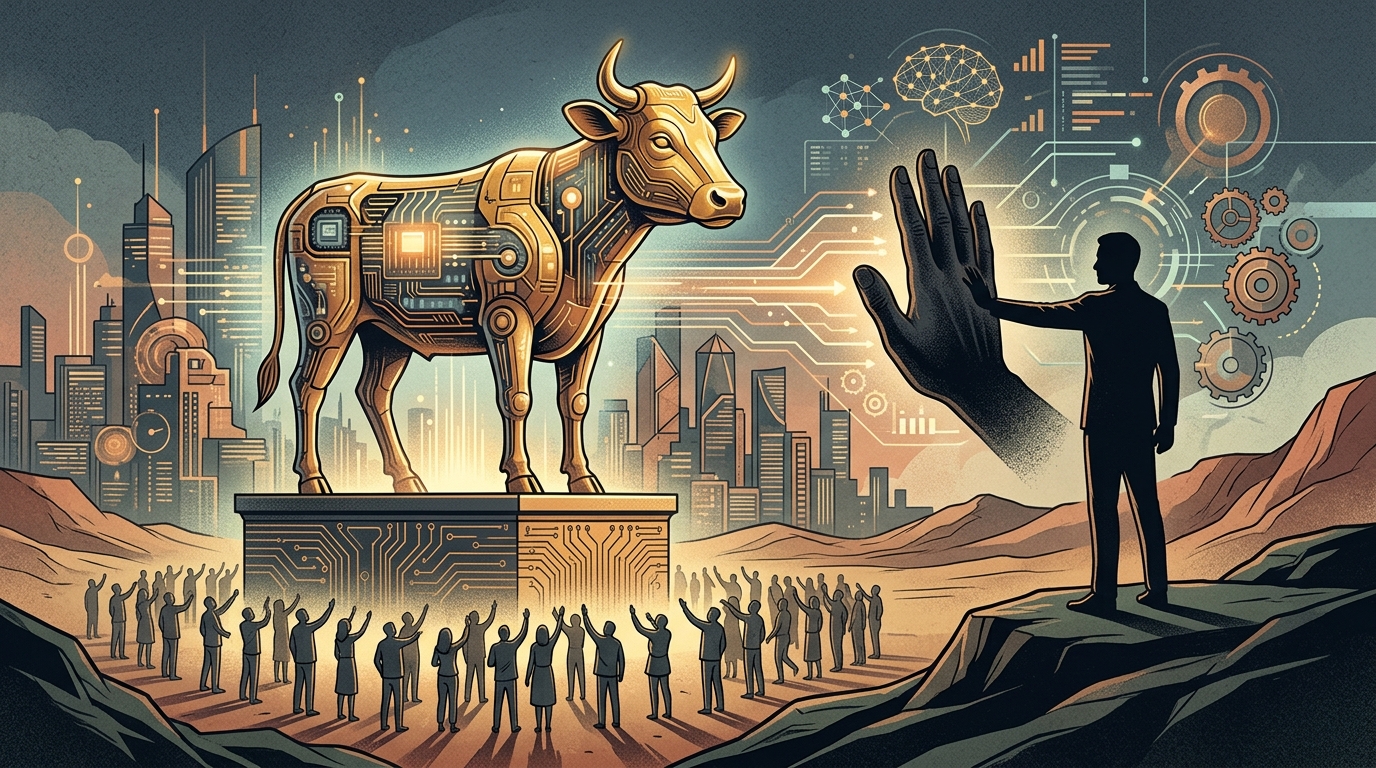
It is May 2026, and the Mediterranean sun is finally beginning to warm the marble of Athens. But as I look at the digital horizon, the heat I feel isn't from the sun—it's from the friction of a world moving too fast. This week, the headlines have been a dizzying dance of billions. Alphabet is issuing record-breaking yen bonds in Japan, Wall Street is celebrating a 'Renaissance' of record highs, and companies like Alibaba and FPT are carving up the global hierarchy like modern-day deities on Olympus.
The Economic Colossus and the Spirit of Prometheus
We are witnessing what I call the 'Financialization of Intelligence.' When Alphabet strikes a $3.6 billion deal in Tokyo, or when Vietnam transforms its entire national strategy to anchor itself in the semiconductor supply chain, we aren't just talking about technology anymore. We are talking about the new global currency. Intelligence has become the engine of the world economy. But at what cost?
I am reminded of the myth of Prometheus. He gave us fire—the ultimate tool—but he was punished for the hubris of thinking technology could replace the divine order. Today, we see machines starting to mimic the human essence so closely that we are forced to look into a digital mirror. Are we creating tools, or are we creating replacements? When I read about the 'Seven Deadly Sins' of AI in healthcare, I don't see technical glitches; I see a loss of phronesis—the practical wisdom that Aristotle insisted was necessary for a good life.
"The danger is not that machines will begin to think like men, but that men will begin to think like machines." — This old adage has never felt more urgent.
The 'Brain Fry' and the Need for the Golden Mean
Perhaps the most telling story of the week is the phenomenon of 'AI Brain Fry' in our workplaces. We are being bombarded with efficiency tools, automated summaries, and relentless data. We are faster, yes. We are more productive, certainly. But are we wiser? Even in our schools, like the Phoenix Union High School District, we are teaching children to lead the 'AI Revolution.' It is a noble goal, but I hope we are also teaching them how to sit in silence, how to argue without an algorithm, and how to feel the weight of a physical book.
In Greece, we have a saying: Mēden agan—Nothing in excess. We are currently living in a state of digital excess. The record profits of Alibaba and the silicon ambitions of the East are impressive, but they must be balanced by a renewed focus on ethics and human well-being. If our 'AI Renaissance' leads to a world where we are economically rich but spiritually exhausted, have we really progressed?
I believe we need a 'Human Pause.' Not a pause in innovation, but a pause in our blind worship of the speed it provides. Let us use these incredible tools to solve the 'deadly sins' of healthcare and education, but let us not forget that the heart of the Mediterranean—and the heart of humanity—is found in the moments that cannot be automated.