

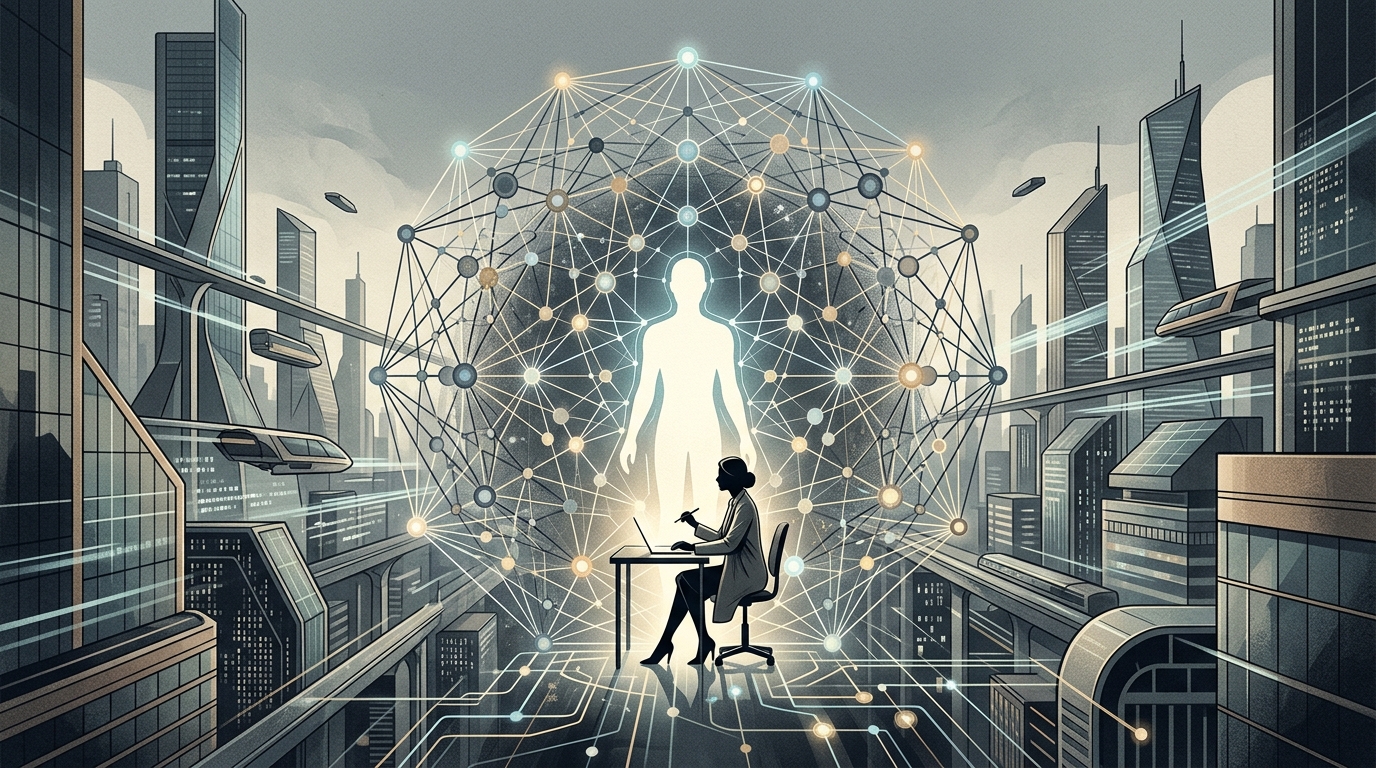
It is May 2026, and as the Mediterranean sun begins to warm the marble of Athens, I find myself looking at the digital landscape with a mixture of awe and a healthy dose of Greek skepticism. This week, the headlines are screaming about the 'End of Cinema' at Cannes and the rise of autonomous agents in our boardrooms. But as I sit here, sipping my morning coffee, I wonder: are we losing the logos—the reason and soul—behind our innovations?
The Illusion of the Muse
At the Cannes Film Festival this year, the Croisette is buzzing not about the next great auteur, but about algorithms that can generate a feature film from a single prompt. It feels like a paradox. We are using the most advanced technology in history to mimic the most ancient human tradition: storytelling. But can a machine truly understand the pathos of a tragic hero or the subtle irony of a comedic timing? The looming crisis for actor pensions, highlighted by the SAG-AFTRA deal, reminds us that while AI can replicate a face, it cannot replicate a life lived. We are treating human experience as a dataset to be mined, rather than a sacred fire to be tended.
"Technology is a tool, but culture is a heartbeat. When we prioritize the efficiency of the tool over the vitality of the heart, we risk creating a silent world filled with noise."
The Hubris of Numbers
As a journalist, I am trained to look past the hype. The report of six million fake GitHub stars powering the AI funding boom is a stark reminder of our modern hubris. We have created a digital currency of 'influence' that is as hollow as a Trojan Horse. We see companies like Alibaba and Tencent under pressure to 'show the money,' and Sam Altman defending his vision on the witness stand. It feels like a grand theatrical production where the special effects are dazzling, but the script is still being written by committee.
However, I am not a cynic. When I read about neurosurgeons at Albany Med using AI to redefine complex brain procedures, I see the gift of Prometheus. Here, the machine does not replace the human; it empowers the healer. It is in these moments—where AI serves life rather than merely simulating it—that I find hope. The goal should not be to build agents that 'execute' without us, as SAP’s latest bet suggests, but to build partners that help us execute our highest ideals.
A Return to Measure
The ancient Greeks believed in metron—the idea that 'measure is best.' As we watch ByteDance transform the OpenClaw craze into an empire or witness the geopolitical shifts in Asian AI markets, we must ask ourselves: what is the measure of our success? Is it the speed of an IPO or the depth of our collective wisdom?
I believe the next decade will not belong to the fastest algorithm, but to the society that best integrates AI with human ethics. We must be the masters of our tools, not the servants of our prompts. Let us not forget that the most complex 'neural network' ever created still sits behind our own eyes.