

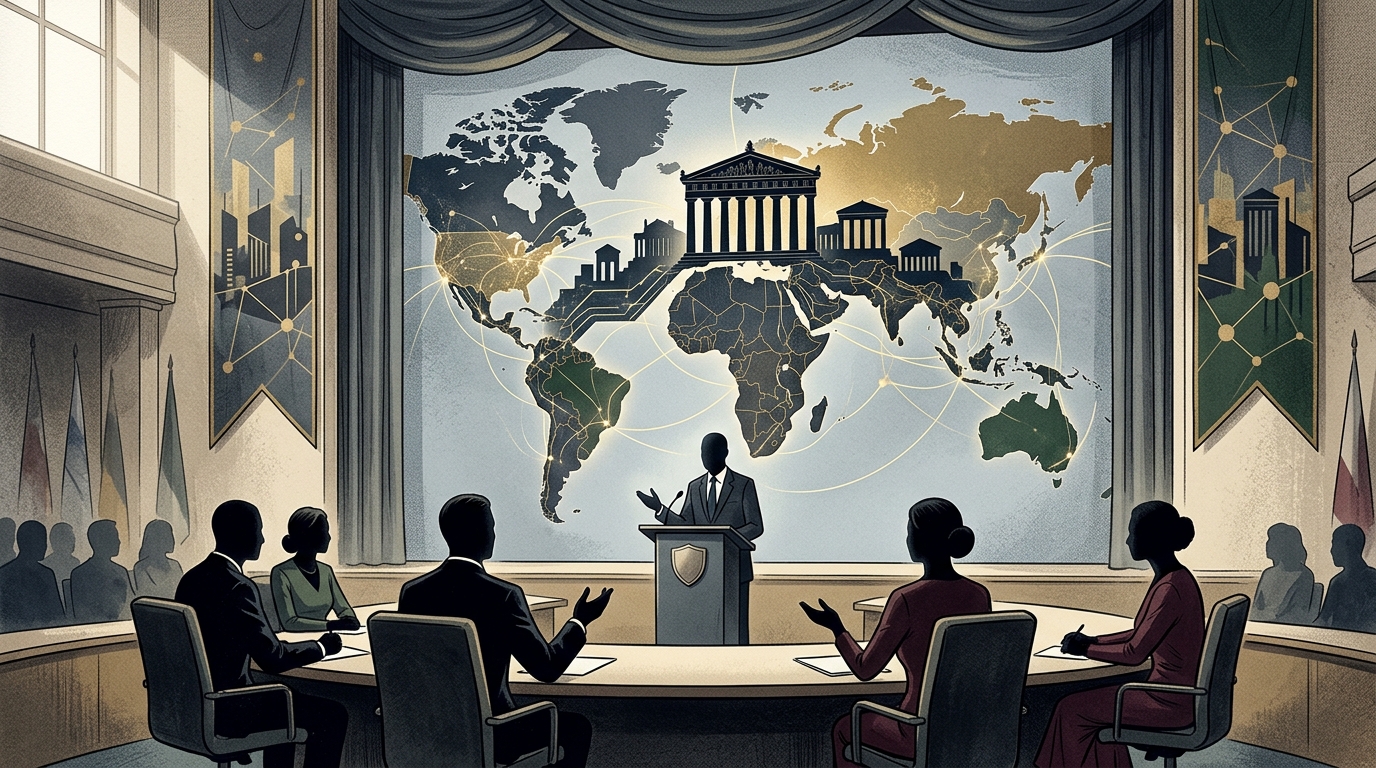
Spring has a way of clarifying the mind here in the Mediterranean. As the light reflects off the Aegean, I find myself thinking about the concept of Autarkeia—self-sufficiency. In the ancient world, it was the mark of a strong city-state. Today, in 2026, it has been rebranded as 'Digital Sovereignty,' and it is the new obsession of the global powers.
The New Walls of the Digital City
Looking at the recent news, it’s clear that the era of globalized tech dependency is fracturing. We see India aggressively pushing for domestic Large Language Models to protect its cultural and linguistic integrity. We see Hong Kong developing DeepSeek-based AI to bypass chip restrictions. Even Apple, the titan of Silicon Valley, is desperately trying to break the TSMC monopoly by diversifying into US-based Intel and Samsung production.
I ask myself: is this a healthy pursuit of independence, or a fearful retreat into digital silos? When Alibaba Cloud engages in 'digital diplomacy' in Malaysia, it isn't just about software; it's about who gets to define the rules of the future. We are building new walls, not of stone, but of silicon and code. While I admire the quest for sovereignty, I worry that we are creating a world where AI becomes a weapon of deterrence rather than a bridge for understanding.
"True power is not just in owning the tools, but in knowing when the tools have reached their limit."
Efficiency vs. Humanity: The Lesson from the East
Perhaps the most poignant story this week comes from China, where a court actually blocked AI-driven layoffs. It is a landmark verdict that challenges the cold logic of 'corporate efficiency.' It reminds me of the Greek concept of Hubris—the overweening pride that leads to a fall. When we believe that an algorithm can replace the nuanced judgment of a human worker, or when we trust AI to manage our financial funds only to see it fail (as the 'algorithmic ceiling' in finance has shown), we are flirting with disaster.
AI is failing as a fund manager because it lacks Phronesis—practical wisdom. It can crunch numbers, but it cannot feel the pulse of a society or the weight of a moral choice. I am heartened to see ThredUp using AI to save the circular economy, focusing on sustainability. This is where the technology shines: as an assistant to our better nature, not a replacement for our livelihood.
The Architecture of Our Future
As investors like Barry Sternlicht pivot entire empires toward data centers, we must ask: what is the soul of this new architecture? If our digital military-industrial complex continues to accelerate, we risk building a world that is incredibly efficient at destruction but bankrupt in empathy.
I believe we must return to the human scale. Technology should serve the Polis—the community—not just the bottom line or the military apparatus. Let us seek sovereignty, yes, but let us not lose our humanity in the process. What good is a digital empire if there is no one left to enjoy the spring sun?