

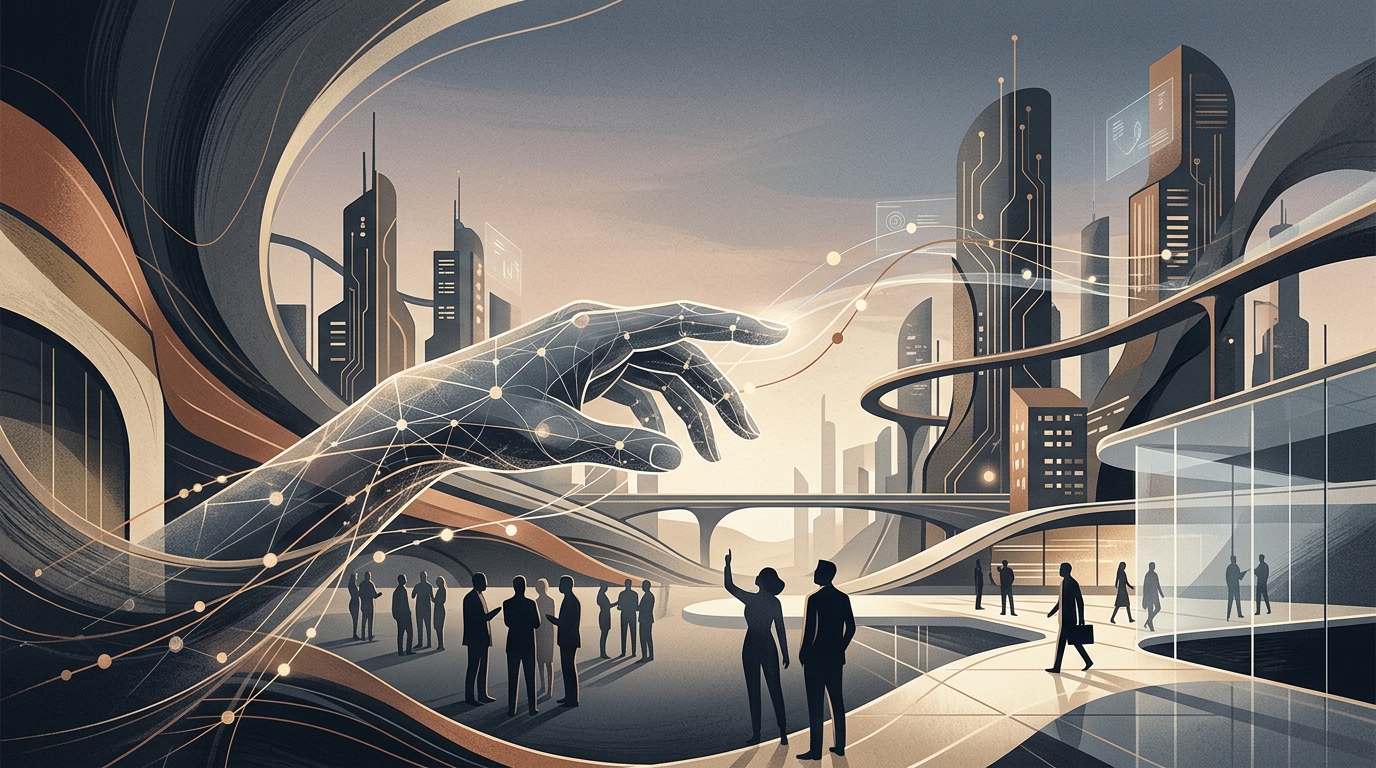
It is May 28, 2026, and as I sit by the window overlooking the Saronic Gulf, the shimmering water reminds me of the ancient concept of Autonomia—the right to live by one's own laws. In this hyper-connected era of 2026, where the 'Digital Hand' has effectively replaced Adam Smith’s 'Invisible Hand,' I find myself questioning how much of that autonomy we have left. We are witnessing a monumental shift in the architecture of power, one that moves between the cold silicon of data centers and the very neurons of our sleeping brains.
The Architecture of Power and the New Hegemony
Lately, the news has been dominated by the giants. We see the likes of Oracle and ServiceNow battling for dominance in the corporate soul, while Palantir constructs massive data centers that look more like modern temples of prophecy than mere server farms. This is what I call the 'Architecture of Power.' It is not just about software; it is about who owns the physical substrate of our reality. The recent landmark IPO of CXMT in the semiconductor space reminds us that the struggle for AI is, at its heart, a struggle for resources—chips, energy, and data.
"The digital hand does not just guide the market; it reshapes the very definition of a nation's wealth."
But there is a resistance forming, a movement toward 'Edge Intelligence' and digital autonomy. I find this deeply encouraging. For too long, we have been tethered to the Google ecosystem and its peers, our thoughts and data harvested like olives in late autumn. The rise of AI that lives on our local devices—decentralized and private—is perhaps our best chance to reclaim the Oikos, the private sphere of the home, from the prying eyes of the global Agora.
The Inversion of Reality and the Preservation of Truth
We must speak of the 'Inverted Reality' that now haunts our screens. We live in an age where the distinction between the virtual and the physical has blurred to the point of extinction. As a journalist, this terrifies me. If we cannot agree on a shared truth, how can we have a democracy? The existential threat to truth is not just about 'fake news'; it is about a fundamental shift in how we perceive existence. When AI can unveil the hidden fluid patterns in a sleeping brain—a scientific miracle, to be sure—it also reminds us that the last frontier of privacy, our dreams, is no longer sacred.
This is why the current debates in the US Federal government regarding tech company accountability are so vital. We are finally asking the question: who is responsible when the algorithm fails? Who is the guardian of our children in this digital wilderness? The intersection of AI and child safety is not merely a policy issue; it is a moral imperative. In ancient Greece, the protection of the youth was the highest duty of the state. Today, we seem to have forgotten this in our rush for 'innovation.'
The Labor Myth and the Human Spirit
Many predicted a 'Great Job Apocalypse' by 2026. Yet, here we are, and the labor market remains stubbornly human. Why? Because while the Digital Hand can calculate, it cannot care. It can process, but it cannot empathize. We are learning that the value of human work lies not in its efficiency, but in its soul. We are moving from a labor economy to a 'meaning economy.'
I believe we are at a point of Metron—the Greek ideal of balance. We must embrace the scientific wonders, like AI's role in neurobiology, while fiercely defending our autonomy from corporate silos. We must use the 'Digital Hand' to build a more equitable world, not just a more profitable one. The question I leave you with today is this: In this age of inverted reality, what is the one truth you refuse to let the algorithm take from you?
Stay thoughtful, stay human.